
Straw-headed Bulbul
Pycnonotus zeylanicus
Order: Passeriformes / Family: Pycnonotidae
Wikimedia Commons
About the Straw-headed Bulbul
The Straw-headed Bulbul, scientifically known as Pycnonotus zeylanicus, is a striking songbird famous for its unique vocal abilities. This bird is native to Southeast Asia, primarily found in regions such as Malaysia, Borneo, Sumatra, and parts of Thailand. Typically inhabiting lowland forests and mangrove swamps, the bulbul is known for its resilience in adapting to disturbed habitats, including plantations and secondary growth forests. The Straw-headed Bulbul plays a vital ecological role as a seed disperser. Its diet consists mainly of fruits, which helps in the regeneration of forested areas. As they consume and transport seeds, they contribute to the propagation of various plant species. The bulbul's melodious song is a defining characteristic, making it a popular subject for birdwatchers and naturalists. Despite its appeal, the Straw-headed Bulbul faces significant threats due to habitat loss and illegal trapping for the bird trade, leading to its status as an endangered species. Seasonal behaviors of this bird are fascinating. During breeding seasons, they become more territorial, often seen in pairs or small groups. Their vocalizations become more frequent and complex, serving both as a defense mechanism against potential threats and as a means to attract mates. Outside the breeding season, these bulbuls are generally more gregarious, forming loose flocks. The Straw-headed Bulbul’s presence in urban areas is not uncommon, particularly in parks and gardens where fruit-bearing trees are planted. However, their primary habitat remains the forested and semi-open areas of Southeast Asia. Conservation efforts are crucial to ensure the survival of this species, as their numbers are dwindling rapidly due to ongoing threats.
The Straw-headed Bulbul belongs to the family Pycnonotidae, within the order Passeriformes. These birds typically live average 8 years, with a maximum recorded of 10 years..
How to Identify a Straw-headed Bulbul
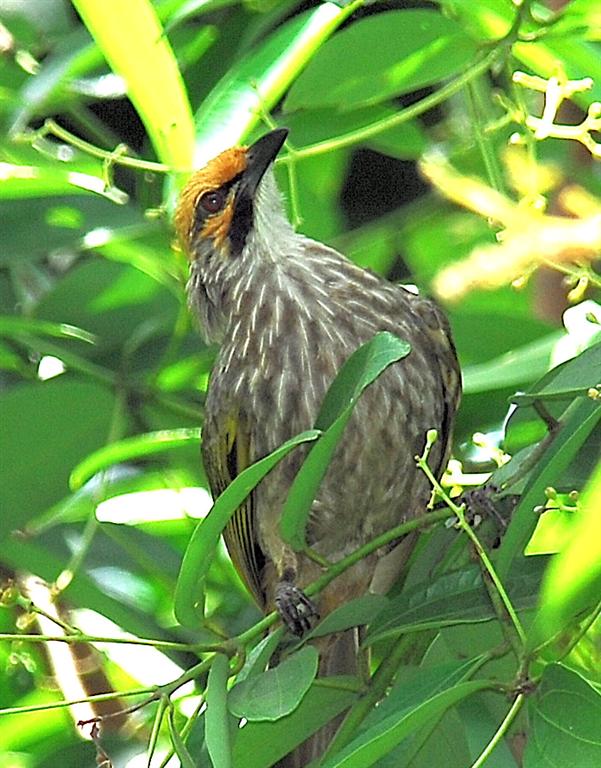
The Straw-headed Bulbul is easily recognizable by its straw-colored head, which contrasts with its olive-green back and wings. Adults have a pale yellowish throat and a white belly, while the upperparts are more subdued with greenish-brown hues. Juveniles resemble adults but have duller plumage, lacking the pronounced straw coloration on the head. Males and females appear similar, making sex differentiation challenging in the field. Compared to other bulbuls, Pycnonotus zeylanicus stands out due to its size and the distinctive head color. In flight, the bulbul exhibits a steady and purposeful flight pattern, characterized by rapid wing beats followed by brief glides. When perched, the bulbul often sits upright, showcasing its prominent head and robust build. Confusion with other bulbul species may occur, but the unique head coloration and vocal prowess typically aid in proper identification. Birdwatchers frequently note the Straw-headed Bulbul’s strong posture, which contributes to its regal appearance.
Having trouble telling birds apart? Upload a photo to our bird identification tool for an instant species match.
Straw-headed Bulbul Habitat and Range
Preferred Habitat
The Straw-headed Bulbul primarily inhabits lowland tropical forests, mangroves, and areas of secondary growth. It prefers environments rich in fruit-bearing trees and shrubs, which provide ample food resources. In terms of elevation, this species is usually found from sea level up to about 1200 meters. In urban settings, it can adapt to gardens and parks, provided they contain suitable vegetation. Unlike some other bulbul species, the Straw-headed Bulbul shows a degree of adaptability to disturbed habitats, often found in plantations and edge habitats. However, primary forest areas remain crucial for its survival, offering the dense foliage necessary for breeding and shelter. Seasonal habitat shifts are minimal, as the species is largely sedentary, although local movements may occur in response to food availability.
Geographic Range
The Straw-headed Bulbul's range is concentrated in Southeast Asia, particularly in Malaysia, Singapore, Borneo, and Sumatra. Smaller populations exist in Thailand and possibly Myanmar. Historically, the species had a broader range, but due to habitat destruction and illegal capture, its distribution has shrunk significantly. Breeding occurs throughout its range, as the bulbul is a resident species, not known for long-distance migrations. Certain areas, such as the lowland forests of Borneo and the mangroves of Malaysia, serve as population density hotspots. Conservationists are particularly concerned about the bird's declining presence in its natural habitats, prompting actions to protect remaining populations and their environments.
Want to know which birds visit your area? Browse our backyard birds by location guides for region-specific species lists.
What Does the Straw-headed Bulbul Eat?
The Straw-headed Bulbul primarily feeds on a variety of fruits, making it an essential player in seed dispersal within its ecosystem. Its diet includes figs, berries, and other soft fruits, which are plentiful in its natural habitat. During certain seasons, the bulbul may also consume insects and small invertebrates to supplement its diet, especially when fruits are scarce. Foraging typically occurs in the early morning and late afternoon, when the bird is most active. The bulbul employs a methodical approach to foraging, often seen hopping through branches or taking short flights between trees to access food. Prey size is generally small, focusing on items that can be easily swallowed whole. This dietary flexibility allows the Straw-headed Bulbul to thrive in various habitats, from dense forests to more open areas.
Straw-headed Bulbul Behavior and Social Structure
The Straw-headed Bulbul displays a range of intriguing behaviors, particularly noted for its social structure and vocal communications. Typically seen in pairs or small family groups, this species exhibits strong territorial instincts during the breeding season. Males often engage in elaborate singing displays to delineate their territory and attract mates. These songs, complex and melodious, are a key feature of their behavioral repertoire. In terms of daily activity, the bulbul is diurnal, with peak activities occurring during the cooler hours of the day. It is known for its alertness and quick response to potential threats, often seeking cover high in the trees or dense foliage. Flocking behavior varies with season, and outside of breeding periods, they may form larger loose associations with other frugivorous birds. Unlike some other species, the Straw-headed Bulbul rarely ventures into the open, preferring to remain within the relative safety of tree canopies. This cautious nature is a response to predation pressures, primarily from birds of prey.
Straw-headed Bulbul Nesting and Reproduction
Nesting for the Straw-headed Bulbul involves constructing a cup-shaped nest, typically found in dense shrubbery or low tree branches. The nest is crafted from twigs, leaves, and grasses, providing a secure environment for the eggs. Clutch size generally ranges from two to three eggs, which are incubated by both parents. The incubation period lasts about 12 to 14 days, after which the chicks hatch. Both male and female bulbuls participate in feeding and caring for the young, which fledge approximately two weeks after hatching. The species typically raises one to two broods per year, depending on environmental conditions and food availability. Nesting sites are often carefully selected to maximize protection from predators and environmental hazards.
Straw-headed Bulbul Sounds and Vocalizations
The Straw-headed Bulbul is renowned for its rich and melodious song. Its primary song consists of a series of clear, whistling notes that vary in pitch and tempo. These vocalizations are often described as joyful and can carry over long distances. During the dawn chorus, the bird's song is particularly prominent, serving as both a territorial advertisement and a mating call. In addition to its song, the bulbul produces a variety of call notes, including sharp alarms when threatened, which alert other birds to potential dangers. The quality of its vocalizations has made the Straw-headed Bulbul a prized bird among aviculturists, though this has also contributed to its decline in the wild due to trapping.
Interesting Facts About the Straw-headed Bulbul
- 1The Straw-headed Bulbul's song is so melodious that it has been likened to a flute, contributing to its popularity with bird enthusiasts.
- 2Despite its name, the Straw-headed Bulbul's head is not entirely straw-colored but rather a mix of straw and brown, providing a unique contrast.
- 3In Singapore, the Straw-headed Bulbul is considered a national treasure due to its rarity and distinctive vocalizations.
- 4The bulbul's song is complex and varies significantly between individuals, allowing birdwatchers to distinguish between different birds easily.
- 5Illegal capture for the pet trade has caused the bird's population to decline by more than 80% in some regions over the past few decades.
- 6During courtship, male Straw-headed Bulbuls perform elaborate singing displays, often incorporating mimicry of other bird species.
- 7The Straw-headed Bulbul can live up to 15 years in the wild, assuming it avoids predation and human threats.
Straw-headed Bulbul Conservation Status
The Straw-headed Bulbul is currently listed as Endangered by the IUCN due to significant declines in its population. The primary threats include habitat destruction and illegal trapping for the songbird trade. Historically, the species was more widespread, but ongoing deforestation and urban expansion have severely limited its natural range. Conservation efforts focus on habitat preservation and legal protection against poaching. Initiatives to restore degraded habitats and establish protected areas are crucial to reversing population declines. Additionally, raising awareness about the bird's plight can aid in reducing illegal trade and ensuring its long-term survival.


