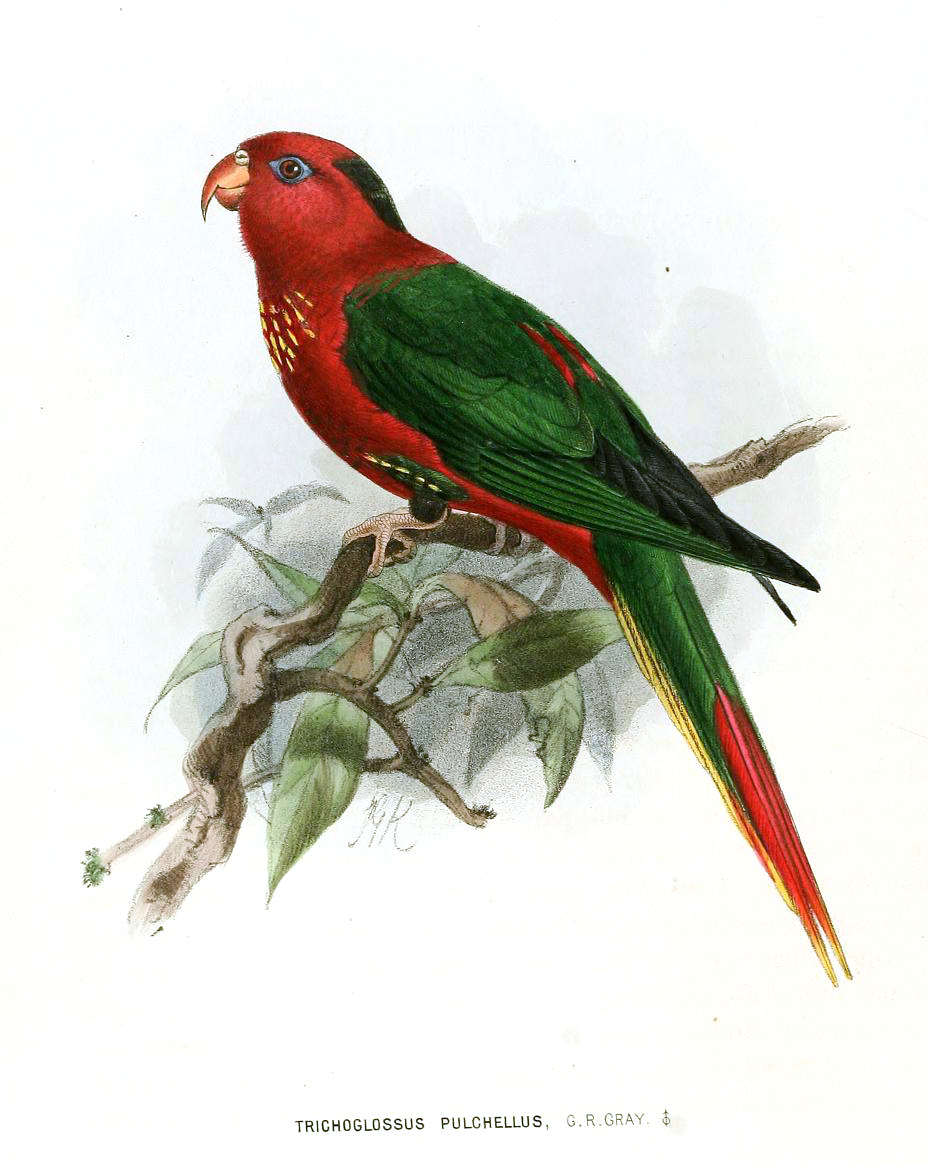
Striated Lorikeet
Synorhacma multistriata
Order: Psittaciformes / Family: Psittaculidae

Wikimedia Commons
About the Striated Lorikeet
The Striated Lorikeet (Synorhacma multistriata) is a remarkable parrot species endemic to New Guinea, where it thrives in the island's lush tropical forests. Belonging to the family Psittaculidae, the Striated Lorikeet displays an intricate pattern of streaks across its plumage, providing both beauty and camouflage within the dappled light of its forest home. These birds are primarily found in lowland rainforests, though they also inhabit montane regions up to 2,800 meters. Their vibrant coloration and gregarious nature make them a delight for observers. They play an essential ecological role as pollinators, aiding the reproduction of various forest plants. In terms of behavior, Striated Lorikeets are known for their seasonal movements, often observed descending to lower elevations during certain times of the year in search of food. Their social interactions are complex, involving both vocal and physical displays to communicate within flocks. The presence of these birds is indicative of a healthy forest ecosystem, as they rely heavily on primary and secondary forests for survival. Their range is somewhat restricted, confined to New Guinea and nearby smaller islands. However, within these areas, the Striated Lorikeet is considered a common species. Conservationists monitor their populations to ensure that habitat degradation does not threaten their numbers. The species' reliance on intact forests makes them vulnerable to logging and land conversion, highlighting the importance of preserving their natural habitats. Understanding their ecological role and behavior contributes to the broader efforts of maintaining biodiversity in the region.
The Striated Lorikeet belongs to the family Psittaculidae, within the order Psittaciformes. These birds typically live average 8-10 years with a maximum recorded of 12 years..
How to Identify a Striated Lorikeet
Adult Striated Lorikeets present a striking appearance with their predominantly green plumage interlaced with fine, dark streaks across the breast and flanks. The head and neck display a subtle blend of blue and yellow hues, adding to their distinctive look. Juveniles appear similar to adults but possess less defined streaking and slightly duller coloration. Sexual dimorphism is not pronounced in this species, with males and females exhibiting comparable plumage. However, males may sometimes display brighter coloration during the breeding season. The Striated Lorikeet is often confused with the Rainbow Lorikeet, but the latter lacks the intricate streaking of the former. In flight, the Striated Lorikeet showcases a streamlined silhouette, with long, pointed wings and a swift, direct flight pattern. When perched, they maintain an upright posture, often found in small groups or pairs. Their active nature and unique markings make them relatively easy to identify for the keen observer.
Having trouble telling birds apart? Upload a photo to our bird identification tool for an instant species match.
Striated Lorikeet Habitat and Range
Preferred Habitat
The Striated Lorikeet primarily inhabits the pristine lowland rainforests of New Guinea. These environments provide abundant flowering plants, which form the core of their diet. They are also found in montane forests, where they have been recorded at elevations up to 2,800 meters. Seasonal habitat shifts occur, with birds moving to lower elevations during times of food scarcity. Although primarily forest dwellers, Striated Lorikeets occasionally venture into forest edges and secondary growth areas, particularly where flowering trees are abundant. They show limited presence in urban settings, preferring the dense canopy cover that forest environments offer.
Geographic Range
The range of the Striated Lorikeet encompasses the island of New Guinea, including both Papua New Guinea and the Indonesian provinces of Papua and West Papua. They also inhabit some of the smaller islands surrounding New Guinea. Within these regions, their distribution is relatively widespread, but they are particularly dense in areas with intact forest cover. The Striated Lorikeet does not undertake long-distance migrations, but it does exhibit altitudinal movements in response to food availability. Although their range is restricted to a single geographic area, their population is stable due to the relatively large expanse of suitable habitat.
Want to know which birds visit your area? Browse our backyard birds by location guides for region-specific species lists.
What Does the Striated Lorikeet Eat?
The Striated Lorikeet's diet primarily consists of nectar from a range of flowering plants, including eucalyptus and various native blossoms. This nectar provides essential energy and nutrients. To supplement their diet, Striated Lorikeets also consume pollen, fruits, and occasionally insects. Seasonal changes in food availability drive their foraging patterns, with birds targeting specific plants when they are in bloom. Their specialized brush-tipped tongues are perfectly adapted for extracting nectar, and they forage actively during daylight hours. The lorikeet's feeding strategy involves moving in small flocks, often vocalizing to maintain contact and communicate food sources.
Striated Lorikeet Behavior and Social Structure
Striated Lorikeets exhibit a highly social structure, often found in small flocks ranging from 6 to 20 individuals. These flocks engage in complex vocalizations, facilitating communication and coordination during foraging and flight. Territorial behavior is evident during the breeding season, with pairs defending their nesting areas vigorously. Courtship displays include mutual preening and synchronized flight patterns. The Striated Lorikeet's response to predators involves quick retreat and a cacophony of alarm calls, alerting others to danger. They are most active during the early morning and late afternoon, spending the hottest parts of the day resting in the shade. Their daily activities revolve around feeding, social interactions, and territorial defense.
Striated Lorikeet Nesting and Reproduction
The nesting habits of the Striated Lorikeet involve selecting tree hollows as preferred nesting sites, often situated high in the forest canopy. These hollows provide protection from ground predators and harsh weather. The typical clutch consists of 2 to 3 eggs, with both parents sharing incubation duties over a period of approximately 25 days. Once hatched, the chicks remain in the nest for about 8 weeks before fledging. Parental care extends beyond fledging, with adults continuing to feed and protect the young. The Striated Lorikeet usually rears one or two broods per year, depending on food availability and environmental conditions.
Striated Lorikeet Sounds and Vocalizations
The Striated Lorikeet produces a series of high-pitched, rapid chattering notes that serve as its primary song. These sounds can be described as sharp and metallic, often delivered in quick succession. Call notes include a variety of squawks and squeaks, used for communication within flocks and during feeding. Alarm calls are more intense and urgent, signaling potential threats. During the dawn chorus, the Striated Lorikeet joins other bird species in a lively symphony, marking the start of the day with its distinctive vocalizations.
Interesting Facts About the Striated Lorikeet
- 1The Striated Lorikeet can consume up to 200 different plant species, showcasing its dietary diversity.
- 2In flight, the Striated Lorikeet can reach speeds of up to 40 kilometers per hour, making it a swift and agile flyer.
- 3Unlike many parrot species, Striated Lorikeets are more commonly seen in montane forests than in coastal regions.
- 4The specialized brush-tipped tongue of the Striated Lorikeet allows it to efficiently extract nectar from flowers.
- 5Striated Lorikeets are known to participate in mixed-species flocks, often seen with other lorikeet species.
- 6During courtship, male Striated Lorikeets perform intricate aerial displays to attract females.
- 7The complex vocal repertoire of the Striated Lorikeet includes over 20 distinct calls used for different purposes.
Striated Lorikeet Conservation Status
Currently, the Striated Lorikeet is listed as Least Concern on the IUCN Red List, with a stable population trend. Despite this status, habitat loss due to logging and land conversion poses a significant threat. Conservation efforts focus on preserving large tracts of primary forest and promoting sustainable land-use practices. Historically, the population has remained relatively stable, but continued monitoring is essential to ensure long-term survival. Collaborative efforts between local communities and conservation organizations aim to protect the habitats crucial for the Striated Lorikeet's continued existence.