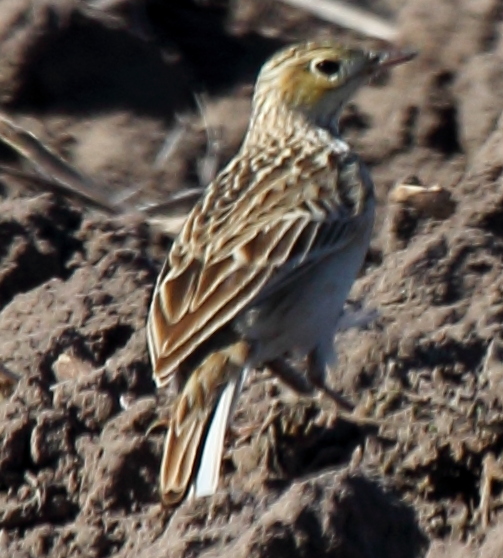
Striped Pipit
Anthus lineiventris
Order: Passeriformes / Family: Motacillidae

Wikimedia Commons
About the Striped Pipit
The Striped Pipit, Anthus lineiventris, is a medium-sized passerine bird belonging to the family Motacillidae. This bird is predominantly found in sub-Saharan Africa, where it inhabits a variety of regions and ecosystems. Known for its strikingly streaked appearance, the Striped Pipit is a captivating presence in the wild. Its natural habitat includes open woodlands, savannas, and areas with scattered thickets, which provide ample opportunities for foraging and nesting. Often seen perched on rocks or low branches, this bird is well-adapted to its environment. The significance of the Striped Pipit within its ecosystem cannot be understated. As an insectivore, it plays a crucial role in controlling insect populations, thereby maintaining ecological balance. During the breeding season, which varies by region, the Striped Pipit engages in complex courtship displays, often involving song and flight. The bird's melodious song, delivered from a high perch or during an aerial display, is a characteristic feature that aids in territorial defense and mate attraction. Ecologically, the Striped Pipit's presence indicates a healthy and functioning ecosystem, as it thrives in undisturbed habitats. Throughout the year, the Striped Pipit adapts its behavior to the changing seasons. In regions with pronounced wet and dry seasons, the bird adjusts its foraging patterns and may migrate locally to find suitable feeding grounds. During the breeding season, pairs become highly territorial and defend their chosen nesting site vigorously. Outside of the breeding period, the Striped Pipit may form small groups, although it tends to be more solitary compared to other pipit species. This adaptability to different environmental conditions is a testament to the bird's resilience and ability to thrive across a range of habitats.
The Striped Pipit belongs to the family Motacillidae, within the order Passeriformes. These birds typically live typically 4-6 years, with a maximum recorded of 9 years..
How to Identify a Striped Pipit
The Striped Pipit is characterized by its medium size, measuring around 19 cm in length. Its plumage features a notable brownish base color with prominent dark streaks running down the back and flanks, giving it a striped appearance. The underparts are paler, with fine streaking that provides camouflage in its natural habitat. The bird's head is marked by a subtle, buff-colored supercilium above the eye, contrasting with its darker crown and nape. Adults exhibit similar plumage regardless of sex, making differentiation between males and females difficult by appearance alone. Juveniles resemble adults but tend to have more pronounced streaking and a slightly duller overall coloration. In flight, the Striped Pipit reveals its distinctive long tail and pointed wings, which aid in identification. Its flight is undulating, characterized by a series of rapid wingbeats followed by short glides. When perched, the bird often adopts an upright posture, displaying its streaked breast and flanks. Although there are other pipit species with similar characteristics, the Striped Pipit's combination of size, streaking pattern, and habitat preference helps distinguish it from its relatives.
Having trouble telling birds apart? Upload a photo to our bird identification tool for an instant species match.
Striped Pipit Habitat and Range
Preferred Habitat
The Striped Pipit predominantly inhabits open woodlands and savannas, particularly those interspersed with rocky outcrops and scattered trees. These environments provide the bird with suitable perching and nesting sites, as well as abundant insect prey. It is often found at elevations ranging from sea level to 2,000 meters, though it prefers areas that offer some degree of cover, such as thickets or low shrubs. Seasonal changes in habitat use are evident, with the bird moving to more open areas during the breeding season to facilitate display and nesting. While it is less commonly observed in urban environments, the Striped Pipit can occasionally be found in rural areas where natural habitats are preserved.
Geographic Range
The Striped Pipit is native to sub-Saharan Africa, with a distribution that spans several countries, including South Africa, Zimbabwe, Botswana, and Namibia. It is most commonly found in areas where suitable habitats, such as open woodlands and savannas, are available. The bird does not undertake long-distance migrations but may engage in local movements to follow food availability and breeding conditions. In regions like the Drakensberg Mountains of South Africa, it is a resident species, maintaining relatively stable populations throughout the year. Population density tends to be higher in regions where habitat conditions are optimal, providing ample resources for feeding and breeding.
Want to know which birds visit your area? Browse our backyard birds by location guides for region-specific species lists.
What Does the Striped Pipit Eat?
The diet of the Striped Pipit primarily consists of insects, which it skillfully captures through a combination of ground foraging and aerial pursuits. Its diet includes ants, beetles, grasshoppers, and caterpillars, which provide essential nutrients for energy and growth. During the wet season, when insect activity peaks, the Striped Pipit takes advantage of the abundance of prey, often seen actively hunting throughout the day. In addition to insects, it consumes small seeds and plant material, particularly during periods of lower insect availability. The bird employs a methodical foraging technique, walking slowly on the ground while scanning for movements, then quickly darting forward to seize its prey.
Striped Pipit Behavior and Social Structure
The Striped Pipit exhibits a range of behaviors that are integral to its survival and reproduction. During the breeding season, males perform elaborate song displays to attract mates and establish territories. These displays often occur from elevated perches, such as rocks or tree branches, where the bird sings a series of melodious phrases. Territorial disputes are common during this time, with males engaging in aerial chases and vocal duels. Outside the breeding season, the Striped Pipit is generally solitary, although it may form loose groups when food is plentiful. The bird is diurnal, active primarily during daylight hours when it forages for insects. Its response to predators includes a combination of vocal alarms and evasive flight, often retreating to dense cover. The Striped Pipit's daily activity pattern involves periods of active foraging interspersed with rest and preening, ensuring that it maintains its plumage in optimal condition.
Striped Pipit Nesting and Reproduction
The Striped Pipit constructs its nest on the ground, typically hidden among grass tussocks or under low shrubs. The nest is a shallow cup made from dry grass, leaves, and twigs, providing camouflage and protection for the eggs. A typical clutch consists of 2-4 eggs, which are incubated by the female for about 14 days. During this period, the male assists by providing food and defending the territory. After hatching, the chicks remain in the nest for approximately 14-16 days before fledging. Both parents share the responsibility of feeding and caring for the young, ensuring they receive a steady supply of insects. The Striped Pipit generally produces one brood per year, although favorable conditions may allow for a second brood.
Striped Pipit Sounds and Vocalizations
The primary song of the Striped Pipit is a melodious sequence of clear, rising and falling notes, often delivered from a high perch or during flight. This song serves to establish territory and attract a mate, with its rhythm and pitch varying slightly between individuals. In addition to its song, the Striped Pipit produces a variety of call notes, including a soft 'tseep' used in communication between mates and a harsher alarm call when predators are nearby. During the dawn chorus, the bird's song is most prominent, breaking the silence of the early morning with its distinctive melody.
Interesting Facts About the Striped Pipit
- 1The Striped Pipit can be found at elevations up to 2,000 meters, showcasing its adaptability to diverse environments.
- 2Despite its solitary nature, the Striped Pipit may form small, loose groups when food resources are plentiful.
- 3The bird's song can be heard over long distances, making it a key tool for territory establishment.
- 4Striped Pipits are known to adjust their foraging strategies based on seasonal insect availability.
- 5A typical Striped Pipit nest is well-camouflaged among grass and foliage, protecting it from predators.
- 6The Striped Pipit's diet is primarily insectivorous, but it will consume seeds during lean times.
- 7The duration of the Striped Pipit's song display can vary, often extending for several minutes.
Striped Pipit Conservation Status
The Striped Pipit is currently listed as Least Concern on the IUCN Red List, reflecting its relatively stable population across its range. However, habitat loss due to agricultural expansion and deforestation poses a significant threat to local populations. Conservation efforts focus on preserving natural habitats and promoting sustainable land use practices. Historical population changes have been relatively minor, although increased human activity in certain regions has led to localized declines. Continued monitoring and habitat protection are crucial to ensuring the long-term survival of this species.