
Sumba Buttonquail
Turnix everetti
Order: Charadriiformes / Family: Turnicidae
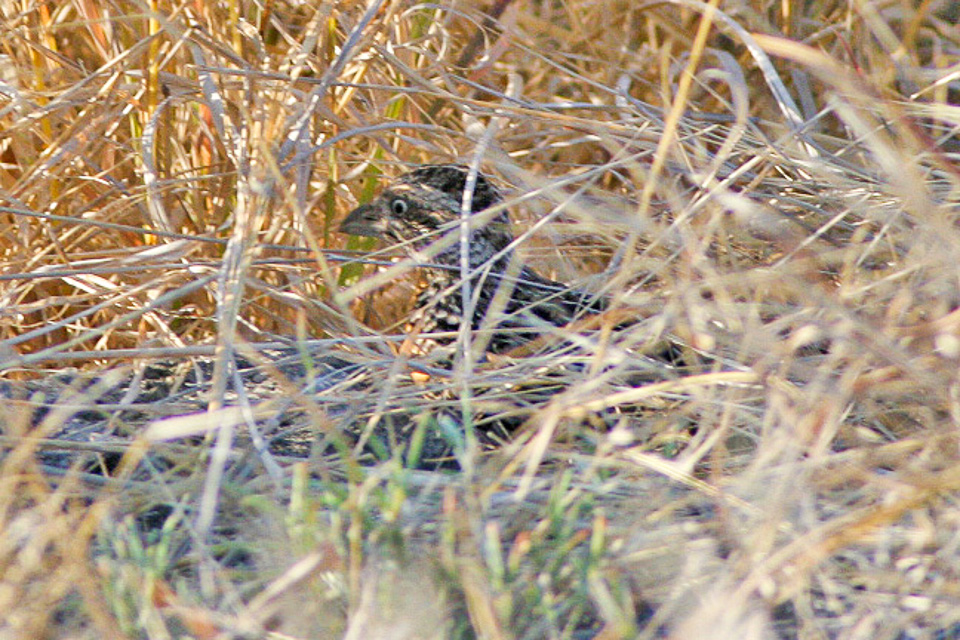
Wikimedia Commons
About the Sumba Buttonquail
The Sumba Buttonquail, scientifically known as Turnix everetti, inhabits the island of Sumba in Indonesia. This elusive bird belongs to the family Turnicidae and is a part of the order Charadriiformes. Its presence is significant as it highlights the unique biodiversity of Sumba, an area known for its endemic species. The Sumba Buttonquail prefers dry, grassy habitats, which provide both cover and foraging opportunities. Throughout the year, these birds remain largely sedentary, focusing their activities on small home ranges. The ecological role of the Sumba Buttonquail includes seed dispersal and invertebrate population control, making them integral to the maintenance of their ecosystem. Seasonal behaviors are relatively understated in this species due to their resident nature. However, during the breeding season, which typically aligns with the island's dry season, they exhibit increased territorial behaviors and vocalizations. Unlike many birds, the Sumba Buttonquail does not undertake long migrations. Instead, it adapts to seasonal changes in resource availability by shifting its foraging habits slightly within its confined range. The bird's survival underscores the fragility of Sumba's ecosystems, which are under threat from human activities such as agriculture and deforestation. Understanding the Sumba Buttonquail's lifestyle and habitat requirements helps conservationists develop targeted strategies to protect not only this species but also the broader ecological community on Sumba.
The Sumba Buttonquail belongs to the family Turnicidae, within the order Charadriiformes. These birds typically live average 3-4 years, with a max recorded of 6 years..
How to Identify a Sumba Buttonquail
The Sumba Buttonquail is a small, cryptically colored bird that often goes unnoticed due to its secretive nature and camouflaged plumage. Adult Sumba Buttonquails feature a mottled brown and gray appearance with intricate patterns that help them blend into the dry, grassy terrains they inhabit. The females are slightly larger and more vibrant than males, with richer chestnut tones on the breast. Juvenile Sumba Buttonquails resemble adults but display a duller coloration, lacking the distinct chestnut hues of mature females. This sexual dimorphism is subtle but noticeable upon closer examination. When observing in the field, the Sumba Buttonquail's distinctive ground-dwelling behavior, coupled with its characteristic short, rounded wings and rapid, low flight, aids in identification. Unlike similar species, the Sumba Buttonquail rarely perches in open view, preferring to remain under cover. Its flight silhouette is compact, with quick wingbeats and a tendency to drop back into cover quickly after being flushed. These field marks, combined with its habitat preferences, help differentiate it from other buttonquail species that might share its range.
Having trouble telling birds apart? Upload a photo to our bird identification tool for an instant species match.
Sumba Buttonquail Habitat and Range
Preferred Habitat
The Sumba Buttonquail is predominantly found in dry, open grasslands and scrublands on the island of Sumba. These habitats are typically characterized by sparse vegetation and a mix of grasses and low shrubs, providing both cover and abundant foraging opportunities. The bird is usually found at low to mid-elevations, where these habitat conditions prevail. Seasonal habitat shifts are minimal, given the species' non-migratory nature, but they may adjust their microhabitats slightly in response to changes in vegetation cover throughout the year. The Sumba Buttonquail tends to avoid urban areas, preferring the relative tranquility and resources of rural settings. Conservation of their preferred habitats is crucial, as these areas face threats from agricultural expansion and habitat degradation.
Geographic Range
The Sumba Buttonquail is endemic to Sumba, an island in the Lesser Sunda Islands of Indonesia. This geographic specificity means that their entire range is confined to this single island, making them particularly vulnerable to habitat changes and human activities. Unlike many bird species with extensive migration corridors, the Sumba Buttonquail remains on the island year-round. Within Sumba, their distribution is patchy, with population density hotspots corresponding to areas of suitable habitat, primarily in the central and eastern parts of the island. These regions provide the necessary conditions for foraging and breeding, supporting the bird's relatively stable, albeit limited, population.
Want to know which birds visit your area? Browse our backyard birds by location guides for region-specific species lists.
What Does the Sumba Buttonquail Eat?
The diet of the Sumba Buttonquail primarily consists of seeds and small invertebrates. They forage by scratching at the ground, using their feet to uncover various prey items hidden beneath the surface. This foraging technique allows them to exploit a range of food sources, including insects, spiders, and other small arthropods. During the dry season, when insect availability may decline, seeds become a more prominent component of their diet. The size of prey varies, but the birds typically target small to medium-sized invertebrates that they can easily handle. Their feeding schedule is largely dictated by the availability of food, often foraging during the cooler parts of the day such as early morning and late afternoon.
Sumba Buttonquail Behavior and Social Structure
The Sumba Buttonquail exhibits solitary or small group behaviors, though they rarely form large flocks. They are ground dwellers, spending most of their time foraging or resting under cover. Territorial behavior intensifies during the breeding season, with males vocalizing to establish dominance and attract mates. Courtship displays are subtle, often involving soft calls and brief chases. When threatened by predators, the Sumba Buttonquail relies on its cryptic plumage to remain undetected, freezing in place or quietly retreating into dense vegetation. Their daily activity pattern includes periods of active foraging interspersed with rest. Unlike many avian species, the Sumba Buttonquail does not engage in extensive migrations, instead remaining within its established territory throughout the year.
Sumba Buttonquail Nesting and Reproduction
The Sumba Buttonquail constructs its nest on the ground, typically hidden within dense grass or under shrubs. The nest is a simple scrape in the earth, lined with dried grass and leaves to provide insulation and camouflage. Preferred nesting locations are well-concealed to protect against predators. Clutch size varies but usually consists of 2-4 eggs. Both parents share incubation duties, which last approximately 16-18 days. Once hatched, the chicks are precocial, leaving the nest shortly after hatching and relying on their parents for guidance and protection. Fledging occurs quickly, often within two to three weeks, allowing the parents to potentially raise multiple broods per year if conditions are favorable.
Sumba Buttonquail Sounds and Vocalizations
The vocalizations of the Sumba Buttonquail are subtle yet distinctive. The primary song, often delivered by males during the breeding season, consists of a series of soft, rhythmic whistles. These sounds serve both territorial and mate-attracting purposes. Call notes are generally quiet and include a variety of clucks and purrs, used for communication between mates and signaling the presence of predators. Alarm calls tend to be sharper and more insistent, providing an alert to nearby buttonquails. Despite their relatively quiet nature, the Sumba Buttonquail participates in the dawn chorus, adding a gentle presence to the early morning soundscape.
Interesting Facts About the Sumba Buttonquail
- 1The Sumba Buttonquail is one of only a handful of bird species that are exclusively found on the island of Sumba, highlighting its unique ecological role.
- 2Despite their name, buttonquails are not true quails and belong to a separate family, Turnicidae, which is more closely related to shorebirds.
- 3Females of the Sumba Buttonquail species are more vibrant than males, a rare trait in the avian world where males often bear showier plumage.
- 4Buttonquails have a fascinating reproductive role reversal; females are more dominant and often initiate courtship.
- 5Unlike many birds that migrate, the Sumba Buttonquail remains on its island home year-round, adapting to seasonal changes in resource availability.
- 6Their cryptic coloration and ground-dwelling behavior make the Sumba Buttonquail extremely difficult to spot in the wild.
- 7The Sumba Buttonquail's preference for remote, undisturbed habitats makes them an indicator species for the health of Sumba's grasslands.
Sumba Buttonquail Conservation Status
The IUCN currently lists the Sumba Buttonquail as Near Threatened, with population trends showing a slow decline. The primary threats to their survival include habitat loss due to agricultural expansion and human encroachment. Conservation efforts focus on preserving existing grasslands and promoting sustainable land management practices. Historical records indicate a larger, more widespread population before significant human settlement on Sumba. Continued conservation initiatives aim to stabilize and potentially increase their numbers by protecting critical habitats and raising awareness about their ecological importance.
