
Swainson's Flycatcher
Myiarchus swainsoni
Order: Passeriformes / Family: Tyrannidae
Wikimedia Commons
About the Swainson's Flycatcher
The Swainson's Flycatcher, scientifically known as Myiarchus swainsoni, is a medium-sized passerine bird that belongs to the Tyrannidae family, commonly known as tyrant flycatchers. This bird is named after the renowned English ornithologist and artist William Swainson. Its range extends primarily across South America, where it occupies a variety of forested and semi-open habitats. The bird is known for its adaptability to different environments, from the tropical rainforests of the Amazon basin to the subtropical woodlands of eastern Brazil, Paraguay, and Argentina. Swainson's Flycatcher plays a critical ecological role as an insectivore, helping to control insect populations across its range. It is a partial migrant, with some populations moving seasonally to exploit changing food resources or to breed. During the breeding season, which occurs primarily in the austral spring and summer, they exhibit territorial behaviors and engage in courtship displays. This species is often observed in small family groups or solitary outside of the breeding season. Swainson's Flycatcher showcases a remarkable adaptability to diverse environmental conditions, which has allowed it to thrive across a broad geographic range. Its presence in both pristine and disturbed habitats highlights its ecological significance as a resilient species. The flycatcher provides an essential service in pest control, preying on various insects that could otherwise impact vegetation health. Its role in the ecosystem underscores the interconnectedness of species within their habitats, emphasizing the importance of conservation efforts to maintain biodiversity. Furthermore, Swainson's Flycatcher serves as a bioindicator for the health of the ecosystems it inhabits, offering insights into the impacts of environmental changes on avian communities.
The Swainson's Flycatcher belongs to the family Tyrannidae, within the order Passeriformes. These birds typically live average lifespan is around 3-4 years, with some individuals reaching up to 6 years..
How to Identify a Swainson's Flycatcher
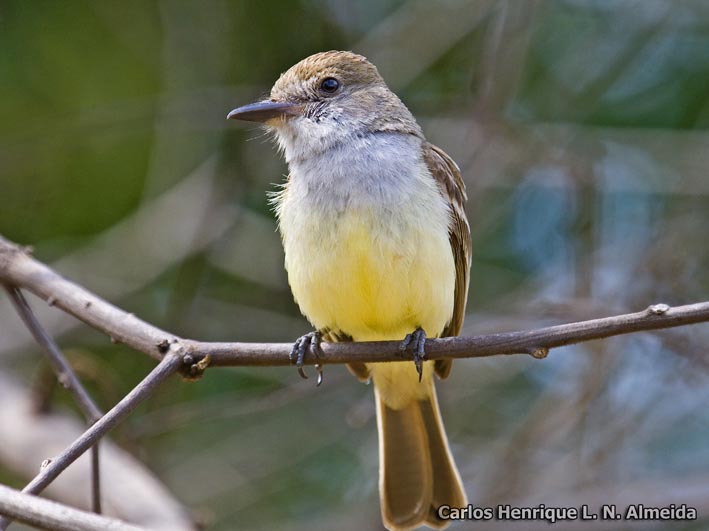
Swainson's Flycatcher exhibits a distinctive plumage that aids in its identification. Adults display olive-brown upperparts with a contrasting bright yellow belly, a key characteristic that sets them apart from similar species. The throat and breast are typically pale gray, blending into the yellow of the underparts. The wings feature two contrasting wing bars, adding to their identification markers. Juveniles resemble adults but may have a slightly duller appearance, with less pronounced wing bars and a more muted yellow on the belly. There is minimal sexual dimorphism, as males and females appear similar in plumage. In flight, Swainson's Flycatcher presents a characteristic silhouette with a relatively short tail and broad wings. Its perching posture is upright, often with a slight forward lean, a typical stance for tyrant flycatchers. When compared to other Myiarchus species, the Swainson's Flycatcher is distinguishable by its size, noticeably smaller than the Dusky-capped Flycatcher but comparable in size to the Ash-throated Flycatcher. Its vocalizations also aid in differentiation, as its calls are distinct from those of its relatives.
Having trouble telling birds apart? Upload a photo to our bird identification tool for an instant species match.
Swainson's Flycatcher Habitat and Range
Preferred Habitat
Swainson's Flycatcher thrives in a variety of habitats, primarily favoring forest edges, open woodlands, and secondary growth forests. It is commonly found at elevations ranging from sea level to 2,000 meters. In the Amazon rainforest, it occupies the understory and mid-story layers, capitalizing on the rich insect diversity. In more open regions such as the cerrado of Brazil and the chaco of Argentina, it utilizes the sparse tree cover and shrubs for hunting and nesting. Seasonal habitat shifts occur as the flycatcher moves to more temperate areas during colder months, demonstrating its adaptability. While it is more abundant in rural and semi-natural environments, it occasionally ventures into urban parks and gardens, particularly where suitable tree cover exists.
Geographic Range
Swainson's Flycatcher boasts a broad range across South America, with its breeding grounds scattered throughout Brazil, Bolivia, Paraguay, and northern Argentina. During the austral winter, populations from southern regions migrate northward, reaching into parts of Colombia and Venezuela. Its migration corridors are not as extensive as those of long-distance migratory species, but they do encompass several ecological zones. The bird is notably abundant in northeastern Brazil, particularly in the Atlantic Forest biome, where it benefits from the diverse habitats. Population densities are generally higher in regions with a mix of forest and open areas, offering ample foraging opportunities.
Want to know which birds visit your area? Browse our backyard birds by location guides for region-specific species lists.
What Does the Swainson's Flycatcher Eat?
The diet of Swainson's Flycatcher primarily consists of insects, which it captures through a technique known as sallying. From a perch, the bird launches into the air to snatch flying insects, demonstrating remarkable agility. Common prey includes beetles, flies, and caterpillars. During the austral summer, when insect abundance peaks, the flycatcher may also consume small fruits and berries, supplementing its diet. This dietary flexibility allows it to exploit available resources efficiently. Foraging typically occurs during the cooler parts of the day, with peak activity in the early morning and late afternoon.
Swainson's Flycatcher Behavior and Social Structure
Swainson's Flycatcher exhibits a range of behaviors that reflect both its social structure and its interactions with the environment. It is generally solitary or found in pairs during the breeding season, defending its territory vigorously against intruders. Courtship involves a series of displays that include wing flicking and vocalizations. These displays serve to strengthen pair bonds and establish breeding rights. Outside the breeding season, the flycatcher is more tolerant of conspecifics, occasionally forming loose flocks. Its response to predators involves alarm calls and evasive maneuvers, indicating a high level of awareness and adaptability. Daily patterns include periods of active foraging interspersed with rest during the hottest parts of the day.
Swainson's Flycatcher Nesting and Reproduction
Swainson's Flycatcher constructs its nest in tree cavities or occasionally uses abandoned woodpecker holes. The nest consists of a loosely organized cup made of grasses, leaves, and feathers, providing a soft lining for the eggs. Preferred nesting sites are typically located between 2 to 10 meters above ground. The clutch size ranges from two to four eggs, with both parents sharing incubation duties, which last approximately 14 days. After hatching, the young are altricial and require continuous care and feeding. The fledging period occurs about two weeks post-hatching, with the parents continuing to provide support until the juveniles gain independence. Generally, the species raises one brood per year, though favorable conditions may allow for a second.
Swainson's Flycatcher Sounds and Vocalizations
The primary song of Swainson's Flycatcher is a series of melodious whistles, often described as a clear 'whee-hee-hee.' This rhythmic and repetitive song serves both to establish territory and attract mates. Additionally, the flycatcher emits a variety of call notes, including a sharp 'wit' used during interactions with other birds. Alarm calls are harsher and more abrupt, likely to warn of approaching predators. During the dawn chorus, the flycatcher's voice contributes to the symphony of sounds, creating a vibrant soundscape in its habitat.
Interesting Facts About the Swainson's Flycatcher
- 1Swainson's Flycatcher was first described by the British naturalist John Gould in 1839.
- 2This flycatcher can adapt to a range of altitudes, from sea level up to 2,000 meters.
- 3Swainson's Flycatcher's sallying technique is a highly efficient method for catching flying insects.
- 4Despite its wide range, Swainson's Flycatcher remains relatively understudied compared to other Myiarchus species.
- 5The species' name honors William Swainson, a significant figure in bird illustration and taxonomy.
- 6Swainson's Flycatcher's yellow belly provides camouflage among the sunlit foliage of its forest habitat.
- 7During migration, Swainson's Flycatcher travels shorter distances than many other migratory birds.
Swainson's Flycatcher Conservation Status
Swainson's Flycatcher is classified as Least Concern by the IUCN due to its widespread distribution and stable population trends. However, habitat degradation and deforestation in parts of its range pose significant threats. Conservation efforts focus on preserving critical habitats and promoting sustainable land use practices. Historical population changes have been influenced by habitat loss, but the species' adaptability has mitigated some impacts. Continuous monitoring and habitat restoration are essential to ensure the long-term survival of this and related species.
Other Tyrannidae Species


Birds Similar to the Swainson's Flycatcher
These species are often confused with the Swainson's Flycatcher due to similar appearance or overlapping range.

