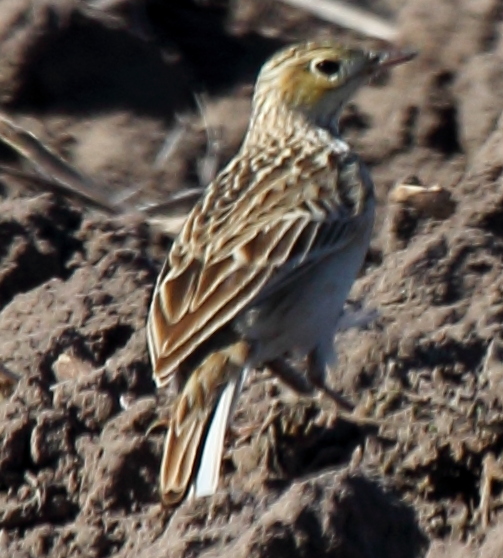
Tawny Pipit
Anthus campestris
Order: Passeriformes / Family: Motacillidae

Wikimedia Commons
About the Tawny Pipit
The Tawny Pipit, scientifically known as Anthus campestris, is a sleek and agile bird that thrives in open habitats across a wide range of regions. This species belongs to the family Motacillidae, which includes the wagtails and pipits, known for their distinctive tail wagging behavior. Tawny Pipits are primarily found in grasslands, semi-arid regions, and steppes, exhibiting a strong preference for dry, open areas with sparse vegetation. Their presence is notably widespread across Europe, northern Africa, and parts of Asia, reflecting their adaptability to a variety of landscapes.
Ecologically, the Tawny Pipit plays a vital role as both predator and prey. Primarily insectivorous, it helps control insect populations, benefiting the ecosystem by maintaining a balance in the food web. During the breeding season, which occurs from late April to July in Europe, these birds contribute to the biodiversity of their habitats by establishing territories and engaging in courtship displays. Their territorial nature ensures diverse avian communities, as they often compete with other ground-nesting birds.
Throughout their migratory journeys, Tawny Pipits exhibit remarkable resilience, traveling thousands of kilometers between their breeding grounds in Europe and their wintering areas in Africa and South Asia. This migration showcases their adaptability and endurance, as they navigate various environmental challenges. The Tawny Pipit's seasonal behaviors, such as migration and breeding, emphasize its role as a dynamic component of its ecosystem. These behaviors not only facilitate gene flow across populations but also influence the structure and function of the habitats they occupy.
The Tawny Pipit belongs to the family Motacillidae, within the order Passeriformes. These birds typically live average 5 years with a maximum recorded of 8 years.
How to Identify a Tawny Pipit
Tawny Pipits are medium-sized birds, characterized by their sandy-brown upperparts and pale underparts, which provide excellent camouflage against their typical grassland and desert backgrounds. Adults display subtle streaking on the back, with a pale supercilium that is more pronounced during the breeding season. The breast is lightly streaked, a key feature that distinguishes them from similar species.
Juvenile Tawny Pipits resemble adults but often show more pronounced streaking on the breast and back, which fades as they mature. There is little sexual dimorphism in this species, with males and females appearing similar in plumage and size. However, males may exhibit slightly bolder markings during the breeding season.
In flight, the Tawny Pipit displays a distinctive silhouette with its long tail and pointed wings. Its flight is characterized by a series of rapid wingbeats followed by short glides. When perched, it often adopts an upright posture, frequently flicking its tail. This characteristic behavior, combined with its overall coloration, helps birdwatchers identify the Tawny Pipit in its natural habitat.
Having trouble telling birds apart? Upload a photo to our bird identification tool for an instant species match.
Tawny Pipit Habitat and Range
Preferred Habitat
Tawny Pipits predominantly inhabit open grasslands, steppes, and semi-arid regions, favoring areas with sparse vegetation and bare ground. They can be found in elevations ranging from lowland plains to high-altitude steppes, demonstrating their adaptability to various landscapes. In Europe, they are commonly observed in agricultural fields and fallow lands, while in Africa and Asia, they extend into desert fringes and savannas.
During migration, Tawny Pipits may also be spotted in coastal dunes and along riverbanks, though they rarely venture into dense forests or heavily urbanized areas. Their preference for open spaces makes them more common in rural regions than urban environments, although they may occasionally be seen in parklands and large gardens.
Geographic Range
The Tawny Pipit breeds across a broad range, extending from western Europe, including Spain, France, and Italy, through central and eastern Europe, into Russia and parts of Central Asia. Countries like Germany and Poland also host breeding populations.
During winter, these birds migrate to warmer climates, with a significant number traveling to northern Africa, including Morocco, Algeria, and Egypt, as well as the Middle East and the Indian subcontinent. Their migration corridors pass through the Mediterranean, where they can be observed in transit.
Population densities vary, with higher concentrations in the steppes of Kazakhstan and other Central Asian regions. In Europe, they are more sporadically distributed, favoring localities that provide suitable breeding habitats. The migratory nature of the Tawny Pipit ensures its wide distribution across multiple continents.
Want to know which birds visit your area? Browse our backyard birds by location guides for region-specific species lists.
What Does the Tawny Pipit Eat?
The Tawny Pipit's diet primarily consists of insects and other invertebrates, making it an essential player in controlling pest populations. During the breeding season, it feeds on a variety of insects, including beetles, grasshoppers, and caterpillars. This insectivorous diet supports the high energy demands of breeding and raising young.
In autumn and winter, when insects are less abundant, the Tawny Pipit supplements its diet with seeds and small berries. This dietary flexibility allows it to thrive in diverse environments, from arid steppes to cultivated fields.
Foraging takes place mainly on the ground, where the Tawny Pipit uses a combination of walking and short flights to capture prey. It often employs a stalking approach, pausing intermittently to scan for movement before darting forward to seize its target. This methodical feeding behavior reflects its adaptation to open, sparsely vegetated habitats.
Tawny Pipit Behavior and Social Structure
The Tawny Pipit exhibits a range of behaviors that emphasize its adaptability to open habitats. It is primarily solitary or found in small family groups outside the breeding season, but during migration, it may form loose flocks with other pipit species.
Territorial behavior is pronounced during the breeding season, with males establishing and defending territories through song and display flights. These displays involve soaring into the air with rapid wingbeats, followed by a glide back to the ground, often accompanied by their characteristic song.
Courtship involves males performing aerial displays and offering food to females as part of the pair-bonding process. Once mated, the pair remains together throughout the breeding season, sharing responsibilities such as nest building and chick rearing.
In response to predators, Tawny Pipits rely on their cryptic plumage for concealment. They often freeze or crouch low to the ground to avoid detection, a behavior that reduces predation risk in their exposed habitats.
Tawny Pipit Nesting and Reproduction
Tawny Pipits construct their nests on the ground, often concealed among tufts of grass or small shrubs. The nest is typically a shallow cup made of dry grass, roots, and occasionally lined with softer materials such as feathers or hair.
Clutch size generally ranges from 4 to 6 eggs, which are pale with variable dark speckles. Both parents share incubation duties, which last about 12 to 14 days. Once hatched, the chicks are altricial, requiring significant parental care and feeding.
Fledging occurs approximately 12 to 15 days after hatching, at which point the young birds begin to explore their surroundings under the watchful eyes of their parents. Depending on environmental conditions, Tawny Pipits may raise one or two broods within a breeding season, contributing to their reproductive success.
Tawny Pipit Sounds and Vocalizations
The Tawny Pipit's song is a series of soft, melodious trills and whistles, often delivered from an elevated perch or during flight displays. The rhythm is steady and the pitch varies slightly, creating a pleasant, rolling quality.
Call notes are simple and monosyllabic, often described as a soft 'tsip' or 'chup,' used for communication between mates or signaling alarm. During the dawn chorus, the Tawny Pipit's song is more frequent, contributing to the acoustic landscape of its habitat.
Alarm calls are more abrupt and sharp, serving to alert other birds of potential threats, and are particularly noticeable during the breeding season when nests are at risk.
Interesting Facts About the Tawny Pipit
- 1The Tawny Pipit is capable of covering distances exceeding 3,000 kilometers during migration, showcasing its endurance.
- 2Despite its nondescript appearance, the Tawny Pipit can be distinguished from similar species by its distinctive call and flight pattern.
- 3Tawny Pipits often share their habitats with larger ground-nesting birds, such as the Eurasian Skylark, with which they compete for territory.
- 4This species' preference for open, dry habitats makes it an indicator species for the health of grassland ecosystems.
- 5Tawny Pipits have been recorded at altitudes up to 2,500 meters in parts of Central Asia, demonstrating their adaptability to varied environments.
Tawny Pipit Conservation Status
Currently, the Tawny Pipit is listed as Least Concern by the IUCN, with stable population trends across most of its range. However, localized declines have been noted in parts of western Europe, attributed to habitat loss and agricultural intensification. Conservation efforts focus on preserving traditional grassland habitats and promoting sustainable agricultural practices. In some regions, habitat restoration projects aim to recreate the open landscapes that support breeding populations. Historically, the population of the Tawny Pipit has fluctuated with changes in land use, underscoring the importance of habitat conservation in ensuring its continued presence across its range.