
Heath Hen
Tetrao marilandicus
Order: Galliformes / Family: Phasianidae
Wikimedia Commons
About the Heath Hen
The Heath Hen (Tetrao marilandicus) was a remarkable member of the Phasianidae family, native to the eastern United States. This bird once thrived in the scrubby heathlands, particularly on the island of Martha's Vineyard, Massachusetts. It played a critical role in its ecosystem as a seed disperser and prey for local predators. The Heath Hen's existence highlighted the delicate balance of its habitat, where it was often seen in open grasslands and coastal heaths. Historically, the species was significant as a regional food source and a cultural symbol for the local Native American tribes. The bird was also a subject of early conservation awareness, marking a pivotal point in understanding human impact on wildlife. In spring, males performed elaborate displays, puffing up their chest feathers and emitting deep, resonating calls that could be heard over long distances. These displays were not only a part of their mating ritual but also served to establish territory. However, the Heath Hen struggled with habitat loss, hunting, and predation by introduced species, which led to its decline. The last known Heath Hen died in 1932. Its extinction is a poignant reminder of the consequences of habitat destruction and the importance of conservation efforts. The bird's ecological role included maintaining the balance of the heathland ecosystem, contributing to nutrient cycling and plant seed dispersion. The loss of the Heath Hen has left a lasting impact on the biodiversity of its native regions.
The Heath Hen belongs to the family Phasianidae, within the order Galliformes. These birds typically live average 4-5 years in the wild..
How to Identify a Heath Hen
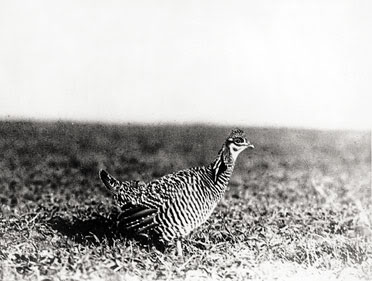
The Heath Hen was a medium-sized bird, closely resembling the Greater Prairie-Chicken in appearance. Adult Heath Hens displayed a mottled brown plumage with a slight orange tint on the neck feathers, which was more pronounced during the breeding season. Males and females were similar in appearance, although males were slightly larger, with a more pronounced neck ruff and air sac, used in their distinctive booming calls. Juveniles were paler and less mottled than adults, making them harder to distinguish from other ground-dwelling birds. Among similar species, the Heath Hen was often confused with the Greater Prairie-Chicken. However, the Heath Hen had a slightly more subdued coloration and lacked the prominent neck sacs of its relative. In flight, the Heath Hen was characterized by its strong, direct wing beats and a rounded silhouette. When perched, it maintained a low profile, often blending seamlessly into the heathland vegetation.
Having trouble telling birds apart? Upload a photo to our bird identification tool for an instant species match.
Heath Hen Habitat and Range
Preferred Habitat
The Heath Hen's preferred habitat included open grasslands and coastal heathlands, predominantly found in the northeastern United States. It thrived in areas with low vegetation, where it could forage for seeds and insects. Historically, it inhabited regions such as Long Island, New York, and Martha's Vineyard, Massachusetts. These areas provided the ideal environment for nesting and feeding. The Heath Hen favored elevations near sea level, as these locations offered ample space and food resources. Unlike many other birds, the Heath Hen did not migrate seasonally but remained in its habitat year-round. Its presence in urban areas was minimal, as it required expansive, natural grasslands and heathlands to thrive.
Geographic Range
The range of the Heath Hen was once extensive, covering much of the northeastern United States. It primarily bred in states like New York, Connecticut, and Massachusetts. The most significant population, however, was found on Martha's Vineyard, where conservation efforts were focused in the early 20th century. The Heath Hen was non-migratory, spending its entire life cycle within its breeding range. Before its decline, the bird was common in its preferred heathland and grassland habitats, with population density hotspots on islands and coastal regions. As human settlements expanded, the Heath Hen's range diminished significantly, leading to its eventual extinction.
Want to know which birds visit your area? Browse our backyard birds by location guides for region-specific species lists.
What Does the Heath Hen Eat?
The Heath Hen's diet predominantly consisted of seeds, berries, and insects. During the spring and summer months, it foraged primarily on the ground, seeking out a variety of seeds from grasses and heathland shrubs. Insects, including beetles and caterpillars, provided a crucial protein source, especially during the breeding season. In the fall and winter, the bird's diet shifted to include more berries and fallen seeds, relying on the sparse vegetation of the heathlands. The Heath Hen's foraging technique involved scratching at the soil and leaf litter to uncover hidden food sources. Its feeding schedule was most active during the early morning and late afternoon, when temperatures were cooler, and predators were less active.
Heath Hen Behavior and Social Structure
The Heath Hen exhibited fascinating social behaviors, particularly during the breeding season. Males engaged in complex courtship displays, inflating their neck sacs and producing deep, resonating 'booming' calls to attract females and deter rivals. These displays took place on established 'booming grounds,' where multiple males would gather to perform. Territorial behavior was prominent, with males fiercely defending their display areas from intruders. Outside the breeding season, the Heath Hen was more solitary, although small groups occasionally formed for foraging. Its response to predators included remaining motionless to blend into the heathland vegetation or taking sudden flight to escape. Daily activity patterns centered around foraging in the morning and late afternoon, with rest periods during the hotter parts of the day.
Heath Hen Nesting and Reproduction
The Heath Hen's nesting habits were adapted to its heathland environment. Nests were simple depressions on the ground, lined with grass and leaves, often concealed under shrubs or tufts of grass for protection. Clutch sizes ranged from 5 to 10 eggs, with incubation lasting about 24 to 26 days. Only the female incubated the eggs, while the male defended the territory. After hatching, the chicks were precocial, leaving the nest within hours and following the female to forage. Fledging occurred approximately 10 to 12 weeks after hatching. The Heath Hen typically raised one brood per year, although favorable conditions sometimes allowed for a second.
Heath Hen Sounds and Vocalizations
The Heath Hen was best known for its booming calls, produced by males during the breeding season. These calls had a deep, resonating quality, similar to a distant foghorn, and could be heard over a mile away. The rhythm was steady, with a series of low-pitched 'booms' followed by a pause. Call notes included soft clucks and whistles used for communication between mates and with chicks. Alarm calls were sharp and staccato, used to warn others of predators. The dawn chorus of the Heath Hen was a defining feature of its habitat, with calls resonating across the heathlands in the early morning.
Interesting Facts About the Heath Hen
- 1The last known Heath Hen, named "Booming Ben," was seen on Martha's Vineyard until 1932.
- 2Heath Hens were once so abundant that they were a staple food for early American colonists.
- 3During their peak, Heath Hens could be heard from over a mile away during their courtship displays.
- 4The Heath Hen was among the first birds subject to organized conservation efforts in the U.S.
- 5Their extinction led directly to the formation of the Audubon Society's first wildlife sanctuary.
- 6In the 1800s, Heath Hen hunting was banned on Martha's Vineyard, but enforcement proved difficult.
- 7The Heath Hen's booming calls were so distinctive that locals could set their watches by them.
Heath Hen Conservation Status
Despite early conservation efforts, the Heath Hen was declared extinct in 1932. It was listed as Threatened in the early 20th century, with the last population confined to Martha's Vineyard. Major threats included habitat destruction, hunting, and predation by introduced species like feral cats. Conservation efforts attempted to protect its habitat and control predators, but these measures were ultimately unsuccessful. The Heath Hen's decline highlighted the need for more effective conservation strategies and informed future efforts for other species. Its extinction serves as a historical lesson in the need for proactive wildlife management.


