
Transvolcanic Jay
Aphelocoma ultramarina
Order: Passeriformes / Family: Corvidae
Wikimedia Commons
About the Transvolcanic Jay
The Transvolcanic Jay, known scientifically as Aphelocoma ultramarina, is a striking bird native to the highland regions of central Mexico. This member of the Corvidae family is renowned for its vibrant blue plumage, accented by a contrasting white throat and chest. Unlike many of its relatives, the Transvolcanic Jay exhibits a relatively sedentary lifestyle, largely residing within the same geographical area year-round. Its habitat primarily consists of pine-oak and fir forests, often at elevations ranging from 1,800 to 3,000 meters. These birds play a critical ecological role as seed dispersers, particularly for oak and pine species, contributing to forest regeneration and biodiversity.
Transvolcanic Jays are social creatures, often forming small family groups that aid in cooperative breeding. This behavior involves several members of the group assisting in the care of the young, an adaptation that enhances the survival rate of offspring. During the breeding season, which typically spans from March to June, these jays exhibit increased territoriality, defending their chosen nesting sites vigorously against intruders. Outside of breeding, they display a more relaxed social structure, often seen foraging together in loose flocks.
Ecologically, the Transvolcanic Jay is significant not only as a seed disperser but also as a predator of insects and small invertebrates, thus playing a multifaceted role in its environment. Its presence indicates a healthy, functioning ecosystem, as these birds thrive in mature, undisturbed forests. Conservation of their habitat is critical, as deforestation and habitat fragmentation pose serious threats to their populations. Monitoring these jays can provide valuable insights into the health of the montane ecosystems they inhabit.
The Transvolcanic Jay belongs to the family Corvidae, within the order Passeriformes. These birds typically live average 7-10 years with a maximum recorded of 15 years..
How to Identify a Transvolcanic Jay
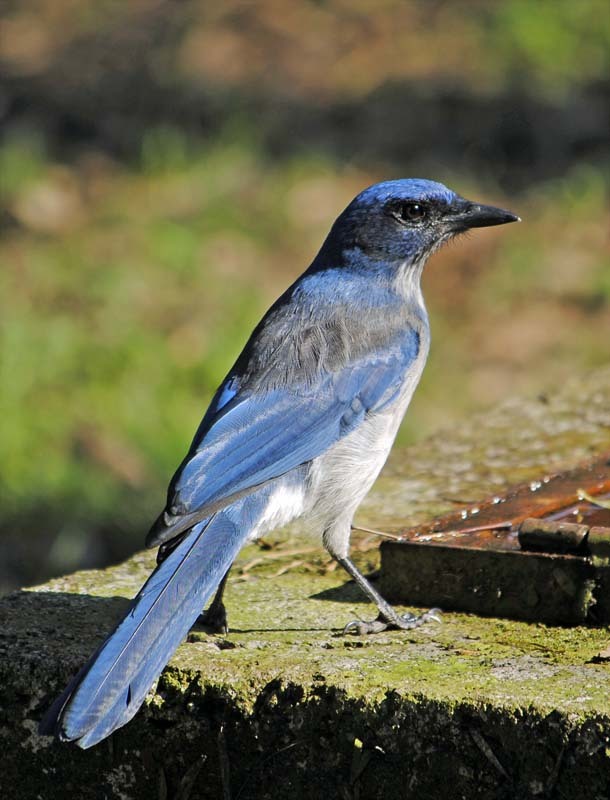
The Transvolcanic Jay is an unmistakable species due to its vivid blue coloration covering most of its body. Adults display a distinctive white throat patch that stands out against their darker blue head and back. This patch is bordered by a subtle black line that adds to their striking appearance. The bird's underparts are generally a lighter grayish-blue, providing a gentle contrast to the more vibrant upper plumage. Juveniles, on the other hand, possess a more muted coloration, with less pronounced white in the throat area and a generally duller overall appearance.
In terms of size, the Transvolcanic Jay is medium-sized for a passerine, measuring about 30-34 cm in length with a wingspan that complements its body size. Males and females exhibit similar plumage, making visual sex differentiation challenging without behavioral context during the breeding season. The bird's silhouette in flight is characterized by broad, rounded wings and a moderately long tail, which aid in its agile maneuvering through forested environments.
While not frequently confused with other species, the Transvolcanic Jay can occasionally be mistaken for the Mexican Jay (Aphelocoma wollweberi), which shares some habitat overlap. However, the latter lacks the stark white throat patch and has a generally more uniform blue coloration. Observers can also note its perching posture, which is typically upright and alert, often accompanied by a curious head tilt as it surveys its surroundings.
Having trouble telling birds apart? Upload a photo to our bird identification tool for an instant species match.
Transvolcanic Jay Habitat and Range
Preferred Habitat
The Transvolcanic Jay inhabits the temperate montane forests of central Mexico, predominantly residing in pine-oak and fir forests. These habitats provide the necessary resources for feeding and nesting, as well as protection from predators. The species typically occupies elevations between 1,800 and 3,000 meters, favoring areas with dense canopy cover and ample underbrush. Within these forests, the jays exploit a variety of microhabitats, including forest edges and clearings where food resources are abundant.
Seasonal shifts in habitat use are relatively minimal, given the bird's non-migratory nature. However, during the breeding season, they may select denser, more secluded areas to construct nests, reducing the risk of predation. In contrast, non-breeding periods see them moving about more freely within their home ranges. While primarily forest dwellers, Transvolcanic Jays occasionally venture into adjacent grasslands or agricultural areas, particularly when foraging for food.
Urban presence is limited, as these birds prefer the tranquility and resources of their natural forest habitats. However, they can occasionally be observed in rural areas that maintain a semblance of their native forest environment, demonstrating some level of adaptability to human-altered landscapes.
Geographic Range
The range of the Transvolcanic Jay is confined to central Mexico, where it is endemic to the Trans-Mexican Volcanic Belt. This region spans several states, including Michoacán, México, Morelos, and Puebla. The bird's distribution is largely centered around the highland areas of these states, where suitable montane forests provide necessary habitat.
During the breeding season, the jays are predominantly found within their established territories in these highland regions. Unlike many bird species, the Transvolcanic Jay does not undertake long-distance migrations. Instead, it exhibits a relatively stable range year-round, relying on the consistent climate and resources of its montane environment.
Population density is highest in areas where mature forests remain intact, and conservation efforts have focused on protecting these key habitats. Unfortunately, deforestation and land-use changes continue to threaten their range, emphasizing the importance of habitat preservation for their ongoing survival.
Want to know which birds visit your area? Browse our backyard birds by location guides for region-specific species lists.
What Does the Transvolcanic Jay Eat?
The diet of the Transvolcanic Jay is diverse, reflecting its adaptability and role as both predator and seed disperser in its ecosystem. Acorns and pine nuts form the core of its diet, particularly during the autumn and winter months when these resources are most abundant. These jays are adept at caching food, a behavior that ensures a steady food supply during leaner times and contributes to seed dispersal.
In addition to seeds, the Transvolcanic Jay consumes a variety of insects and small invertebrates, particularly during the spring and summer when such prey is plentiful. Their foraging technique involves skillful probing and picking through leaf litter and bark, demonstrating a high degree of dexterity and intelligence typical of corvids.
Occasionally, these birds may also take small vertebrates such as lizards or young birds, showcasing their opportunistic feeding habits. They typically feed during daylight hours, with peak activity observed in the early morning and late afternoon when they are most active and the temperature is cooler.
Transvolcanic Jay Behavior and Social Structure
Transvolcanic Jays exhibit complex social behavior, characterized by their formation of small, cohesive family groups. These groups often include several adult birds, many of which participate in cooperative breeding. This involves not only the breeding pair but also other group members who assist in feeding and protecting the young, a strategy that enhances reproductive success.
Territorial behavior becomes pronounced during the breeding season, with jays defending their nesting sites aggressively against intrusions by conspecifics and other potential threats. Outside of this period, their territoriality diminishes, and they are more likely to forage in larger, mixed-species flocks.
Courtship displays among Transvolcanic Jays include mutual preening and food sharing, strengthening pair bonds. Daily activity patterns are diurnal, with peak periods of foraging occurring in the early morning and late afternoon. In response to predators, these jays are known to mob intruders, using loud alarm calls to alert group members and coordinate defensive actions.
Transvolcanic Jay Nesting and Reproduction
The nesting habits of the Transvolcanic Jay are a testament to their cooperative breeding strategy. Nests are typically constructed in the dense foliage of trees, providing concealment from predators. The nest itself is a bulky structure composed of twigs, lined with softer materials such as grasses and feathers to cushion the eggs.
Clutch size generally ranges from three to five eggs, with both parents participating in incubation, which lasts approximately 18-20 days. Fledging occurs about three weeks after hatching, during which time the young are fed and cared for by both parents and other group members. This extended family structure allows for increased survival rates among the young.
Transvolcanic Jays typically raise one brood per year, although conditions may occasionally permit a second. The involvement of multiple adults in the rearing process not only spreads the workload but also helps to protect the young from predation.
Transvolcanic Jay Sounds and Vocalizations
The vocalizations of the Transvolcanic Jay are varied and complex, playing a crucial role in communication among groups. Their primary song consists of a series of harsh, rasping notes delivered in quick succession, often described as 'kraa-kraa-kraa.' This song serves as a territorial declaration and can be heard most prominently during the breeding season.
In addition to their song, these jays produce a range of call notes used to maintain contact with group members. These calls are typically shorter and more melodious than the primary song, serving to coordinate movements and activities within the group. Alarm calls are sharp and piercing, designed to alert others to the presence of predators. These calls often trigger coordinated mobbing behavior, helping to deter potential threats.
During the dawn chorus, the Transvolcanic Jay's vocalizations contribute to the rich soundscape of their montane forest habitats, underscoring their active role in the avian community.
Interesting Facts About the Transvolcanic Jay
- 1Transvolcanic Jays have a wingspan of approximately 50 cm, aiding their agile forest navigation.
- 2These jays are known for their cooperative breeding, a trait shared with only about 9% of bird species worldwide.
- 3The species' name, Aphelocoma ultramarina, reflects its deep blue coloration reminiscent of the sea.
- 4Transvolcanic Jays can live up to 15 years in the wild, a testament to their adaptability and survival skills.
- 5Their ability to cache food is sophisticated, allowing them to remember locations of hidden food items over long periods.
- 6Despite their bright coloration, these jays are skilled at remaining inconspicuous within their forest habitats.
- 7Their diet includes up to 25% animal matter during the breeding season, highlighting their opportunistic feeding habits.
Transvolcanic Jay Conservation Status
The Transvolcanic Jay is currently listed as Least Concern by the IUCN, but its populations face pressures from habitat loss due to deforestation and land-use change. While stable in some areas, populations are declining in regions where forest cover has diminished. Conservation efforts focus on preserving the montane forests critical to their survival, with initiatives aimed at sustainable land management and reforestation. Historically, the population of the Transvolcanic Jay has fluctuated in response to habitat changes, underscoring the importance of ongoing conservation efforts. Protecting these habitats not only benefits the jays but also supports the broader ecological community of the Trans-Mexican Volcanic Belt. Continued monitoring and research are essential to ensure the long-term viability of these vibrant birds.
Other Corvidae Species


Birds Similar to the Transvolcanic Jay
These species are often confused with the Transvolcanic Jay due to similar appearance or overlapping range.
