
Tropeiro Seedeater
Sporophila beltoni
Order: Passeriformes / Family: Thraupidae
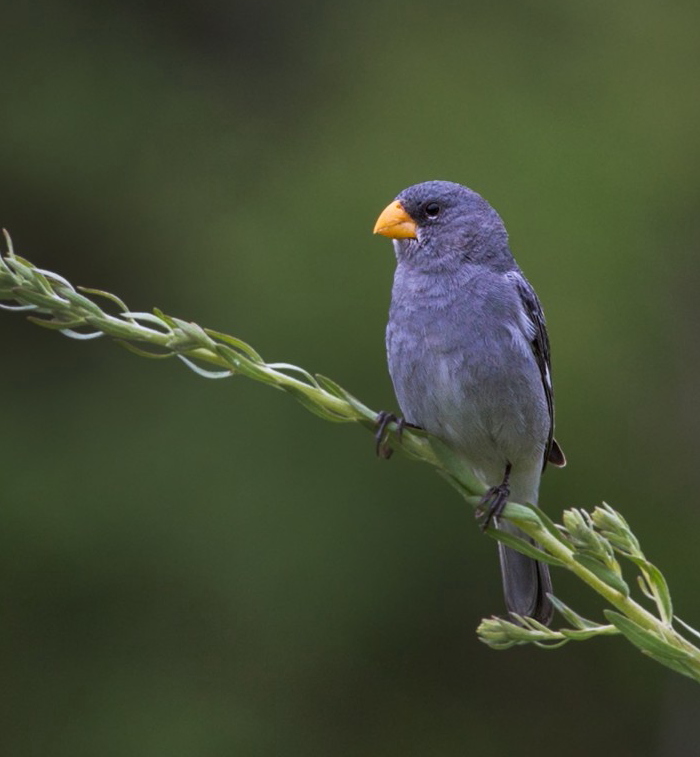
Wikimedia Commons
About the Tropeiro Seedeater
The Tropeiro Seedeater, known scientifically as Sporophila beltoni, is a small passerine bird belonging to the family Thraupidae. This charming bird is endemic to Brazil, particularly thriving in the southern regions. It occupies a unique ecological niche within the Cerrado biome, a vast tropical savanna characterized by diverse flora and fauna. The bird's presence in this environment underscores its adaptability and ecological significance. Traditionally, the Tropeiro Seedeater has been recognized for its vocal repertoire, which plays an integral role in its breeding and social interactions. During the breeding season, which spans from September to March, males are known for their vigorous singing, a behavior aimed at attracting females and establishing territories. The Tropeiro Seedeater also exhibits interesting migration patterns. While some populations remain sedentary, others embark on short-distance migrations in response to climatic variations and food availability. This flexibility ensures their survival across different environmental conditions. In non-breeding seasons, these birds often form mixed-species flocks, joining other seed-eating birds as they forage for food across open landscapes. The species is currently not listed as threatened, but habitat loss due to agriculture and urban development poses ongoing risks. Conservation efforts focusing on habitat preservation are crucial for maintaining stable populations of the Tropeiro Seedeater. Overall, the Tropeiro Seedeater plays a vital role in seed dispersal within its habitat, contributing to the ecological balance and biodiversity of the regions it inhabits.
The Tropeiro Seedeater belongs to the family Thraupidae, within the order Passeriformes. These birds typically live average 3-5 years, maximum recorded 6 years.
How to Identify a Tropeiro Seedeater
Identifying the Tropeiro Seedeater involves noting its distinctive black-and-white plumage. Adult males exhibit a striking contrast with a black head, back, and wings, while the underparts are predominantly white. This sharp contrast makes them easily recognizable in their natural habitat. Females, on the other hand, are less conspicuous, exhibiting a more subdued brownish coloration which provides camouflage in their environment. Juveniles resemble females but can be distinguished by their less-defined plumage. The Tropeiro Seedeater's small size, around 11 to 12 centimeters in length, places it firmly in the category of small passerines. In flight, its silhouette is compact with rapid, shallow wingbeats. When perched, the bird often adopts an upright posture, particularly when singing. The Tropeiro Seedeater could be confused with other seedeaters such as the Double-collared Seedeater, but careful observation of plumage and vocalizations helps in accurate identification. The black-and-white pattern of the Tropeiro Seedeater remains a key field mark for bird enthusiasts.
Having trouble telling birds apart? Upload a photo to our bird identification tool for an instant species match.
Tropeiro Seedeater Habitat and Range
Preferred Habitat
The Tropeiro Seedeater primarily inhabits the Cerrado biome, which extends across central Brazil. This region features a unique combination of open grasslands, savannas, and scattered trees, providing the ideal environment for seed-eating birds. They favor areas with abundant grass seed availability, often seen in agricultural fields and pastures where grasses are allowed to grow. During different seasons, they may shift to more wooded areas or riparian zones, especially during breeding when cover and nesting sites are crucial. Although traditionally associated with rural and natural habitats, the Tropeiro Seedeater can sometimes be found in suburban areas where suitable habitats persist. The elevation range of this species is generally low to moderate, usually not exceeding 1,500 meters. This adaptability to different habitat types within the Cerrado makes the Tropeiro Seedeater a versatile species in terms of habitat preference.
Geographic Range
The Tropeiro Seedeater is endemic to Brazil, with its range primarily concentrated in the southern part of the country. It is particularly prevalent in the states of Rio Grande do Sul and Santa Catarina. During the breeding season, it occupies territories in the open savannas and grasslands of the Cerrado. In contrast, during non-breeding seasons, the bird may move to slightly different areas within the same general region, occasionally expanding its range to adjacent states in search of food. While it does not undertake long-distance migrations typical of some other passerines, localized movements are common. Population density hotspots are most notable in areas where natural habitats have been preserved, though the species can be found in lesser numbers in more developed areas where remnants of its preferred habitat remain.
Want to know which birds visit your area? Browse our backyard birds by location guides for region-specific species lists.
What Does the Tropeiro Seedeater Eat?
The Tropeiro Seedeater's diet consists mainly of seeds, which it forages for in the grasslands of its habitat. Grass seeds form the staple of its diet, with the bird showing a preference for certain seed types depending on seasonal availability. During the breeding season, they may also consume small insects, providing a protein boost essential for chick development. The bird employs a foraging technique characterized by hopping on the ground and picking up seeds directly with its strong, conical bill. Seeds from grasses such as Panicum and Paspalum are particularly favored. Feeding typically occurs during the early morning and late afternoon when temperatures are cooler and seed availability is optimal. The Tropeiro Seedeater's diet may slightly shift in composition depending on the time of year and the specific location within its range.
Tropeiro Seedeater Behavior and Social Structure
The Tropeiro Seedeater exhibits fascinating social and territorial behaviors. During the breeding season, males establish territories through song, using their vocalizations to ward off rivals and attract females. This species is monogamous, with pairs remaining together throughout the breeding season. Outside the breeding season, the Tropeiro Seedeater is more social, often forming flocks with other seed-eating birds. These flocks enhance foraging efficiency and offer protection against predators. When confronted by threats, such as hawks or other predators, the Tropeiro Seedeater employs a series of alarm calls and often takes cover in dense vegetation. Daily activity patterns include periods of feeding interspersed with rest and preening. The bird is most active during cooler parts of the day, reducing activity during the midday heat. Its response to predators and flocking behavior are crucial for survival in the open landscapes it inhabits.
Tropeiro Seedeater Nesting and Reproduction
Nesting for the Tropeiro Seedeater involves constructing a cup-shaped nest, typically made from grass and other plant materials. The nest is usually situated in low shrubs or small trees, providing cover and protection from predators. Nest construction is a joint effort, though the female plays a more significant role. Clutches typically consist of two to three eggs, which the female incubates for approximately 12 to 14 days. During this period, the male is attentive, often bringing food to the female. After hatching, both parents share feeding duties, providing a diet rich in seeds and insects to the chicks. The young fledge about 12 to 15 days after hatching, though they may remain dependent on the parents for food for some time thereafter. The Tropeiro Seedeater may produce two broods per year, maximizing reproductive success in favorable conditions.
Tropeiro Seedeater Sounds and Vocalizations
The Tropeiro Seedeater's song is characterized by a series of clear, melodious notes delivered in rapid succession. The rhythm is brisk, with a series of whistles that rise and fall in pitch, creating a harmonious and pleasing sound. Call notes consist of sharp 'chip' sounds, often used to communicate with other flock members or alert them to potential dangers. During the dawn chorus, males are particularly vocal, their songs filling the air as they establish territory and attract mates. Alarm calls are more urgent, with a harsher tone designed to warn others of nearby threats. The distinct and varied vocalizations of the Tropeiro Seedeater make it one of the more audible species within its habitat.
Interesting Facts About the Tropeiro Seedeater
- 1The Tropeiro Seedeater is named after the Tropeiros, Brazilian muleteers known for their long journeys, reflecting the bird's nomadic tendencies.
- 2Despite its striking black-and-white plumage, the Tropeiro Seedeater's modest size often makes it less conspicuous in its natural habitat.
- 3The Tropeiro Seedeater is one of the few seed-eating birds that incorporate a significant amount of insect matter into their diet during the breeding season.
- 4Researchers have noted that the Tropeiro Seedeater's song can vary significantly between different populations, indicating a degree of regional dialects.
- 5The Tropeiro Seedeater's preference for open habitats makes it particularly vulnerable to habitat fragmentation, highlighting the importance of conservation efforts.
- 6During courtship, male Tropeiro Seedeaters perform a unique display that includes both song and visual cues to attract females.
- 7The species was only recently described in 2013, emphasizing the ongoing discoveries in avian biodiversity within the Neotropics.
Tropeiro Seedeater Conservation Status
The Tropeiro Seedeater is currently listed as Least Concern by the IUCN, with populations considered stable. However, habitat loss due to agricultural expansion and urbanization poses significant threats to its natural environment. Conservation efforts focus on protecting the Cerrado biome and implementing sustainable land-use practices. Historical population changes have seen some declines in localized areas, but overall, the species maintains a relatively healthy population. Continued conservation efforts are crucial for ensuring the long-term survival of the Tropeiro Seedeater as habitats face increasing pressure from human activity.


