
Van Hasselt's Sunbird
Leptocoma brasiliana
Order: Passeriformes / Family: Nectariniidae
Wikimedia Commons
About the Van Hasselt's Sunbird
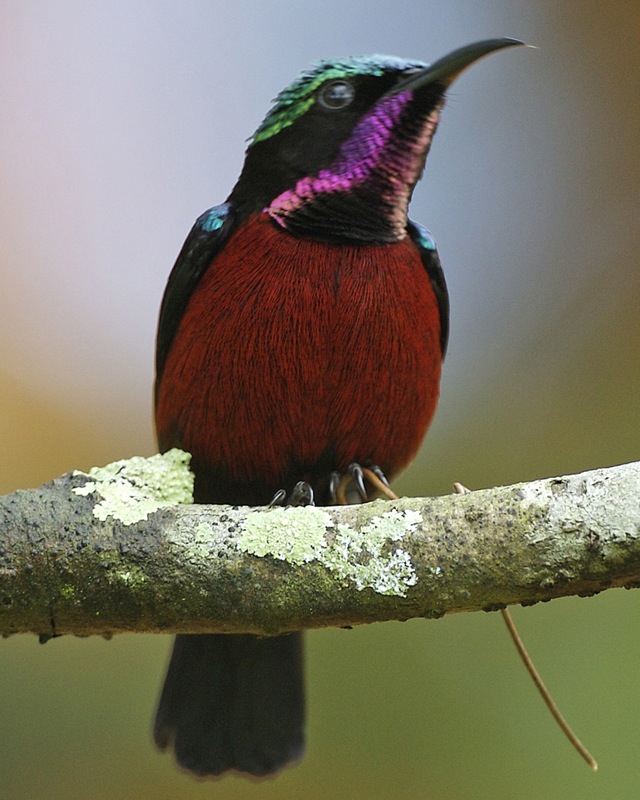
The Van Hasselt's Sunbird, scientifically known as Leptocoma brasiliana, is a small, vividly colored bird belonging to the Nectariniidae family. Primarily found in Southeast Asia, this bird inhabits countries such as Thailand, Malaysia, Indonesia, and the Philippines. It thrives in tropical and subtropical forests, often seen flitting through the dense foliage in search of nectar. Its ecological role as a pollinator is vital, as it feeds on the nectar of various flowering plants, facilitating cross-pollination. During the breeding season, the Van Hasselt's Sunbird becomes a key player in the reproductive cycles of many native plants. Its presence in a habitat is an indicator of the health of the ecosystem. Males are especially striking with their metallic green and blue plumage, which plays a role in attracting mates. The Van Hasselt's Sunbird is not migratory, yet it exhibits some seasonal movements within its range. During the wet season, these sunbirds may venture to lower elevations, following the blooming patterns of their preferred nectar sources. In contrast, the dry season sees them retreating to higher elevations where moisture is more abundant. The bird's adaptability to different forest layers - from canopy to understory - allows it to exploit a variety of floral resources year-round. Despite its beauty, the Van Hasselt's Sunbird faces environmental challenges, including habitat fragmentation and deforestation. Conservationists emphasize the need to preserve forested areas to maintain not only the sunbird's population but also the myriad of species that share its habitat. The Van Hasselt's Sunbird exemplifies the intricate connections within tropical ecosystems, underscoring the importance of biodiversity conservation.
The Van Hasselt's Sunbird belongs to the family Nectariniidae, within the order Passeriformes. These birds typically live 4-6 years, with a maximum recorded of 8 years..
How to Identify a Van Hasselt's Sunbird
Van Hasselt's Sunbird can be identified by its striking iridescent plumage. The male boasts a metallic green head, throat, and upperparts, with a contrasting deep violet breast and belly. The iridescence of the feathers can change subtly depending on the light, giving the bird a dazzling appearance. Females, on the other hand, are less ostentatious, with olive-green upperparts and yellowish underparts, allowing them to blend into the foliage more effectively. Juvenile sunbirds resemble the females but with duller tones. In flight, Van Hasselt's Sunbird exhibits rapid wingbeats typical of small passerines, and its compact silhouette is distinctive. Perched, the sunbird often adopts an upright posture on slender branches, its long, curved bill perfectly adapted for reaching deep into flowers. Confusion with similar species, such as the Purple Sunbird, can occur, yet Van Hasselt's Sunbird is distinguishable by its unique color patterns and habitat preferences.
Having trouble telling birds apart? Upload a photo to our bird identification tool for an instant species match.
Van Hasselt's Sunbird Habitat and Range
Preferred Habitat
Van Hasselt's Sunbird predominantly inhabits tropical and subtropical forests, favoring areas with abundant flowering plants. It thrives in primary and secondary growth forests, often seen in lowland and montane regions. The bird can be found at elevations ranging from sea level to 2,500 meters, although it is more common below 1,000 meters. Seasonal habitat shifts are minor, primarily involving movements to lower elevations during the wet season. In urban areas, the sunbird may visit gardens and parks, especially those with a good variety of flowering ornamentals. However, its preference remains for forested areas where native flora is abundant.
Geographic Range
Van Hasselt's Sunbird has a widespread range across Southeast Asia. Its breeding range encompasses countries like Thailand, Malaysia, Indonesia, and the Philippines. It is particularly abundant in the Sundaland region, including Borneo and Sumatra. The bird is non-migratory, though it exhibits altitudinal movements within its range, influenced by flowering cycles. Population density is highest in areas with intact forest cover and a rich diversity of flowering plants. While not currently endangered, localized declines have been noted due to habitat loss, particularly in regions undergoing rapid deforestation.
Want to know which birds visit your area? Browse our backyard birds by location guides for region-specific species lists.
What Does the Van Hasselt's Sunbird Eat?
The primary diet of Van Hasselt's Sunbird consists of nectar, which it extracts from a variety of flowering plants using its specialized, slender bill. It targets flowers from family groups like Rubiaceae and Loranthaceae. In addition to nectar, the bird supplements its diet with small insects and spiders, providing essential proteins. Seasonal changes influence its diet, with a higher intake of insects during the breeding season to meet increased energy demands. Foraging occurs throughout the day, with peaks in activity during the early morning and late afternoon. The sunbird's foraging technique involves swift hovering near flowers, similar to a hummingbird, though it often perches briefly to feed.
Van Hasselt's Sunbird Behavior and Social Structure
Van Hasselt's Sunbird is generally solitary or found in pairs, especially during the breeding season. Males are territorial, often engaging in aerial displays and vocalizations to deter intruders. Courtship involves elaborate displays, where the male flaunts his iridescent plumage to attract a mate. While not typically forming large flocks, small groups may gather in areas with abundant food resources. The sunbird exhibits a diurnal activity pattern, with most feeding and social interactions occurring during daylight hours. Its response to predators involves rapid flight and seeking cover within dense foliage, relying on its agility and small size for protection.
Van Hasselt's Sunbird Nesting and Reproduction
Van Hasselt's Sunbird constructs a pendant nest, typically hanging from a slender branch or vine. The nest is intricately woven from plant fibers, spider silk, and moss, creating a secure environment for the eggs. Preferred nesting locations include the mid-levels of forested areas, providing both concealment and accessibility. Clutch size generally consists of two eggs, with an incubation period of approximately 14 days. Both parents participate in feeding the young, which fledge after about 18-20 days. The species may raise two broods per year, depending on food availability and environmental conditions.
Van Hasselt's Sunbird Sounds and Vocalizations
The primary song of Van Hasselt's Sunbird is a series of high-pitched, rapid notes, often delivered in a repetitive sequence. These songs serve as both a territorial declaration and a courtship display. Call notes are sharp and metallic, used for communication between mates or to alert others of potential threats. Alarm calls are more urgent, prompting swift retreats into cover. The sunbird participates in the dawn chorus, adding its voice to the cacophony of forest sounds at daybreak.
Interesting Facts About the Van Hasselt's Sunbird
- 1Van Hasselt's Sunbird is named after the Dutch zoologist Johan Coenraad van Hasselt, who contributed significantly to natural history.
- 2Despite its small size, the Van Hasselt's Sunbird can hover like a hummingbird while feeding on nectar.
- 3These sunbirds can consume up to twice their body weight in nectar and insects daily to meet their energy needs.
- 4Van Hasselt's Sunbird plays a crucial role in pollination, interacting with over 50 plant species across its range.
- 5The bird's iridescent plumage results from microscopic feather structures, not pigments, causing light interference.
- 6Van Hasselt's Sunbird can often be found in mixed-species foraging flocks, benefiting from shared vigilance against predators.
- 7The species exhibits a high degree of site fidelity, often returning to the same breeding territories year after year.
Van Hasselt's Sunbird Conservation Status
The IUCN currently lists Van Hasselt's Sunbird as a species of Least Concern, with stable population trends. However, habitat loss due to deforestation poses a potential threat, particularly in regions experiencing rapid agricultural and urban expansion. Conservation efforts focus on preserving forest habitats and promoting sustainable land management practices. Historical data indicate fluctuations in local populations, correlated with habitat integrity. Continued monitoring is essential to ensure the species' long-term survival.


