Vireo atripennis
Vireo atripennis
Order: Passeriformes / Family: Vireonidae
About the Vireo atripennis
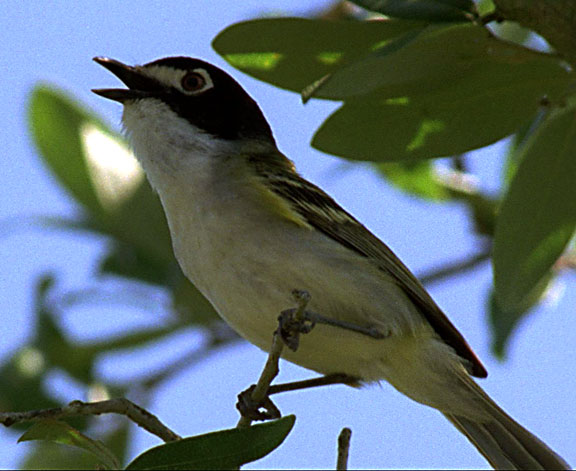
The Vireo atripennis, commonly known as the Black-capped Vireo, is a small yet remarkable member of the family Vireonidae. This species flourishes in the oak-juniper woodlands of central and northern Mexico, extending its range occasionally into the southern United States, particularly Texas. Known for its striking black cap and white spectacles, the Black-capped Vireo plays a crucial role in the ecosystem as both predator and prey, maintaining the balance of insect populations while serving as a food source for larger avian predators. During the breeding season, which spans from April to July, these vireos establish territories in shrubby areas with dense undergrowth, where they construct their nests. Their presence signifies a healthy environment, as they thrive in regions with diverse plant life and minimal disturbance from human activities. In winter, the Vireo atripennis migrates to the Pacific slope of western Mexico, seeking warmer climates and abundant food resources. The Black-capped Vireo's migratory behavior underscores the importance of conserving both breeding and wintering habitats to ensure their survival. Ecologically, their role extends to seed dispersal, as they inadvertently aid in the spread of plant species whose seeds are small enough to be ingested and later excreted. This songbird's adaptability to different habitats across its range highlights its resilience, yet its dependence on specific environments makes it vulnerable to habitat destruction and climate change. By studying the Vireo atripennis, ornithologists gain insight into the broader impacts of ecological changes on avian populations.
The Vireo atripennis belongs to the family Vireonidae, within the order Passeriformes. These birds typically live average 6 years with a maximum recorded of 8 years..
How to Identify a Vireo atripennis
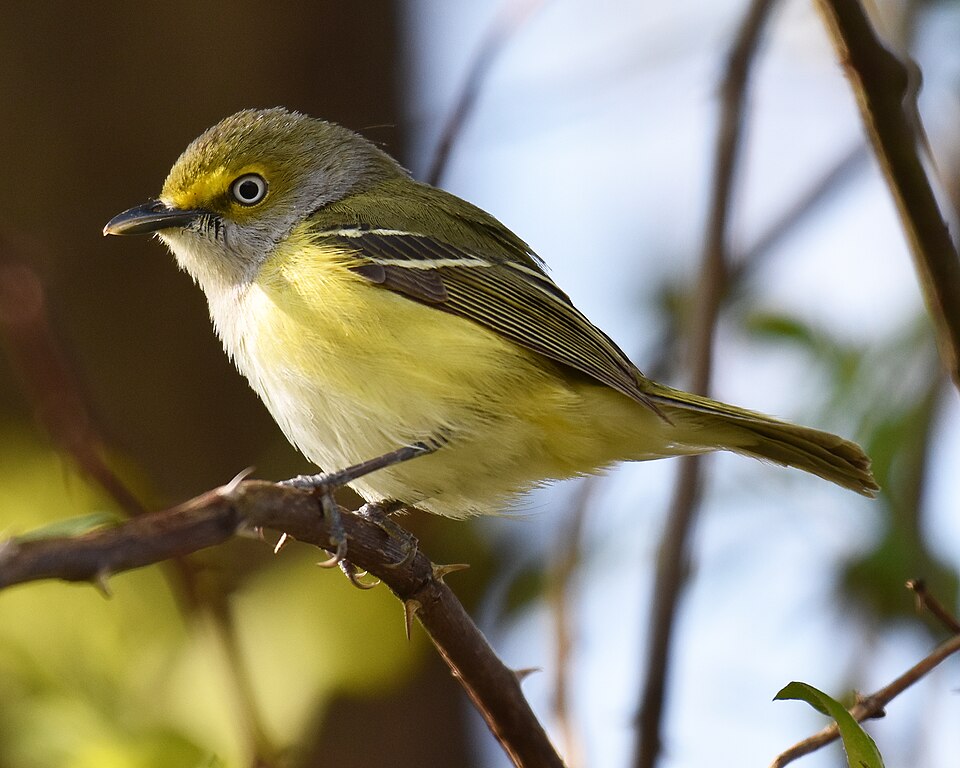
The Vireo atripennis is a small songbird measuring about 12 centimeters in length, with a wingspan of approximately 18 centimeters. Adult males are distinguished by their black cap, which contrasts sharply with their white underparts and olive-green upperparts. Females, while similar, exhibit a more subdued grayish cap, making them slightly less conspicuous. Both sexes possess distinctive white spectacles around their eyes, a key feature for identification. Juveniles resemble females but tend to have a more muted coloration overall, lacking the defined black cap. In flight, the Vireo atripennis displays a quick, fluttering pattern, interspersed with brief glides. When perched, they exhibit an upright posture, often seen in the dense foliage of shrubs and small trees. Despite their distinct appearance, they can be confused with other vireos, such as the White-eyed Vireo, which shares similar habitat preferences. However, the Black-capped Vireo's unique song and cap coloration set it apart from its relatives. Observers should note the bird's deliberate movement through vegetation and its tendency to remain at mid-level heights, which can help distinguish it from other species with overlapping ranges.
Having trouble telling birds apart? Upload a photo to our bird identification tool for an instant species match.
Vireo atripennis Habitat and Range
Preferred Habitat
Vireo atripennis primarily inhabits oak-juniper woodlands, favoring areas with dense underbrush and a mix of open canopy. These environments provide ideal conditions for foraging and nesting. Typically found at elevations ranging from 300 to 1,500 meters, these birds thrive in regions where young growth is prevalent, as they rely on the cover for protection and nesting. During migration and winter months, the Black-capped Vireo shifts to more tropical and semi-deciduous forests along the Pacific slope of Mexico. This seasonal habitat shift underscores their adaptability, although they are notably absent from urban areas due to their preference for secluded, undisturbed environments. The presence of native shrubs and small trees is critical, as it offers both food sources and nesting sites.
Geographic Range
The breeding range of the Vireo atripennis spans central and northern Mexico, with occasional forays into the southern United States, particularly in Texas's Edwards Plateau and the Hill Country. During winter, these birds migrate to the coastal and highland regions of western Mexico, including states such as Sinaloa, Nayarit, and Jalisco. Migration corridors primarily follow the western coast, avoiding expansive deserts and arid zones. Within their range, population densities peak in areas where their preferred oak-juniper woodlands are abundant and well-preserved. Conservation efforts in these key regions are critical to maintaining the bird's population stability, as habitat fragmentation poses a significant threat.
Want to know which birds visit your area? Browse our backyard birds by location guides for region-specific species lists.
What Does the Vireo atripennis Eat?
The diet of Vireo atripennis consists predominantly of insects and spiders, which they forage from leaves and branches. During the breeding season, their diet expands to include caterpillars, beetles, and other arthropods, providing essential protein for nestlings. In winter, they supplement their diet with berries and small fruits, taking advantage of the seasonal abundance. This dietary flexibility allows them to adapt to the varying availability of food sources throughout the year. Their foraging technique involves gleaning insects from foliage, often hanging upside down to reach hidden prey. The size of their prey typically ranges from small aphids to medium-sized caterpillars, and they are most active in feeding during the early morning and late afternoon.
Vireo atripennis Behavior and Social Structure
Vireo atripennis exhibits a socially monogamous structure during the breeding season, with pairs forming stable bonds. Males establish and defend territories through song, a key component of their courtship display. They often perch conspicuously while singing to deter rivals and attract mates. Despite their small size, these birds exhibit aggressive territorial behavior, often chasing away intruders. In response to predators, they employ a variety of alarm calls and may engage in mobbing behavior to deter threats. During non-breeding months, they become less territorial and may join mixed-species flocks, which provide increased foraging efficiency and predator vigilance. Daily activity peaks during dawn and dusk, aligning with the periods of greatest insect activity. Their behavior reflects a keen adaptation to their environment, balancing the demands of foraging, reproduction, and predation.
Vireo atripennis Nesting and Reproduction
Vireo atripennis constructs cup-shaped nests using grasses, bark strips, and spider silk, typically suspended from the fork of a small branch. These nests are usually placed at heights ranging from 0.5 to 3 meters above ground, providing concealment from predators. Clutch sizes vary from three to five eggs, with both parents sharing incubation duties over a period of 14 to 17 days. After hatching, the fledglings remain in the nest for approximately 10 to 12 days, during which both parents participate in feeding. The species generally produces one brood per year, although favorable conditions may lead to a second attempt. Parental roles are distinctly cooperative, with both sexes equally involved in rearing the young.
Vireo atripennis Sounds and Vocalizations
The primary song of Vireo atripennis is a series of rich, melodious phrases, each lasting 2 to 3 seconds. The rhythm is rapid and fluid, often compared to a cascade of notes that rise and fall in pitch. Call notes are sharper and more insistent, serving as communication between mates or to signal alarm. During the dawn chorus, males increase their singing frequency, establishing territory and attracting mates. While their song is distinctive, it can be confused with that of the Bell's Vireo, though the latter lacks the same complexity and musical quality. Understanding their acoustic repertoire aids in distinguishing them from sympatric species.
Interesting Facts About the Vireo atripennis
- 1The Black-capped Vireo can lay up to five eggs per clutch, which are incubated by both parents.
- 2Despite its small size, this vireo's song can be heard over 100 meters away in dense woodland.
- 3The Black-capped Vireo's migration can cover over 1,000 kilometers from breeding to wintering grounds.
- 4Females are known to build their nests in as little as three days, using materials like grasses and spider silk.
- 5The Vireo atripennis was first described scientifically in 1859, highlighting its long-standing interest to ornithologists.
- 6This vireo species plays a vital role in controlling insect populations in its habitat, particularly in oak-juniper woodlands.
- 7During the breeding season, the Black-capped Vireo's song frequency increases, serving as both territorial and mating calls.
Vireo atripennis Conservation Status
Currently listed as Near Threatened by the IUCN, Vireo atripennis faces population challenges due to habitat loss and fragmentation. Urban development and agricultural expansion threaten their breeding and wintering habitats. However, conservation efforts, including habitat restoration and legal protection, have been implemented to curb these trends. Historical data indicate a decline in population, but recent measures in protected areas show signs of stabilization. Continued monitoring and habitat management remain essential to prevent further decline and ensure long-term survival.