
Whiskered Flowerpecker
Dicaeum proprium
Order: Passeriformes / Family: Dicaeidae
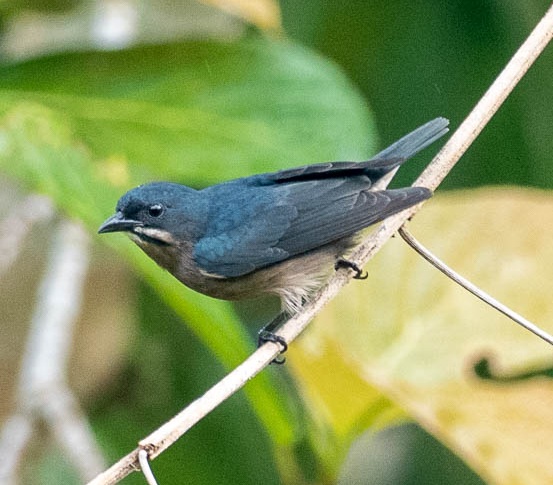
Wikimedia Commons
About the Whiskered Flowerpecker
The Whiskered Flowerpecker, scientifically known as Dicaeum proprium, is a small yet remarkable bird that belongs to the family Dicaeidae. This species is primarily found in the lush, biodiverse forests of the Philippines, particularly thriving in the montane and lowland forests of Mindanao and surrounding islands. Known for its distinct whisker-like plumage around the face, the Whiskered Flowerpecker is an important pollinator and seed disperser within its ecosystem. Its ecological role is crucial, as it aids in maintaining the reproductive cycles of various plant species native to its habitat. Throughout the year, this bird exhibits a fascinating array of behaviors. During the breeding season, it becomes more territorial, especially in areas dense with flowering plants. Outside the breeding season, the Whiskered Flowerpecker tends to be less aggressive, often seen foraging in mixed-species flocks. These seasonal behaviors are vital for its survival, influencing its movements and interactions within the forest. Despite its small size, the Whiskered Flowerpecker plays a significant role in its ecosystem. Its presence indicates a healthy, biodiverse environment, as it relies on a wide range of flowering plants for nourishment. This interdependence highlights the importance of conserving its natural habitat, as any disruption can have cascading effects on both the bird and the forest. Additionally, the Whiskered Flowerpecker serves as an indicator species for environmental changes, as shifts in its population can signal broader ecological shifts in the region. The bird's significance extends beyond its ecological roles. In local cultures, the Whiskered Flowerpecker often symbolizes resilience and adaptability, reflecting the rich biodiversity of the Philippine archipelago. Efforts to study and preserve this species contribute to a greater understanding of tropical forest ecosystems, emphasizing the interconnectedness of all life forms within these environments. In summary, the Whiskered Flowerpecker is more than just a bird. It is a vital component of its natural habitat and a symbol of the delicate balance between species and ecosystems.
The Whiskered Flowerpecker belongs to the family Dicaeidae, within the order Passeriformes. These birds typically live typically around 5-7 years, with some living up to 9 years..
How to Identify a Whiskered Flowerpecker
Adult Whiskered Flowerpeckers exhibit a distinctive set of field marks that make them recognizable to keen birders. The most prominent feature is the 'whiskers,' which are actually elongated feathers around the face that give the species its name. The plumage is predominantly olive-green on the back, transitioning to a lighter, more yellowish hue on the underparts. A subtle yet noticeable grayish-white streak runs from the beak, enhancing the whisker-like appearance. Juvenile birds differ slightly, possessing a duller overall coloration and less pronounced facial markings. Both males and females appear similar, though males might have slightly more vibrant coloration during the breeding season. In flight, the Whiskered Flowerpecker displays a rapid and somewhat erratic flight pattern, with wings that appear short and rounded. This flight silhouette is typical of small, agile songbirds adapted to navigating dense foliage. When perched, they often appear upright and alert, frequently flicking their tails. This species could be confused with other flowerpeckers sharing the same habitat, such as the Olive-backed Flowerpecker. However, the lack of whisker-like markings in those species makes differentiation easier upon close observation. The Whiskered Flowerpecker's unique facial plumage serves as a reliable identification marker for both novice and experienced birdwatchers.
Having trouble telling birds apart? Upload a photo to our bird identification tool for an instant species match.
Whiskered Flowerpecker Habitat and Range
Preferred Habitat
The Whiskered Flowerpecker thrives primarily in tropical forest habitats. It favors montane forests, often found at elevations ranging from 500 to 2,000 meters above sea level. These forests provide a rich diversity of flowering plants, which are essential to the bird's diet and nesting preferences. Seasonal habitat shifts are common, with the bird moving to lower elevations during certain times of the year, likely in response to food availability or climatic conditions. While primarily a forest dweller, the Whiskered Flowerpecker can occasionally be spotted at the edges of plantations and secondary growth forests, particularly when these areas are in proximity to its primary montane habitat. Despite this adaptability, the species does not typically venture into urban environments, as it relies heavily on the complex forest ecosystem. Conservation of these habitats is crucial, given the bird's specialized habitat requirements. The presence of the Whiskered Flowerpecker often indicates a robust forest environment, making it a priority in conservation planning for tropical biodiversity.
Geographic Range
The Whiskered Flowerpecker has a relatively restricted range, confined to the Philippine archipelago. It primarily breeds on the island of Mindanao, but its presence is also noted on the smaller islands nearby, such as Dinagat and Siargao. These regions provide the dense, flowering forests that the species prefers. Within this range, the bird is considered a resident species, showing limited migratory behavior. Population density is higher in undisturbed forest areas where its food sources are abundant. The species does not typically engage in long-distance migrations, although local movements between different elevations are common. These movements are likely in response to seasonal changes in food availability. While its range is limited geographically, the Whiskered Flowerpecker's role in its ecosystem is significant, making it a focal point for regional conservation efforts.
Want to know which birds visit your area? Browse our backyard birds by location guides for region-specific species lists.
What Does the Whiskered Flowerpecker Eat?
The Whiskered Flowerpecker's diet primarily consists of nectar, making it an essential pollinator in its tropical forest ecosystem. It feeds on a variety of flowering plants, with a preference for those native to the Philippine archipelago. In addition to nectar, the bird consumes small fruits and berries, which aid in seed dispersal. These dietary habits highlight the bird's dual ecological roles as both a pollinator and a seed disperser. During certain times of the year, the Whiskered Flowerpecker may also consume insects and other small invertebrates, supplementing its diet with protein-rich food sources. This dietary shift often corresponds with breeding seasons when additional energy is required. Foraging techniques include hovering in front of flowers or perching briefly to extract nectar with their specialized brush-tipped tongues. Feeding occurs predominantly in the early morning and late afternoon, capitalizing on peak nectar availability.
Whiskered Flowerpecker Behavior and Social Structure
The Whiskered Flowerpecker exhibits intriguing behaviors that reflect its adaptation to the tropical forest environment. It is generally a solitary bird, though it may form loose associations with mixed-species flocks, particularly outside the breeding season. This social structure allows it to benefit from the vigilance of other species, reducing predation risk. Territorial behavior becomes more evident during the breeding season, with males often defending areas abundant in flowering plants. Courtship displays include fluttering flights and vocalizations designed to attract potential mates. In terms of daily activity patterns, the Whiskered Flowerpecker remains active throughout the day, with peaks in foraging activity during early morning and late afternoon. It shows a remarkable ability to navigate dense foliage, using its small size and agile flight to its advantage. When threatened by predators, the bird employs evasive maneuvers and may retreat to thicker foliage for cover. This behavior underscores its evolutionary adaptations to a life amidst the tropical forest canopy.
Whiskered Flowerpecker Nesting and Reproduction
The nesting habits of the Whiskered Flowerpecker are well adapted to its forest habitat. It constructs small, cup-shaped nests using materials such as moss, fine twigs, and spider silk, which provide both structure and camouflage. These nests are typically located in the fork of a branch, often at moderate heights of 2 to 5 meters above the ground. The clutch size generally ranges from two to three eggs, with both parents involved in incubation. The incubation period lasts around 12 to 14 days, after which the chicks hatch and are cared for by both parents. The fledging timeline is relatively short, with young birds typically leaving the nest about 14 days after hatching. The Whiskered Flowerpecker usually raises one brood per year, although conditions of abundant food resources might allow for a second brood. Parental roles are well-defined, with both male and female sharing feeding duties and protecting the nest from potential threats.
Whiskered Flowerpecker Sounds and Vocalizations
The Whiskered Flowerpecker is known for its distinctive vocalizations, which are a key component of its behavioral repertoire. The primary song consists of a series of high-pitched, rapid notes that can be likened to a soft trill. These song patterns are often used during the breeding season to establish territory and attract mates. In addition to its song, the Whiskered Flowerpecker emits various call notes, including short, sharp 'chip' sounds used for communication between individuals. Alarm calls are more urgent, characterized by a series of quick, ascending whistles, which alert conspecifics to potential dangers. During the dawn chorus, the bird's vocal contributions are often a mix of its primary song and call notes, creating a lively soundscape in its forest habitat. The complexity and variety of its vocalizations make the Whiskered Flowerpecker a fascinating subject for ornithologists and bird enthusiasts alike.
Interesting Facts About the Whiskered Flowerpecker
- 1The Whiskered Flowerpecker's diet of nectar and fruit makes it a vital pollinator and seed disperser in its ecosystem.
- 2Despite its small size, the Whiskered Flowerpecker can be quite territorial during the breeding season, defending prime feeding areas.
- 3This bird's specialized brush-tipped tongue is perfectly adapted for extracting nectar from flowers.
- 4The Whiskered Flowerpecker is primarily found on the island of Mindanao, highlighting its restricted range.
- 5Its unique whisker-like facial markings are not true whiskers but rather elongated feathers that serve as a key identification feature.
Whiskered Flowerpecker Conservation Status
The Whiskered Flowerpecker is currently classified as Near Threatened on the IUCN Red List, with its population trend showing a gradual decline. The primary threats to this species include habitat loss due to deforestation and land conversion for agriculture. These activities reduce the availability of flowering plants essential for the bird's survival. Conservation efforts focus on preserving and restoring its natural habitat, particularly in protected areas and national parks. Historical population changes indicate a decrease in numbers correlating with increased human activity in its range. Efforts to mitigate these impacts include reforestation projects and community-based conservation initiatives. Continued monitoring of population trends and habitat conditions is vital for ensuring the long-term survival of the Whiskered Flowerpecker.


