White-bellied Erpornis
Erpornis zantholeuca
Order: Passeriformes / Family: Vireonidae

Wikimedia Commons
About the White-bellied Erpornis
The White-bellied Erpornis (Erpornis zantholeuca), once classified as a member of the Yuhina family, is now recognized under the Vireonidae family. Endemic to Southeast Asia, this small bird thrives in the subtropical and tropical moist lowland forests. Its presence spans countries such as Thailand, Myanmar, Cambodia, and Vietnam, where it plays a vital role in the ecosystem as an insectivore. The bird's ecological significance is underscored by its contribution to insect population control, thus maintaining a balanced environment in its native habitats.
The White-bellied Erpornis prefers the dense canopy layers of forests, where it can forage efficiently for insects and avoid predators. Its adaptability allows it to thrive in secondary forests and even plantations, reflecting its ability to adjust to changing environmental conditions. During breeding seasons, these birds become more conspicuous as they vocalize to establish territories and attract mates.
Beyond its ecological role, the White-bellied Erpornis is of interest to ornithologists and birdwatchers alike due to its distinct vocalizations and social behavior. Its song, a series of melodious notes, is often heard during the early morning hours. While not globally threatened, the species faces habitat loss due to deforestation. Conservation efforts focused on habitat preservation are crucial to ensuring the continued survival of this species in the wild.
The White-bellied Erpornis belongs to the family Vireonidae, within the order Passeriformes. These birds typically live average 4 years; max recorded 6 years.
How to Identify a White-bellied Erpornis
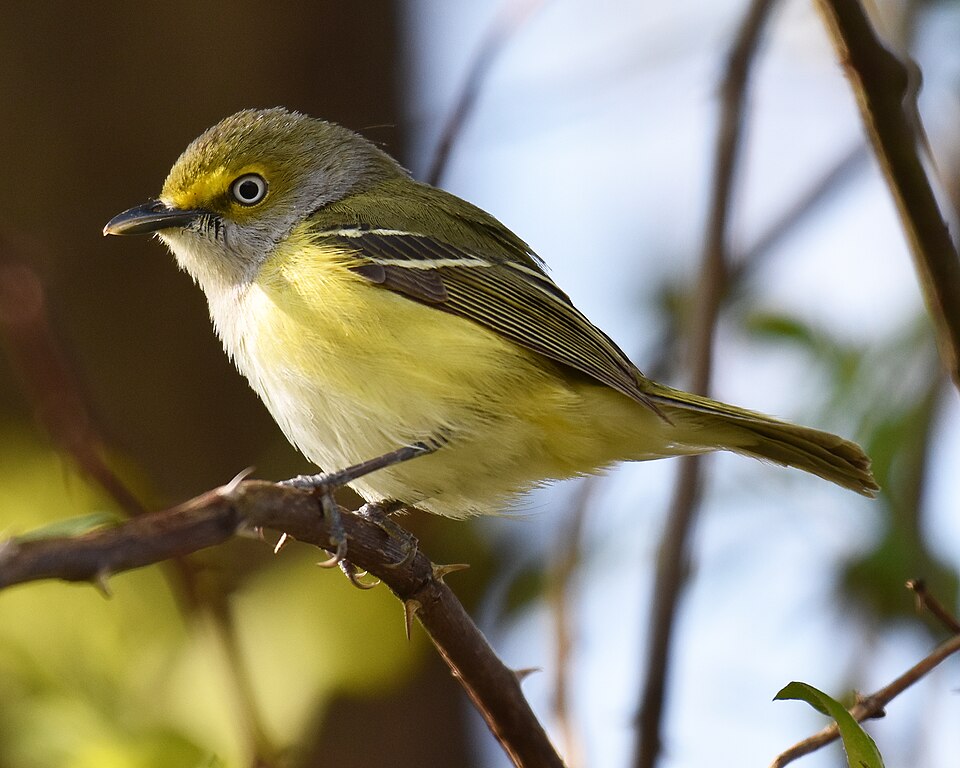
The White-bellied Erpornis is easily identifiable by its contrasting plumage. Adults display olive-green upperparts and striking white underparts, which are key characteristics for field identification. The olive color extends to its wings and tail, providing excellent camouflage among foliage. In terms of size, the bird is small, measuring about 13 centimeters in length.
Juveniles resemble adults but may exhibit slightly duller plumage. Both sexes share similar coloration, making it challenging to distinguish between males and females based solely on appearance. However, during the breeding season, males may appear more vibrant due to hormonal changes.
The White-bellied Erpornis can be confused with similar species such as the White-bellied Yuhina or other small greenish birds. Key differences include its distinctive white belly and unique vocalizations. When in flight, its silhouette is compact, with rapid wingbeats, which helps differentiate it from other sympatric species.
Having trouble telling birds apart? Upload a photo to our bird identification tool for an instant species match.
White-bellied Erpornis Habitat and Range
Preferred Habitat
The White-bellied Erpornis inhabits subtropical and tropical moist lowland forests, often found at elevations ranging from sea level up to 1500 meters. These birds prefer dense forest canopies where they can forage and nest. They are also found in secondary growth forests and plantations, indicating their adaptability to different forest types.
While predominantly a forest bird, the White-bellied Erpornis can occasionally be spotted in more open areas like forest edges and clearings, especially during non-breeding seasons. In urban settings, they are rare and typically only venture into gardens or parks adjacent to forested areas.
Geographic Range
The White-bellied Erpornis is widely distributed across Southeast Asia. Its range extends from the eastern Himalayas of India and Nepal across to southern China, including the provinces of Yunnan and Guangxi. Further south, it inhabits countries such as Myanmar, Thailand, Laos, Cambodia, Vietnam, and parts of Malaysia.
The species is predominantly sedentary, with some local movements influenced by food availability and breeding activities. Population density is higher in areas with extensive forest cover, such as the forests of northern Thailand and Vietnam's Annamite Range. Despite its wide range, habitat destruction poses a threat to its populations in certain regions.
Want to know which birds visit your area? Browse our backyard birds by location guides for region-specific species lists.
What Does the White-bellied Erpornis Eat?
The White-bellied Erpornis primarily feeds on insects and other small invertebrates, playing a crucial role in controlling insect populations. Typical prey includes caterpillars, beetles, and spiders. The bird employs an active foraging technique, often seen gleaning leaves and branches for hidden insects.
Seasonal changes influence their diet, with an increased consumption of fruit during periods when insect prey is less abundant. They may occasionally feed on nectar, taking advantage of flowering plants within their habitat. Their feeding schedule is diurnal, with peak activity in the early morning and late afternoon.
White-bellied Erpornis Behavior and Social Structure
Social in nature, the White-bellied Erpornis often forms small flocks, particularly outside the breeding season. These flocks may consist of family units or mixed-species groups, enhancing foraging efficiency and predator vigilance. During the breeding season, pairs become more territorial, with males singing from prominent perches to declare territory and attract mates.
Courtship involves a series of displays, including fluttering flights and mutual preening. The species is generally active during daylight hours, with a peak in activity during the cooler parts of the day. White-bellied Erpornises respond to predators with alarm calls, often prompting nearby individuals to join in a chorus of warning.
White-bellied Erpornis Nesting and Reproduction
The White-bellied Erpornis constructs a cup-shaped nest using fine twigs, grass, and leaves, typically placed high in the forest canopy to avoid ground predators. Nests are often well-concealed within dense foliage.
A typical clutch consists of 2 to 4 eggs, which are incubated by both parents over a period of about 12 to 14 days. Once hatched, the chicks are fed and cared for by both parents until they fledge, usually around 12 to 14 days after hatching. The species may produce two broods in a year, depending on environmental conditions and food availability.
White-bellied Erpornis Sounds and Vocalizations
The primary song of the White-bellied Erpornis consists of a series of melodious, high-pitched notes that are repeated in rapid succession. The rhythm is regular, creating a pleasant and recognizable tune that resonates through their forest habitats.
In addition to their song, these birds communicate through a variety of call notes, including soft chirps and alarm calls that signal the presence of predators. During the dawn chorus, their songs contribute to the collective soundscape of the forest, often heard alongside other sympatric species.
Interesting Facts About the White-bellied Erpornis
- 1The White-bellied Erpornis was once classified with the Yuhinas but is now placed in the Vireonidae family due to genetic studies.
- 2Despite its small size, the White-bellied Erpornis plays a significant role in controlling insect populations within its habitat.
- 3This species is often found in mixed-species flocks, which helps increase foraging efficiency and predator detection.
- 4The White-bellied Erpornis can occasionally be observed feeding on nectar, showcasing its dietary adaptability.
- 5Its song is one of the first to be heard during the dawn chorus, marking the start of the day's avian symphony in the forest.
- 6The White-bellied Erpornis has shown adaptability to secondary forests, indicating a level of resilience to habitat changes.
- 7Breeding pairs of White-bellied Erpornis are known for their cooperative parenting, sharing incubation and feeding duties.
White-bellied Erpornis Conservation Status
Currently, the White-bellied Erpornis is classified as a species of Least Concern by the IUCN, indicating a stable population trend. However, ongoing habitat loss due to deforestation poses a significant threat to their long-term survival. Conservation efforts focused on protecting forest habitats are crucial. These efforts include establishing protected areas and promoting sustainable forestry practices. Historical population fluctuations have been closely tied to changes in forest cover, emphasizing the importance of habitat preservation.