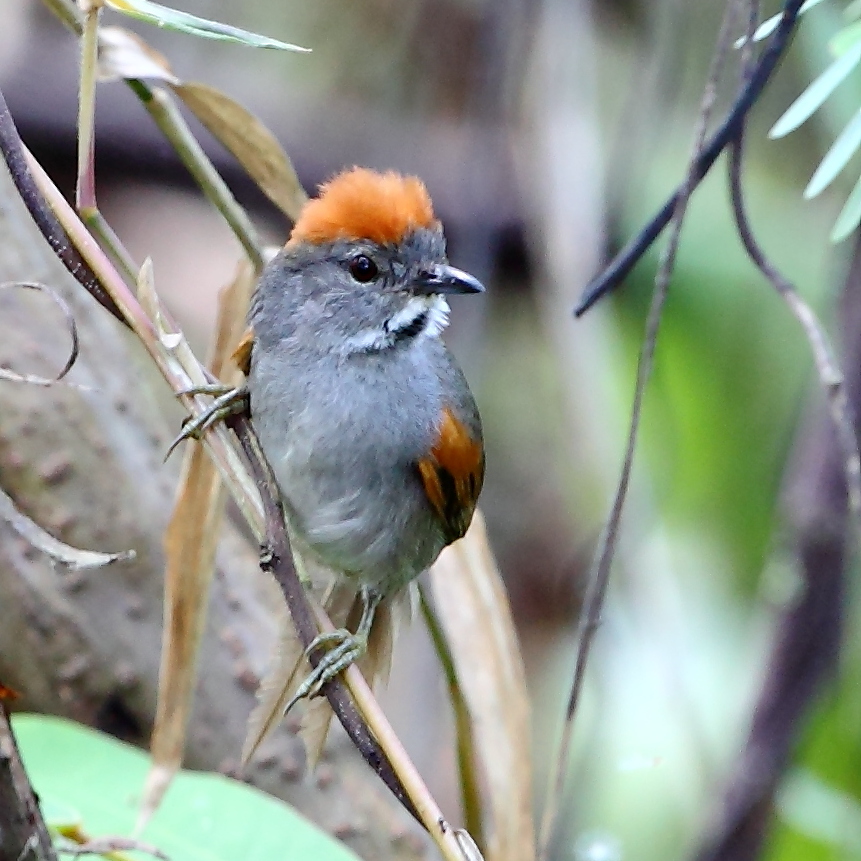
White-lored Spinetail
Synallaxis albilora
Order: Passeriformes / Family: Furnariidae

Wikimedia Commons
About the White-lored Spinetail
The White-lored Spinetail (Synallaxis albilora) is a small passerine bird belonging to the Furnariidae family, notable for its presence in the subtropical and tropical regions of South America. This species plays a significant ecological role in its habitat, acting as both a seed disperser and an insect population controller. Its range predominantly includes countries like Brazil, Bolivia, Paraguay, and northern Argentina. The bird is most commonly associated with lowland forests, especially those with dense undergrowth, as well as secondary growth and edge habitats where it can forage efficiently. The White-lored Spinetail is adapted to a range of altitudes but typically resides below 1,500 meters. Its ecological significance extends beyond its feeding habits, as it also influences plant regeneration and forest dynamics through its selective foraging and nesting behaviors. During the breeding season, which aligns with the rainy season, the spinetail becomes particularly vocal and territorial. Outside of breeding, it remains somewhat elusive, but its distinctive call can still be heard as it moves through its forested habitat. The bird's adaptability to secondary growth forests underlines its resilience in the face of habitat alteration, although ongoing deforestation in parts of its range poses a threat to its population stability.
The White-lored Spinetail belongs to the family Furnariidae, within the order Passeriformes. These birds typically live average 4 years with a max recorded of 7 years..
How to Identify a White-lored Spinetail
The adult White-lored Spinetail boasts a striking white supercilium, or eyebrow stripe, that contrasts sharply with its otherwise brownish plumage. The back and wings display a warm brown, providing camouflage amidst forest litter and foliage. Its underparts are lighter, with a muted buff or whitish belly. Juveniles resemble adults but often exhibit a slightly duller coloration and less distinct white eyebrow. Both sexes appear similar, making sexing in the field challenging without behavioral cues. This spinetail's perching posture is upright, aiding in the observation of its distinct facial markings. In flight, its short, rounded wings and long tail are noticeable, although it is more often observed hopping through dense vegetation. Similar species, like the Rufous-capped Spinetail, lack the defining white supercilium, which is a critical identification mark. Observers should note the bird's preference for low, dense foliage when searching for this species.
Having trouble telling birds apart? Upload a photo to our bird identification tool for an instant species match.
White-lored Spinetail Habitat and Range
Preferred Habitat
The White-lored Spinetail inhabits dense subtropical and tropical forests across South America's lowland regions. It thrives in secondary growth and edges, where vegetation is thick but not overly mature. This species favors areas below 1,500 meters in elevation, though it can occasionally be found at slightly higher altitudes in suitable habitats. Unlike some forest species, the spinetail adapts well to disturbed habitats, often found in regenerating forests and areas with patchy tree coverage. It is less common in urban areas, preferring the cover and complexity of natural and semi-natural environments.
Geographic Range
The White-lored Spinetail's range spans across several South American countries, primarily within Brazil, Bolivia, Paraguay, and northern Argentina. It is a resident bird, meaning it does not undertake significant migrations, though local movements might occur in response to seasonal food availability or habitat changes. Within these countries, the bird can be found in forested lowlands and occasionally in foothill regions. Population densities are highest in areas where forest cover remains extensive and relatively undisturbed, although it displays some adaptability to fragmented habitats.
Want to know which birds visit your area? Browse our backyard birds by location guides for region-specific species lists.
What Does the White-lored Spinetail Eat?
The diet of the White-lored Spinetail consists mainly of insects and other small invertebrates, which it gleans from foliage and ground litter. During the breeding season, its diet might shift to include more protein-rich insects to support the nutritional needs of growing chicks. The bird employs a methodical foraging technique, moving through low vegetation and probing with its bill to uncover hidden prey. Though predominantly insectivorous, it also consumes seeds and small fruits, especially during periods when insect prey is less abundant.
White-lored Spinetail Behavior and Social Structure
White-lored Spinetails are typically solitary or found in pairs, especially during the breeding season when territorial behaviors intensify. They defend their territory with vocalizations and physical displays, often using their distinctive calls to warn rivals. Courtship involves mutual displays and vocalizations, strengthening pair bonds. Outside of breeding, these birds might participate in mixed-species flocks, benefiting from increased foraging efficiency and predator vigilance. They exhibit diurnal activity patterns, with peak activity during early morning and late afternoon. When threatened, they rely on dense vegetation for cover, rarely taking to open flight.
White-lored Spinetail Nesting and Reproduction
White-lored Spinetails construct domed nests with side entrances, often hidden within dense foliage. They use a variety of materials, including twigs, leaves, and other plant fibers, ensuring the structure blends seamlessly with the surrounding environment. Nests are typically located 1-3 meters off the ground. The average clutch consists of 2-3 eggs, with both parents sharing incubation duties over approximately 15-18 days. Post-hatching, both parents participate in feeding the altricial chicks. Fledging occurs around 15-18 days post-hatching, and the species may raise two broods in a productive season.
White-lored Spinetail Sounds and Vocalizations
The primary song of the White-lored Spinetail is a rapid series of high-pitched notes, often described as a 'trickling' sound. This song serves both mate attraction and territorial defense. Its call notes are sharp and metallic, used in communication between mates or as alarms when predators are near. During the dawn chorus, the spinetail's persistent song stands out against the backdrop of the forest, marking its presence to rivals and potential mates alike.
Interesting Facts About the White-lored Spinetail
- 1The White-lored Spinetail's nest is so well-camouflaged it often goes unnoticed by predators and humans alike.
- 2Despite their small size, these birds are known for their loud and persistent vocalizations, often heard before seen.
- 3Synallaxis albilora is part of a large genus with over 30 species, each adapted to specific niches in South America.
- 4The species' preference for dense undergrowth makes it a key player in controlling insect populations within its habitat.
- 5While primarily insectivorous, the White-lored Spinetail's occasional fruit consumption aids in seed dispersal.
- 6Their nests often incorporate unique materials like spider silk, adding strength and flexibility to the structure.
- 7This spinetail's adaptability to secondary forests highlights its resilience amidst increasing habitat fragmentation.
White-lored Spinetail Conservation Status
The IUCN lists the White-lored Spinetail as a species of Least Concern, though its populations show a declining trend due to habitat loss. Deforestation, driven by agriculture and urban expansion, poses the primary threat to its habitats. Conservation efforts focus on protecting large expanses of subtropical forests and promoting sustainable land-use practices. Historically, the bird has shown resilience in adapting to secondary habitats, but continued habitat degradation could challenge its survival.
Other Furnariidae Species


Birds Similar to the White-lored Spinetail
These species are often confused with the White-lored Spinetail due to similar appearance or overlapping range.