
White-throated Ground Dove
Pampusana xanthonura
Order: Columbiformes / Family: Columbidae
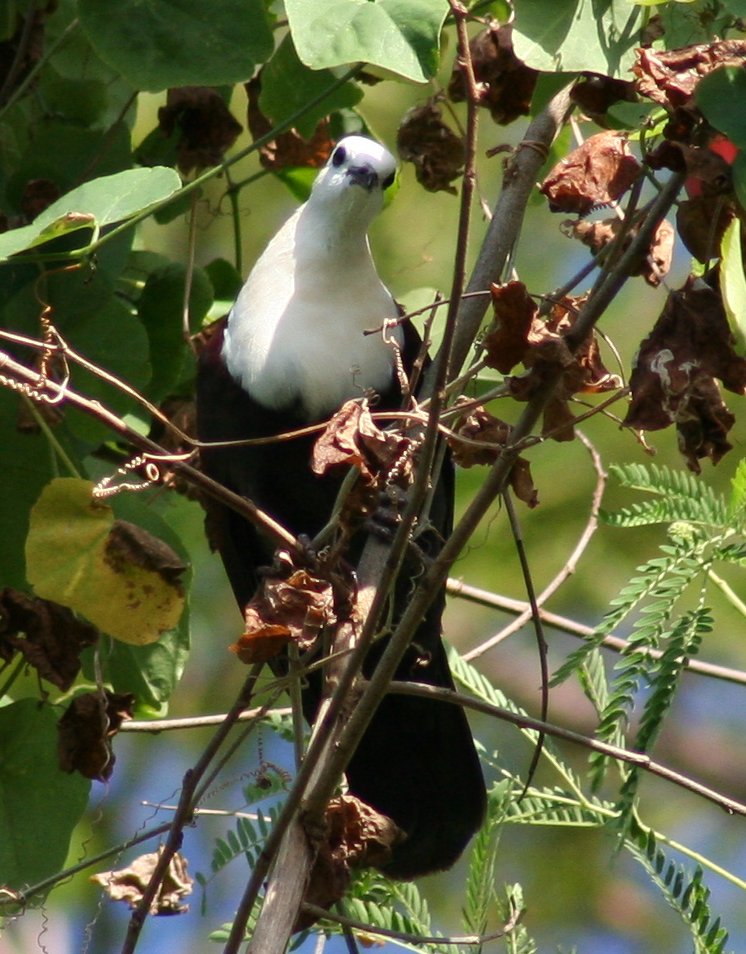
Wikimedia Commons
About the White-throated Ground Dove
The White-throated Ground Dove (Pampusana xanthonura) is a member of the Columbidae family and an emblematic bird of the tropical Pacific Islands. This species is primarily found in the Mariana Islands, particularly Guam and Saipan, where it plays a crucial ecological role as both a seed disperser and a prey species. Its presence is significant in maintaining the native flora, as it feeds on a variety of seeds, fruits, and small invertebrates. The White-throated Ground Dove's contribution to the ecosystem extends beyond its diet; its foraging habits help in seed dispersal, promoting plant diversity and forest regeneration. As a non-migratory bird, it remains within its habitat year-round, adapting to seasonal changes by altering its diet and breeding behavior accordingly. The bird's striking appearance and distinctive vocalizations make it a subject of interest among ornithologists and naturalists studying Pacific Island avifauna. The White-throated Ground Dove's distribution and abundance are closely linked to the health of its forest habitat, which faces threats from deforestation and invasive species. Conservation efforts are essential to preserve the natural ecosystems where these birds thrive, ensuring the continued ecological balance and biodiversity of the region. The species' role in the cultural heritage of the Pacific Islands also underscores its importance, as it features in local folklore and traditions. With ongoing habitat loss and predation pressures, understanding the White-throated Ground Dove's ecological role and habitat requirements is critical for developing effective conservation strategies.
The White-throated Ground Dove belongs to the family Columbidae, within the order Columbiformes. These birds typically live 6-8 years with a maximum recorded of 11 years.
How to Identify a White-throated Ground Dove
The adult White-throated Ground Dove measures around 26 to 30 centimeters in length, with a wingspan approximately 45 centimeters. Its plumage features a predominantly dark brown body with a striking white throat patch that gives the species its common name. The rest of the underparts are paler, transitioning from white throat to brownish-gray belly. Males and females exhibit subtle differences, with males typically displaying a slightly more iridescent sheen on their feathers. Juveniles are duller in color and lack the pronounced white throat of adults, making them less conspicuous. In flight, the White-throated Ground Dove presents a broad, rounded wing silhouette, and its tail is relatively short. When perched, it maintains a horizontal posture, often staying close to the ground or low branches. The bird's subtle coloration can sometimes lead to confusion with other ground doves, but the white throat is a reliable distinguishing feature. Its soft cooing calls also help in identification, especially when visual confirmation is challenging.
Having trouble telling birds apart? Upload a photo to our bird identification tool for an instant species match.
White-throated Ground Dove Habitat and Range
Preferred Habitat
The White-throated Ground Dove inhabits tropical and subtropical moist lowland forests and shrublands. It prefers dense forest understories, where it can easily forage on the ground for seeds and fallen fruits. The species is primarily found at elevations below 400 meters but can occasionally be seen in higher areas if suitable habitat is available. While typically associated with pristine forest environments, this dove can adapt to secondary growth areas and forest edges. Unlike some other dove species, the White-throated Ground Dove is less common in urban areas, although it may visit gardens or parks adjacent to forested regions. Seasonal habitat shifts are minimal given its non-migratory nature, but changes in food availability may influence local movements within its range.
Geographic Range
The breeding and residential range of the White-throated Ground Dove is limited to the Mariana Islands in the western Pacific Ocean, with core populations on Guam, Saipan, Tinian, and Rota. The range is quite restricted, making the species vulnerable to habitat changes and disturbances. There are no extensive migratory patterns, as the bird is largely sedentary, with individuals typically remaining in their local areas throughout the year. The highest population densities are found in undisturbed forested areas, where the doves can find ample food and nesting sites. Conservation areas and protected reserves in the Marianas are crucial for maintaining viable populations, as these provide safe havens from habitat destruction and invasive species.
Want to know which birds visit your area? Browse our backyard birds by location guides for region-specific species lists.
What Does the White-throated Ground Dove Eat?
The diet of the White-throated Ground Dove mainly consists of seeds, fruits, and small invertebrates. The bird forages primarily on the forest floor, where it uses its strong bill to pick up seeds and fallen berries. It shows a preference for native plant species, which helps in seed dispersal. Seasonal variations in food availability lead to dietary adjustments, with doves consuming more fruits during periods of abundance and relying on seeds during leaner times. The size of prey items is generally small, consistent with the bird's modest size. Foraging typically occurs during the cooler parts of the day, such as early morning and late afternoon, when the bird is less vulnerable to predation.
White-throated Ground Dove Behavior and Social Structure
The White-throated Ground Dove exhibits a generally solitary or paired lifestyle, although small family groups may form during the breeding season. Territorial behavior is common, with males defending their chosen area through vocalizations and occasional physical displays. Courtship involves males performing display flights and soft cooing to attract females. The species is not known for extensive flocking, but loose associations may occur when food sources are plentiful. Alert and cautious, the White-throated Ground Dove responds quickly to potential threats, often taking cover in dense vegetation. Its daily activities are centered around feeding, resting, and maintaining territory, with peak activity during dawn and dusk.
White-throated Ground Dove Nesting and Reproduction
The nesting habits of the White-throated Ground Dove involve constructing simple nests made of twigs and leaves, usually placed in low bushes or trees. These structures, though rudimentary, provide adequate support for the one or two eggs typically laid per clutch. Incubation lasts about 14 days, with both parents sharing the responsibility of keeping the eggs warm. Once hatched, the chicks remain in the nest for approximately two weeks before fledging. Parental roles are shared, with both male and female taking turns feeding and protecting the young. The species generally raises one to two broods per year, depending on environmental conditions and food availability.
White-throated Ground Dove Sounds and Vocalizations
The primary song of the White-throated Ground Dove is a series of soft, rhythmic coos that rise and fall gently, providing a soothing background to the forest soundscape. These calls are often repeated throughout the day, especially during the breeding season, serving both territorial and mate attraction purposes. In addition to the song, the dove produces a variety of call notes, including softer coos used for communication between mates or signaling alarm. A unique characteristic of this bird's vocalizations is their subtlety, which stands in contrast to the louder calls of some other dove species.
Interesting Facts About the White-throated Ground Dove
- 1The White-throated Ground Dove plays a crucial role in seed dispersal, aiding in the regeneration of native forests.
- 2This bird is one of the few dove species that remain largely sedentary, with no significant migration patterns.
- 3The White-throated Ground Dove's soft cooing is often described as a calming forest melody, distinct in its gentle rhythm.
- 4In local folklore, the White-throated Ground Dove is considered a symbol of peace and tranquility.
- 5Despite its modest size, the dove can cover considerable ground while foraging, helping maintain ecological balance.
- 6The species' population decline on Guam is linked to the introduction of the brown tree snake, a major predator.
- 7The White-throated Ground Dove's preference for dense forest undergrowth makes it less visible but vital to its ecosystem.
White-throated Ground Dove Conservation Status
The White-throated Ground Dove is currently classified as Near Threatened by the IUCN, with populations declining due to habitat loss and predation by invasive species such as brown tree snakes. Conservation efforts in the Mariana Islands focus on habitat restoration and predator control to mitigate these threats. Historical data show a more widespread distribution before the introduction of invasive species. Continued conservation work is crucial to prevent further declines, with efforts including breeding programs and habitat protection measures aimed at stabilizing and increasing population numbers.
Other Columbidae Species


Birds Similar to the White-throated Ground Dove
These species are often confused with the White-throated Ground Dove due to similar appearance or overlapping range.

