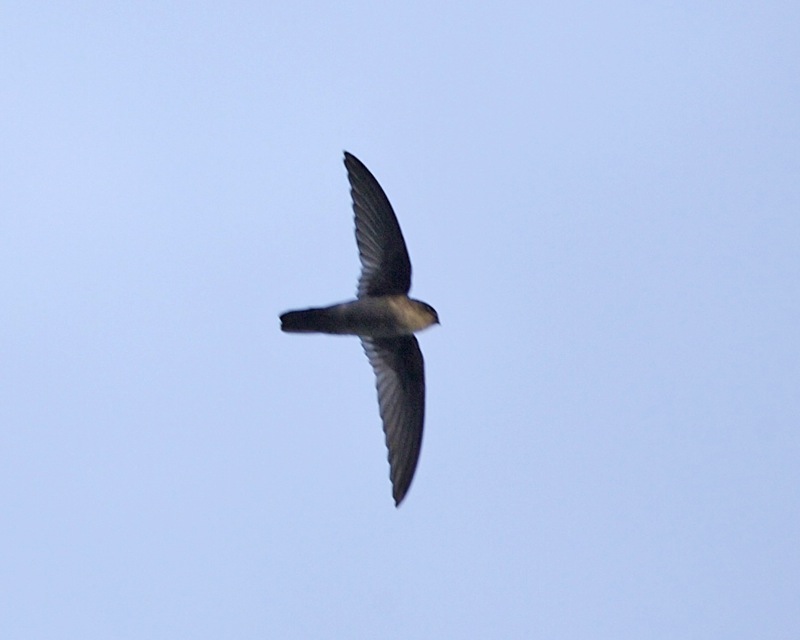
Whitehead's Swiftlet
Aerodramus whiteheadi
Order: Apodiformes / Family: Apodidae

Wikimedia Commons
About the Whitehead's Swiftlet
The Whitehead's Swiftlet, scientifically named Aerodramus whiteheadi, is a remarkable avian species primarily known for its swift and impressive aerial abilities. This bird is a member of the Apodidae family, which includes other fast-flying swifts. Its adept flight skills are a key adaptation for its insectivorous diet, allowing it to catch prey mid-air with precision. In terms of appearance, the Whitehead's Swiftlet is relatively small, averaging about 11 centimeters in length, with a wingspan that can reach up to 25 centimeters. Its plumage is predominantly dark gray, blending effectively into the shadowy environments of caves and dense forests where it often resides.
This species holds particular ecological significance in its native regions, notably the Philippines, where it is endemic. The Whitehead's Swiftlet plays a crucial role in controlling insect populations, thus contributing to the ecological balance within its habitat. It is predominantly found in forested areas and is known to inhabit regions from sea level up to mountainous areas at elevations of approximately 1,800 meters. The bird's presence in both lowland and montane forests demonstrates its adaptability to different ecological niches.
Seasonally, the Whitehead's Swiftlet exhibits some movement but is primarily a sedentary species, showing limited migratory behavior. It may undertake short-distance movements in response to food availability or breeding requirements. The swiftlet's use of echolocation, a trait relatively rare among birds, is employed primarily within dark caves where it nests. This echolocation capability allows it to navigate and hunt effectively in complete darkness, underscoring its unique evolutionary adaptations. Overall, the Whitehead's Swiftlet is an integral component of its ecosystem, contributing to both biodiversity and the natural insect control processes.
The Whitehead's Swiftlet belongs to the family Apodidae, within the order Apodiformes. These birds typically live typically 4-6 years, with a maximum recorded lifespan of 10 years..
How to Identify a Whitehead's Swiftlet
Identifying the Whitehead's Swiftlet requires close attention to several specific field marks. Adults exhibit a uniform dark gray to blackish plumage, which can appear slightly glossy under direct sunlight. This coloration is consistent across both sexes, as there is no significant sexual dimorphism in plumage. Juveniles are similar in appearance to adults but may have slightly duller feathers with some brownish tinges, particularly on the underparts. The Whitehead's Swiftlet's body is compact and streamlined, aiding its swift, agile flight.
One of the key identification features is the bird's small, slightly forked tail, which facilitates its rapid maneuvers in the air. Its wings are long and narrow, allowing for sustained flight and quick changes in direction. When observed at rest, typically within cave interiors, the Whitehead's Swiftlet perches with a distinctive horizontal posture, its wings folded neatly against its body.
The Whitehead's Swiftlet can be confused with other swiftlet species within its range, such as the Philippine Swiftlet (Aerodramus mearnsi). However, it is distinguished by its darker overall coloration and slightly smaller size. Observers should note the swiftlet's flight silhouette, characterized by its rapid, fluttering wingbeats and occasional gliding. While in flight, the bird's lack of a distinct white rump, a feature present in some other swiftlet species, is another distinguishing attribute.
Having trouble telling birds apart? Upload a photo to our bird identification tool for an instant species match.
Whitehead's Swiftlet Habitat and Range
Preferred Habitat
The Whitehead's Swiftlet primarily inhabits tropical and subtropical forests, with a preference for both lowland and montane environments. In the Philippines, its range includes the islands of Luzon and Mindanao, where it occupies forested regions. This species is particularly associated with limestone caves and karst landscapes, which provide ideal nesting sites. These caves, often located within dense forests, offer the dark conditions favorable for the swiftlet's echolocation.
The bird's elevation range varies from sea level to about 1,800 meters, allowing it to exploit different ecological zones. In terms of seasonal habitat shifts, the Whitehead's Swiftlet does not exhibit significant changes, primarily maintaining its presence in forested areas year-round. Unlike some bird species, it is less commonly found in urban settings, preferring the privacy and resources of rural and remote forested regions.
During certain times of the year, particularly the breeding season, the swiftlet may be observed entering caves more frequently, as these locations serve as both nesting sites and communal roosts. The bird's reliance on such specific habitats underscores the importance of preserving these environments, which are increasingly threatened by human activity.
Geographic Range
The Whitehead's Swiftlet is endemic to the Philippines, with its range primarily restricted to the islands of Luzon and Mindanao. Within these islands, it is found in regions that offer suitable forested habitats and cave systems. The bird does not exhibit significant migratory behavior, largely remaining within these areas throughout the year.
In terms of population density, the Whitehead's Swiftlet tends to be more concentrated around limestone cave systems, which provide essential nesting and roosting sites. These populations are relatively stable where appropriate habitat conditions persist, although localized declines may occur due to habitat disturbance.
Breeding occurs primarily within the geographic confines of its known range, with no evidence of long-distance migration or dispersal to neighboring islands or regions. However, some short-distance movements might occur in response to changes in food availability or environmental conditions. As a result, conservation efforts are particularly focused on protecting the specific habitats within the swiftlet's limited range to ensure its continued survival.
Want to know which birds visit your area? Browse our backyard birds by location guides for region-specific species lists.
What Does the Whitehead's Swiftlet Eat?
The diet of the Whitehead's Swiftlet consists primarily of small aerial insects, which it captures during rapid, agile flights. This diet includes mosquitoes, flies, beetles, and other small arthropods. The bird's feeding technique involves swift, direct flight patterns that allow it to snatch prey from the air with remarkable precision.
Seasonal variations in diet are influenced by the availability of different insect populations. During the wet season, when insect numbers typically increase, the Whitehead's Swiftlet can exploit a more abundant food supply. Conversely, in drier periods, it may need to broaden its foraging range to maintain sufficient food intake.
The swiftlet's foraging occurs primarily during daylight hours, although its ability to navigate using echolocation enables it to extend foraging activities into low-light conditions. This adaptability is particularly beneficial when feeding near or within the caves where it nests. Prey size varies but generally remains small, consistent with the bird's feeding adaptations and physical capabilities.
Whitehead's Swiftlet Behavior and Social Structure
The Whitehead's Swiftlet exhibits a range of behaviors that are both fascinating and adaptive to its environment. Socially, it tends to form loose flocks, especially during feeding and roosting times. These flocks, although not tightly knit, provide some level of protection against predators through sheer numbers.
Territorial behavior is not strongly pronounced in this species, as it often shares its habitat with other swiftlets and birds. During the breeding season, however, the Whitehead's Swiftlet displays more defined territorial tendencies, particularly around nesting sites. Courtship displays are subtle, involving aerial maneuvers and calls to attract a mate.
Flocking patterns may vary with the seasons, becoming more pronounced during times of food abundance. The response to predators is typically to rely on its swift flight to evade capture, as few predators can match its speed and agility. In terms of daily activity patterns, the Whitehead's Swiftlet is primarily diurnal, with peak activity occurring during the early morning and late afternoon when insects are most active.
Whitehead's Swiftlet Nesting and Reproduction
The nesting habits of the Whitehead's Swiftlet are closely tied to its preference for cave environments. Nests are constructed on the walls or ceilings of these caves, utilizing primarily saliva, which hardens to form a secure structure. This nesting material choice is both unique and effective, allowing the swiftlet to build in even the most challenging locations.
Clutch size typically consists of one or two eggs, which are white and oval-shaped. The incubation period lasts around 18 to 23 days, during which both parents share the responsibility of keeping the eggs warm. After hatching, the fledging period spans approximately 40 to 45 days, with both parents actively involved in feeding and caring for the young.
The Whitehead's Swiftlet usually raises one brood per year, although in optimal conditions, a second brood may occur. Nesting location preferences emphasize safety from predators and proximity to feeding areas, ensuring that the swiftlet can efficiently provide for its chicks while minimizing exposure to potential threats.
Whitehead's Swiftlet Sounds and Vocalizations
The Whitehead's Swiftlet's vocalizations are characterized by a series of high-pitched, rapid clicks used primarily for echolocation. These sounds are not musical but serve a crucial role in navigation and communication within the dark confines of its cave habitats.
In addition to echolocation clicks, the swiftlet produces a variety of call notes that are softer and more conversational in tone, often heard during social interactions or when establishing nesting sites. Alarm calls are sharper and slightly louder, designed to alert other swiftlets of potential danger.
The dawn chorus of the Whitehead's Swiftlet is less prominent than in many other bird species, as its vocalizations are more functional than melodic. However, these sounds are vital for the bird's survival, enabling it to thrive in environments where vision alone would be insufficient.
Interesting Facts About the Whitehead's Swiftlet
- 1The Whitehead's Swiftlet uses echolocation similar to bats, a rare trait among birds, allowing it to navigate in total darkness.
- 2This swiftlet species can fly at speeds up to 80 kilometers per hour, making it one of the fastest in its family.
- 3Whitehead's Swiftlets build nests entirely out of their hardened saliva, a technique also used by other swiftlet species for making edible bird's nests.
- 4The bird's life span can extend up to 15 years in the wild, a considerable age for its size.
- 5Despite its small size, the Whitehead's Swiftlet can cover large areas while foraging, traveling several kilometers in search of food.
- 6The Whitehead's Swiftlet has been observed to exhibit cooperative breeding behavior, where non-breeding individuals help rear chicks.
- 7This species of swiftlet is known for its silent flight, an adaptation that aids in stealthy insect capture during flight.
Whitehead's Swiftlet Conservation Status
The Whitehead's Swiftlet is currently listed as Least Concern by the IUCN, indicating a relatively stable population. However, it faces threats from habitat destruction, particularly due to deforestation and cave disturbances caused by human activities. Conservation efforts focus on protecting the swiftlet's natural habitats, particularly forested areas and cave systems essential for nesting. Local conservation initiatives aim to raise awareness about the importance of these ecosystems and promote sustainable land use practices. Historically, population changes have been linked to environmental degradation, but ongoing efforts seek to stabilize and enhance swiftlet populations through habitat preservation and legal protections. Monitoring and further research are needed to ensure the long-term viability of this unique species.
Other Apodidae Species


Birds Similar to the Whitehead's Swiftlet
These species are often confused with the Whitehead's Swiftlet due to similar appearance or overlapping range.