
Woodland Pipit
Anthus nyassae
Order: Passeriformes / Family: Motacillidae
Wikimedia Commons
About the Woodland Pipit
The Woodland Pipit, scientifically known as Anthus nyassae, is a small passerine bird belonging to the family Motacillidae. This species inhabits the rich woodlands and savannas of sub-Saharan Africa, thriving in regions where its cryptic coloration provides excellent camouflage against the dappled sunlight filtering through the tree canopy. The Woodland Pipit's presence is significant as it plays a crucial role in insect population control within its ecosystem. It is commonly found in countries such as Tanzania, Zambia, and Mozambique, where it exploits a variety of habitats including miombo woodlands and riverine forests. Its ecological role extends to seed dispersal, as it occasionally ingests seeds along with its primarily insectivorous diet. This bird is highly adapted to its environment, exhibiting seasonal behaviors that align with the availability of food resources. During the breeding season, which coincides with the rainy season in its range, the Woodland Pipit becomes more vocal and engages in intricate courtship displays. These displays include aerial acrobatics and melodic songs designed to attract mates and establish territories. Its adaptability to seasonal changes ensures its survival through fluctuating environmental conditions. The Woodland Pipit also participates in mixed-species foraging flocks, often seen alongside other small insectivorous birds. This behavior enhances its foraging efficiency and provides added protection from predators. As an integral part of the woodland avian community, the Woodland Pipit contributes to the intricate tapestry of life in these biodiverse regions. Its interactions with other species, both plant and animal, highlight the interconnectedness of the woodland ecosystem and the importance of conserving these habitats.
The Woodland Pipit belongs to the family Motacillidae, within the order Passeriformes. These birds typically live average 3-4 years, with a maximum recorded of 6 years.
How to Identify a Woodland Pipit
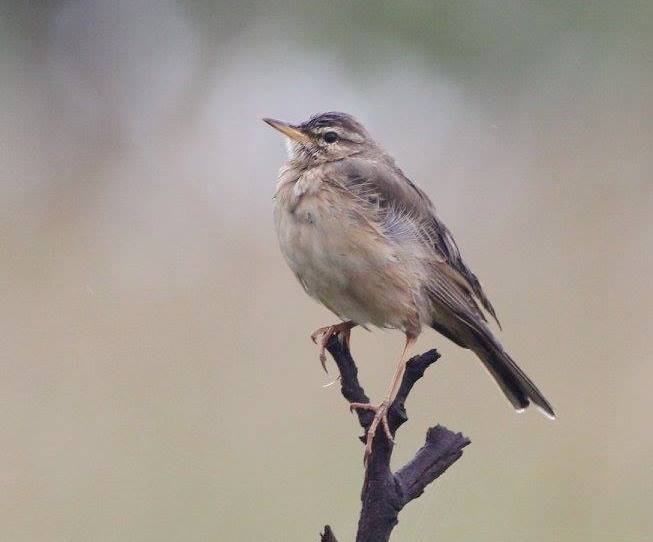
The Woodland Pipit is a small songbird characterized by its streaked plumage, which provides effective camouflage in its woodland habitat. Adult pipits display a brownish upper body with dark streaks and a paler, streaked breast. The underparts are whitish, often with a buff tinge. Juvenile Woodland Pipits resemble adults but may show fresher, more pronounced streaking. Males and females are similar in plumage, making sex differentiation challenging in the field. The bird's thin bill is well adapted for its insectivorous diet, and its legs are relatively long, aiding in terrestrial foraging. In flight, the Woodland Pipit exhibits a distinctive undulating pattern, with rapid wingbeats followed by brief glides. Its silhouette is slender with a slightly forked tail, which is often wagged upon landing. When perched, the pipit maintains an upright posture, often on low branches or the ground. Identification challenges may arise with similar species such as the Tree Pipit or the African Pipit, but the Woodland Pipit can be distinguished by its habitat preference and subtle differences in plumage and vocalizations.
Having trouble telling birds apart? Upload a photo to our bird identification tool for an instant species match.
Woodland Pipit Habitat and Range
Preferred Habitat
The Woodland Pipit predominantly inhabits the woodlands and savannas of sub-Saharan Africa. It thrives in miombo woodlands, characterized by the presence of Brachystegia and Julbernardia trees, as well as in riverine forests and open savanna woodlands. The bird is typically found at elevations ranging from sea level to 2,000 meters. During the dry season, it may venture into more open areas in search of food, but it generally avoids dense forests and arid regions. While the Woodland Pipit can adapt to some human-modified landscapes, it prefers areas with ample tree cover, making it less common in urban settings. Its habitat choice is closely linked to the availability of its insect prey, which flourishes in these biodiverse environments.
Geographic Range
The Woodland Pipit's range spans across several countries in sub-Saharan Africa, with a strong presence in Tanzania, Zambia, Mozambique, and Zimbabwe. It is a resident species, with no significant migratory movements, although local dispersal may occur in response to seasonal changes in food availability. During the breeding season, the Woodland Pipit is more concentrated in areas with optimal nesting sites and abundant food resources. Population densities are higher in regions where miombo woodlands are extensive, such as in central and southern Tanzania and northern Zambia. In these hotspots, the Woodland Pipit is a common sight, contributing to the region's avian diversity.
Want to know which birds visit your area? Browse our backyard birds by location guides for region-specific species lists.
What Does the Woodland Pipit Eat?
The Woodland Pipit primarily feeds on insects, making it a key player in controlling pest populations in its habitat. Its diet includes ants, beetles, grasshoppers, and caterpillars, which it captures through active ground foraging. The pipit employs a methodical search pattern, walking or running across the forest floor, occasionally making short flights to catch airborne prey. During the breeding season, its diet may shift to include more protein-rich insects to support the nutritional needs of its young. The Woodland Pipit also consumes small seeds and berries, particularly when insect availability declines. This opportunistic feeding strategy ensures a relatively stable food supply throughout the year.
Woodland Pipit Behavior and Social Structure
The Woodland Pipit exhibits a range of intriguing behaviors, particularly during the breeding season. It is generally a solitary bird, coming together with others primarily during the breeding period or in mixed-species foraging flocks. Its territorial behavior intensifies during breeding, with males performing conspicuous song flights to establish dominance and attract females. These displays involve ascending flights with melodious singing, followed by parachute-like descents. The pipit's daily activity pattern includes early morning and late afternoon foraging sessions, taking advantage of cooler temperatures and peak insect activity. In response to predators, the Woodland Pipit remains vigilant, using its cryptic plumage to blend into its surroundings. When threatened, it may freeze or take a swift, zigzagging flight to evade capture. Its behavior reflects a balance between energy conservation and the need to remain inconspicuous in a predator-rich environment.
Woodland Pipit Nesting and Reproduction
The Woodland Pipit nests on the ground, typically selecting sites with ample cover from grass or low shrubs. The nest is a cup-shaped structure, woven from grasses and lined with softer materials such as feathers or fine grasses. Clutches usually consist of 2 to 4 eggs, which are incubated by the female for about 12 to 14 days. Both parents participate in feeding the chicks, which fledge approximately 10 to 12 days after hatching. The Woodland Pipit may raise one or two broods per year, depending on environmental conditions and food availability. Parental care is crucial during the fledgling stage, as young birds are particularly vulnerable to predation.
Woodland Pipit Sounds and Vocalizations
The Woodland Pipit's primary song is a soft, melodic series of notes, delivered in a fluid sequence with a gentle, rising pitch. This song is most often heard during the breeding season, serving to attract mates and establish territories. The call notes are sharp and metallic, often described as 'tseet' or 'tsip' sounds, used for communication between mates or during flight. Alarm calls are more urgent and harsh, signaling the presence of potential threats. The Woodland Pipit participates in the dawn chorus, contributing its distinctive calls to the symphony of woodland sounds. Its vocalizations, while pleasant, are subtle compared to some other woodland songbirds.
Interesting Facts About the Woodland Pipit
- 1The Woodland Pipit's aerial courtship display involves a dramatic flight followed by a parachute-like descent.
- 2Despite its name, the Woodland Pipit can also be found in open savanna landscapes, showcasing its adaptability.
- 3The Woodland Pipit's diet primarily consists of insects, making it an important player in pest control within its ecosystem.
- 4During the breeding season, male Woodland Pipits become more vocal, using song flights to attract females and establish territories.
- 5Woodland Pipits often join mixed-species foraging flocks, enhancing their foraging efficiency and predator awareness.
- 6The cup-shaped nest of the Woodland Pipit is intricately woven from grasses and is well camouflaged on the forest floor.
- 7Young Woodland Pipits fledge approximately 10 to 12 days after hatching, showcasing rapid development in early life stages.
Woodland Pipit Conservation Status
The Woodland Pipit is currently classified as Least Concern by the IUCN, with a stable population trend. Its widespread distribution across suitable habitats in sub-Saharan Africa contributes to its resilience. However, habitat loss due to deforestation and agricultural expansion poses a potential threat. Conservation efforts focus on preserving woodland habitats and promoting sustainable land use practices. Historically, the Woodland Pipit has maintained stable populations, but ongoing monitoring is essential to ensure its continued survival amidst environmental changes.
Other Motacillidae Species



Birds Similar to the Woodland Pipit
These species are often confused with the Woodland Pipit due to similar appearance or overlapping range.

