Yellow-bellied Tit
Periparus venustulus
Order: Passeriformes / Family: Paridae

Wikimedia Commons
About the Yellow-bellied Tit
The Yellow-bellied Tit (Periparus venustulus) is a captivating member of the Paridae family, predominantly found in the temperate forests of East Asia. This small songbird plays a vital role in its ecosystem by aiding in insect population control and acting as a seed disperser. The tit's vibrant plumage and melodious call make it a favorite among birdwatchers and nature enthusiasts. In terms of distribution, the Yellow-bellied Tit primarily resides in China, frequenting provinces such as Sichuan, Fujian, and Yunnan, where dense forests provide ample resources for feeding and nesting. The bird thrives in both deciduous and mixed woodland areas, often preferring lower to mid-elevation ranges. Seasonally, the tit exhibits minimal migratory behavior, mainly adjusting its elevation range rather than traveling long distances. During the breeding season, which occurs from early spring to late summer, the Yellow-bellied Tit becomes highly active, engaging in elaborate courtship displays to attract mates. This period is critical for the species as it ensures the continuation of its population. In winter, these birds form loose flocks, sometimes mingling with other small passerines, to enhance foraging efficiency and protection against predators. The ecological role of the Yellow-bellied Tit extends beyond its immediate environment. By preying on insects detrimental to forest health, the tit indirectly supports the growth and sustainability of its habitat. Moreover, as a seed disperser, the bird contributes to the proliferation of various plant species, thus maintaining ecological balance. Its presence indicates a healthy forest ecosystem, making it an essential species for biodiversity conservation in the regions it inhabits.
The Yellow-bellied Tit belongs to the family Paridae, within the order Passeriformes. These birds typically live typically around 4-6 years, with a maximum recorded of 9 years..
How to Identify a Yellow-bellied Tit
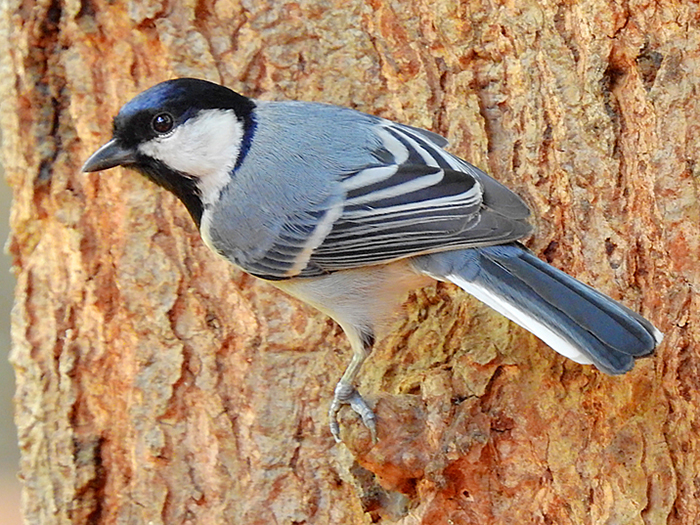
The Yellow-bellied Tit stands out with its vibrant yellow underparts, contrasting sharply with its black cap and nape. Adult plumage is characterized by a greenish back and wings, with a subtle blue tint on the wing feathers. The tail is relatively short and also exhibits a slight bluish hue. Juveniles display a duller plumage, with less pronounced yellow and a more muted black cap. Males and females appear similar, though males may sometimes exhibit slightly brighter coloring. When compared with similar species, such as the Coal Tit, the Yellow-bellied Tit's distinctive yellow belly provides a clear differentiation. In flight, the bird presents a compact silhouette with fast, erratic movements typical of tits. When perching, it often assumes an upright posture, frequently flicking its tail. This tit is most often confused with the Great Tit, yet the latter lacks the same vivid yellow underbelly and has a more robust build. Observers should note the Yellow-bellied Tit's smaller size and characteristic rapid wing beats when identifying the species in the field.
Having trouble telling birds apart? Upload a photo to our bird identification tool for an instant species match.
Yellow-bellied Tit Habitat and Range
Preferred Habitat
Yellow-bellied Tits inhabit temperate forests, favoring deciduous and mixed woodlands with abundant undergrowth. They are commonly found at elevations ranging from 500 to 2500 meters, though they may venture higher during warmer months. These birds display limited urban presence, occasionally visiting parks and gardens in suburban areas adjacent to forests. Seasonal habitat shifts primarily involve altitudinal migration, descending to lower elevations in winter in search of food and milder climates. In rural settings, they thrive in forest edges and clearings, where mixed vegetation supports a diverse insect population. Their adaptability to various forest types ensures their persistence across a wide geographic range.
Geographic Range
The Yellow-bellied Tit's breeding range primarily encompasses central and southern China, with significant populations in Sichuan, Fujian, and Yunnan provinces. It is also found in parts of northern Vietnam and Laos. During the winter months, the species may move slightly southward or to lower altitudes, although it generally remains within its breeding range. Migration corridors are not well-defined due to the bird's limited migratory behavior. Population density tends to peak in regions with optimal forest conditions, such as the subtropical and temperate zones of China. These areas provide the necessary resources for feeding, nesting, and sheltering.
Want to know which birds visit your area? Browse our backyard birds by location guides for region-specific species lists.
What Does the Yellow-bellied Tit Eat?
The diet of the Yellow-bellied Tit primarily consists of insects and other small invertebrates, which it actively seeks in the forest canopy. During the breeding season, its diet shifts to include a higher proportion of protein-rich insects, crucial for chick development. In winter, the bird's diet diversifies to include seeds and berries, supplementing the reduced availability of insects. The tit employs a variety of foraging techniques, such as gleaning from foliage and bark, often hanging upside-down to reach hidden prey. It occasionally joins mixed-species foraging flocks to increase feeding efficiency and access a wider array of food sources. Prey size generally includes small caterpillars, beetles, and spiders, which are abundant in its forested habitat.
Yellow-bellied Tit Behavior and Social Structure
Yellow-bellied Tits exhibit social and territorial behaviors, particularly during breeding. They maintain territories through vocalizations and displays, with males often engaging in song to assert dominance and attract mates. Courtship displays involve fluttering flights and intricate vocalizations, serving as both an attraction mechanism and a deterrent to rivals. During non-breeding seasons, these birds form loose flocks, which can include other tit species and small passerines, enhancing foraging success and predator detection. The Yellow-bellied Tit is diurnal, with peak activity in early morning and late afternoon. It displays a keen awareness of predators, utilizing alarm calls to alert conspecifics of danger. These calls often prompt temporary retreats into dense foliage until the threat subsides.
Yellow-bellied Tit Nesting and Reproduction
The Yellow-bellied Tit constructs its nest in tree cavities, often utilizing abandoned woodpecker holes. The nest is made from moss, feathers, and plant fibers, providing insulation and camouflage. Preferred nesting locations include deciduous trees with ample cover to protect against predators. The typical clutch size ranges from 4 to 7 eggs, with both parents sharing incubation duties over approximately 14 days. Fledging occurs about 18 days post-hatching, with both parents actively feeding the young. The species typically raises one brood per year, though favorable conditions may allow for a second. Parental roles are well-defined, with the female primarily responsible for incubation and the male assisting with feeding.
Yellow-bellied Tit Sounds and Vocalizations
The Yellow-bellied Tit's primary song is a series of melodious, high-pitched notes that rise and fall in a rhythmic pattern. Its call notes are sharp and distinctive, often used in communication between mates or to signal alarm. Alarm calls are short, rapid bursts, alerting other birds to potential threats. During the dawn chorus, the Yellow-bellied Tit contributes a lively, cheerful song that sets the tone for the surrounding forest. Its vocalizations, while subtle, are essential for maintaining territorial boundaries and coordinating flock activities. Comparatively, the tit's song is less complex than that of the Great Tit, featuring fewer variations in pitch and tempo.
Interesting Facts About the Yellow-bellied Tit
- 1The Yellow-bellied Tit's scientific name, Periparus venustulus, hints at its charming appearance, with 'venustulus' meaning 'charming' in Latin.
- 2Despite their small size, Yellow-bellied Tits can consume up to one-third of their body weight in food each day.
- 3These birds often engage in 'anting,' a behavior where they allow ants to crawl over their feathers, possibly to remove parasites.
- 4Yellow-bellied Tits have been observed to use tools, such as sticks, to extract insects from crevices, showcasing their problem-solving abilities.
- 5The species' vibrant yellow underparts are not just for show; they play a role in mate attraction and species recognition.
- 6During harsh winters, Yellow-bellied Tits may temporarily expand their diet to include small fruits and seeds to survive.
- 7These birds participate in mixed-species flocks, which can include up to 10 different bird species, enhancing their foraging success.
Yellow-bellied Tit Conservation Status
The Yellow-bellied Tit currently has a stable population trend and is classified as Least Concern by the IUCN. Despite this status, habitat loss due to deforestation poses a significant threat to its long-term survival. Conservation efforts focus on preserving forest habitats and promoting sustainable land-use practices. Historical data suggests that the species has maintained a stable population over several decades, benefiting from protected areas in China. Continued monitoring and habitat preservation are crucial to ensuring the species' future viability in its native range. Collaborative conservation initiatives aim to mitigate habitat degradation and secure the ecological integrity of its forest home.
Other Paridae Species


Birds Similar to the Yellow-bellied Tit
These species are often confused with the Yellow-bellied Tit due to similar appearance or overlapping range.