
Yellow-browed Camaroptera
Camaroptera superciliaris
Order: Passeriformes / Family: Cisticolidae
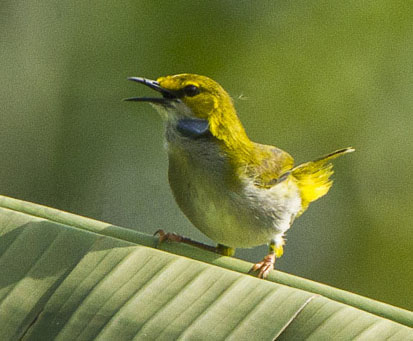
Wikimedia Commons
About the Yellow-browed Camaroptera
The Yellow-browed Camaroptera (Camaroptera superciliaris) is a small passerine bird belonging to the Cisticolidae family. This species is predominantly found across the tropical regions of sub-Saharan Africa, notably in countries like Nigeria, Cameroon, and Uganda. It thrives in a variety of habitats, ranging from dense forests to open woodlands. The bird's ecological role is significant, as it participates actively in the control of insect populations, thereby maintaining ecological balance in its native environment.
This bird is known for its adaptability to different forested environments, including the edges of lowland and montane forests. In areas like the Congo Basin, the Yellow-browed Camaroptera takes advantage of the dense underbrush to hunt for insects and build its nest. During the breeding season, which typically aligns with the rainy season, these birds become more vocal and territorial, displaying an array of behaviors to ward off intruders and attract mates.
Ecologically, the Yellow-browed Camaroptera plays a crucial role in its ecosystem. By feeding on a variety of insects, it helps control pest populations, contributing to the health of the forest. Its presence in the ecosystem also indicates a healthy, biodiverse environment, as it requires a well-structured habitat with ample foliage and insect life. The bird's adaptability to various habitats makes it a resilient species, though it still faces challenges from habitat loss and fragmentation.
The Yellow-browed Camaroptera belongs to the family Cisticolidae, within the order Passeriformes. These birds typically live typically 4-6 years, with some living up to 8 years..
How to Identify a Yellow-browed Camaroptera
The Yellow-browed Camaroptera is a small bird, measuring approximately 11 cm in length. Its most distinctive feature is the bright yellow supercilium or 'eyebrow' that contrasts sharply with its olive-green upperparts and grayish underparts. Both sexes appear similar, making it difficult to distinguish between males and females based on plumage alone. However, during the breeding season, males may appear slightly more vibrant.
Juvenile Yellow-browed Camaropteras resemble adults but often display duller colors. The bird's compact body and short tail are characteristic, as is its quick, darting flight. When perched, it often flicks its tail upward, a behavior that can aid in identification. In flight, its silhouette is compact and rounded, lacking the elongated tails of some other Cisticolidae members.
The Yellow-browed Camaroptera can be confused with the Green-backed Camaroptera due to overlap in range. However, the former's yellow supercilium and more pronounced olive tones help differentiate it. Observers can also look for its characteristic perching posture and active foraging behavior.
Having trouble telling birds apart? Upload a photo to our bird identification tool for an instant species match.
Yellow-browed Camaroptera Habitat and Range
Preferred Habitat
The Yellow-browed Camaroptera occupies a variety of habitats, primarily within tropical and subtropical regions. It thrives in dense forests, including lowland rainforests and montane forests, as well as in more open woodland and savanna environments. In areas such as the moist forests of West Africa, it prefers the thick undergrowth where it can forage for insects and build nests.
The bird's elevation range extends from sea level to about 2,000 meters, depending on the availability of suitable dense vegetation. During the non-breeding season, it may venture into secondary growth and scrub habitats, where it continues to find ample food resources.
In urban areas, the Yellow-browed Camaroptera adapts to gardens and parks with sufficient tree cover and underbrush, although it remains more common in rural and less disturbed habitats. Seasonal habitat shifts are minimal, given its year-round presence in most of its range, but local movements may occur in response to food availability or habitat changes.
Geographic Range
The Yellow-browed Camaroptera's range extends across a significant portion of sub-Saharan Africa. Its breeding range includes countries such as Nigeria, Gabon, and the Democratic Republic of the Congo, where it resides in both primary and secondary forests. In East Africa, it is found in Uganda and parts of Kenya, favoring forested areas with dense underbrush.
The bird is non-migratory, meaning it generally remains within its range throughout the year. However, it may undertake local movements to exploit seasonal variations in food availability. Areas like the Congo Basin represent population density hotspots due to the rich biodiversity and ample habitat.
Although the species does not engage in long-distance migrations, it is well-distributed across its range, with populations adapting to both wet and dry conditions. In southern reaches of its distribution, such as Angola and Zambia, the bird's presence is more scattered, reflecting variations in habitat availability and environmental pressures.
Want to know which birds visit your area? Browse our backyard birds by location guides for region-specific species lists.
What Does the Yellow-browed Camaroptera Eat?
The Yellow-browed Camaroptera is primarily insectivorous, feeding on a wide array of small invertebrates that it finds within the dense foliage of its habitat. Its diet consists largely of insects such as beetles, ants, and caterpillars, which it expertly gleans from leaves and branches. During the rainy season, the abundance of insects allows the Camaroptera to increase its feeding frequency and support its energetic breeding activities.
In addition to insects, the bird occasionally consumes spiders and other small arthropods, exploiting diverse food sources to meet its nutritional needs. Its foraging technique involves quick, agile movements as it hops through undergrowth, using its short, pointed bill to pick off prey.
Seasonal dietary changes are minimal, but during times of insect scarcity, the Yellow-browed Camaroptera may supplement its diet with seeds and small fruits. This flexibility in dietary habits helps the bird to survive in varying environmental conditions. Feeding typically occurs throughout the day, with peaks in activity during the cooler morning and late afternoon hours.
Yellow-browed Camaroptera Behavior and Social Structure
The Yellow-browed Camaroptera is a highly social bird, often seen in pairs or small family groups. It exhibits strong territorial behavior, especially during the breeding season, when males engage in vigorous displays to defend their territory from rivals. Courtship displays include a series of vocalizations and physical postures aimed at attracting a mate.
Flocking behavior is common outside the breeding season, with groups forming to forage and roost together. These flocks may include other small insectivorous birds, providing safety in numbers against potential predators. The bird's response to predators includes alarm calls and evasive flight patterns designed to confuse and evade threats.
Daily activity patterns of the Yellow-browed Camaroptera typically involve periods of intense foraging interspersed with resting. It is most active during the early morning and late afternoon, when it takes advantage of cooler temperatures to search for food. The bird's energetic and inquisitive nature makes it a lively presence in its habitat.
Yellow-browed Camaroptera Nesting and Reproduction
The Yellow-browed Camaroptera constructs a distinctive domed nest, often hidden within dense vegetation to protect against predators. Preferred nesting sites include low shrubs and small trees, where the bird can weave together grasses, leaves, and spider webs to create a secure structure.
Clutch size usually consists of two to three eggs, which are incubated primarily by the female. The incubation period lasts approximately 14 days, after which the chicks hatch and are cared for by both parents. Fledging occurs about 14 days post-hatching, with young birds leaving the nest but remaining dependent on parental feeding and protection for several weeks.
The Yellow-browed Camaroptera typically produces one to two broods per year, depending on environmental conditions and food availability. Parental roles are shared, with both male and female contributing to feeding and guarding the young, ensuring a high survival rate for the offspring.
Yellow-browed Camaroptera Sounds and Vocalizations
The primary song of the Yellow-browed Camaroptera is a clear, ascending series of notes, often described as 'chip-chip-chip-churrrrr.' This song serves both as a territorial declaration and a courtship call during the breeding season. In addition to its song, the bird emits various call notes, including sharp 'tsee-tsee' sounds used for communication between mates and group members.
Alarm calls are brisk and high-pitched, designed to alert conspecifics of potential threats. During the dawn chorus, the Yellow-browed Camaroptera's song is particularly prevalent, contributing to the rich acoustic tapestry of its habitat.
The bird's vocalizations are not only distinctive but also serve as an important tool for maintaining social bonds and coordinating group activities within its densely vegetated environment.
Interesting Facts About the Yellow-browed Camaroptera
- 1The Yellow-browed Camaroptera can often be heard before it is seen, due to its loud, distinctive song.
- 2This bird is known for its elaborate nest-building skills, using spider silk to weave its domed structures.
- 3Though small, the Yellow-browed Camaroptera is a prolific insect hunter, helping control pest populations.
- 4The bird's bright yellow supercilium provides an easy field mark for birdwatchers in dense habitats.
- 5Unlike many birds, the Yellow-browed Camaroptera is not highly migratory, remaining in its range year-round.
- 6Its social nature often leads it to form mixed-species flocks, enhancing its foraging efficiency and safety.
- 7The Camaroptera's adaptability to various habitats makes it a resilient member of the African avifauna.
Yellow-browed Camaroptera Conservation Status
The IUCN currently lists the Yellow-browed Camaroptera as a species of Least Concern, reflecting its stable population trend. However, ongoing threats such as habitat destruction and fragmentation pose long-term risks to its populations. Deforestation for agriculture and urban development are primary challenges, especially in West Africa. Conservation efforts focus on habitat preservation, with several protected areas established to safeguard crucial breeding and foraging grounds. Historical population changes have been relatively minor, but continued vigilance is necessary to ensure the species' longevity. Organizations working in the regions where the Yellow-browed Camaroptera resides emphasize the importance of sustainable land-use practices to mitigate habitat loss and promote biodiversity conservation.


