
Yellow-browed Sparrow
Ammodramus aurifrons
Order: Passeriformes / Family: Passerellidae
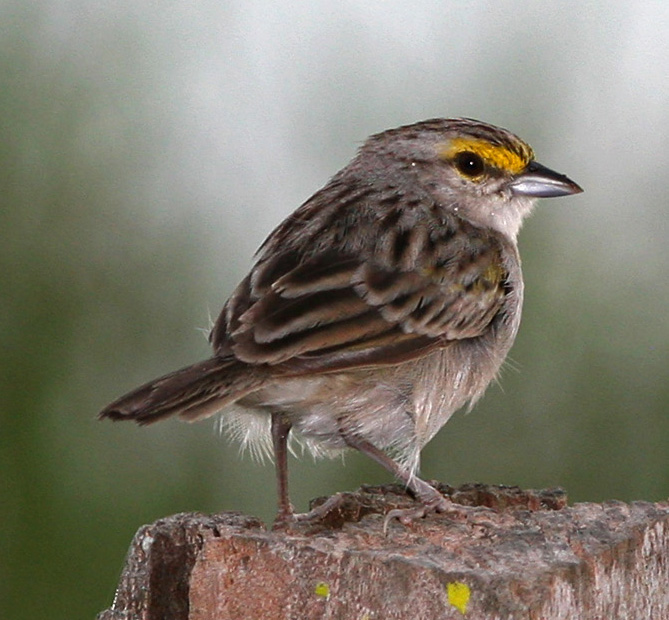
Wikimedia Commons
About the Yellow-browed Sparrow
The Yellow-browed Sparrow (Ammodramus aurifrons) is a small yet robust passerine bird, notable for its adaptability and wide distribution across South America. Its presence marks the open grasslands, savannas, and agricultural fields from the eastern slopes of the Andes to the Atlantic coast. As a member of the Passerellidae family, it plays a vital role in maintaining the ecological balance by controlling insect populations and dispersing seeds. This bird is a year-round resident in countries such as Brazil, Bolivia, and Paraguay, thriving in both lush and arid environments. Its adaptability allows it to exploit a range of habitats, from lowland plains to the foothills of mountains, generally avoiding dense forested areas. During the breeding season, the Yellow-browed Sparrow becomes particularly vocal, with males establishing territories through persistent song. This behavior is crucial for maintaining pair bonds and ensuring reproductive success. Outside of the breeding season, these sparrows often form loose flocks, enhancing their foraging efficiency and predator vigilance. Despite its seemingly inconspicuous presence, the Yellow-browed Sparrow contributes significantly to the health of grassland ecosystems. Its diet primarily consists of seeds and insects, which it gleans from the ground, helping to control pest populations. The bird's foraging activity aerates the soil and promotes plant growth, supporting the broader biodiversity of its habitat. The conservation status of the Yellow-browed Sparrow remains relatively secure, but habitat loss due to agricultural expansion poses a potential threat. Conservation efforts focus on sustainable land management practices that preserve its natural habitats while accommodating human agricultural needs.
The Yellow-browed Sparrow belongs to the family Passerellidae, within the order Passeriformes. These birds typically live typically 3-5 years, with some reports of individuals reaching 6 years..
How to Identify a Yellow-browed Sparrow
Adult Yellow-browed Sparrows are easily identified by their bright yellow stripe above the eye, which contrasts sharply with their otherwise muted plumage. Their upperparts are predominantly brown, streaked with darker tones, reminiscent of sparrows found in temperate regions. The underparts are a pale buff color, often appearing almost white, especially in brighter light. Juveniles resemble adults but display more subtle coloration and lack the pronounced yellow eyebrow. Males and females appear similar, though males may exhibit slightly brighter plumage during the breeding season. In flight, the Yellow-browed Sparrow shows a rounded silhouette with a short tail and broad wings, which aid in its agile movements through grassy habitats. When perched, it often adopts an upright posture, making it easier to spot among the vegetation. Despite its distinctive traits, the Yellow-browed Sparrow can be confused with similar species like the Grassland Sparrow (Ammodramus humeralis). However, the latter lacks the prominent yellow eyebrow and typically inhabits more open grasslands.
Having trouble telling birds apart? Upload a photo to our bird identification tool for an instant species match.
Yellow-browed Sparrow Habitat and Range
Preferred Habitat
The Yellow-browed Sparrow predominantly inhabits open grasslands, savannas, and agricultural fields. It thrives at elevations ranging from sea level to approximately 1,500 meters. This bird is adaptable, often found in both managed and natural grasslands. Seasonal shifts may see it in slightly different habitats, such as edges of woodlands during wetter months. In urban areas, it occasionally ventures into parks and gardens, though it prefers less disturbed zones where vegetation remains dense. Its presence in rural areas is more pronounced, particularly where fields and pastures provide ample foraging opportunities.
Geographic Range
The Yellow-browed Sparrow's range spans much of South America, with a stronghold in Brazil, Bolivia, and Paraguay. It also extends into northern Argentina, southern Guyana, and Suriname. This bird does not undertake long-distance migrations, generally remaining within its breeding range year-round. However, some local movements occur in response to seasonal changes in food availability and habitat conditions. Population density is highest in regions where open grasslands and agricultural fields intersect, such as the Cerrado biome in Brazil and the lowland Pampas of Argentina.
Want to know which birds visit your area? Browse our backyard birds by location guides for region-specific species lists.
What Does the Yellow-browed Sparrow Eat?
The diet of the Yellow-browed Sparrow primarily consists of seeds and insects. During the dry season, seeds from grasses and small herbaceous plants form the bulk of its diet. As the rainy season progresses, the sparrow shifts to a more insectivorous diet, taking advantage of the increased availability of beetles, caterpillars, and other insects. Foraging occurs predominantly on the ground, where the bird uses its stout bill to pick through leaf litter and soil. It often forages in small flocks, which increases its efficiency and provides protection from predators. Prey size generally ranges from small seeds to medium-sized insects, allowing the sparrow to maintain a balanced diet throughout the year.
Yellow-browed Sparrow Behavior and Social Structure
The Yellow-browed Sparrow exhibits a range of behaviors that reflect its adaptability and social nature. During the breeding season, males become territorial, singing persistently from exposed perches to attract mates and deter rivals. Courtship involves both vocal and visual displays, with males often performing short flights to showcase their plumage. Outside the breeding season, the sparrow is more social, forming small flocks that forage together. This flocking behavior enhances safety, as more eyes are available to spot potential predators like hawks and snakes. Daily activity peaks during the early morning and late afternoon, coinciding with cooler temperatures and increased prey activity. The Yellow-browed Sparrow maintains a flexible feeding schedule, allowing it to exploit opportunities as they arise.
Yellow-browed Sparrow Nesting and Reproduction
Yellow-browed Sparrows build cup-shaped nests close to the ground, often concealed within dense grass or low shrubs. These nests, constructed from grasses and lined with finer materials like feathers and rootlets, provide a safe environment for raising young. The typical clutch size ranges from two to four eggs, which are incubated by the female for about 12 to 14 days. Both parents participate in feeding the chicks, which fledge approximately two weeks after hatching. The species can produce multiple broods per year, particularly in regions with extended wet seasons, ensuring high reproductive output.
Yellow-browed Sparrow Sounds and Vocalizations
The primary song of the Yellow-browed Sparrow is a melodious series of clear whistles, often repeated in rapid succession. The pitch is relatively high, with a rhythmic quality that carries well across open landscapes. Call notes are short and sharp, used for communication between flock members. Alarm calls are more strident and urgent, signaling the presence of predators. During the dawn chorus, the sparrow's song is particularly prominent, as males establish territories and reinforce pair bonds. Its vocalizations are an essential part of its behavioral repertoire, facilitating both social interactions and territorial negotiations.
Interesting Facts About the Yellow-browed Sparrow
- 1The Yellow-browed Sparrow's song can be heard over 200 meters away in open grasslands.
- 2Despite its small size, the Yellow-browed Sparrow can consume up to 30% of its body weight in food daily.
- 3The Yellow-browed Sparrow's nesting success is higher in years with prolonged wet seasons.
- 4In some regions, the Yellow-browed Sparrow has adapted to foraging in rice fields, benefiting from human agriculture.
- 5Studies show that the Yellow-browed Sparrow's presence can reduce grasshopper populations significantly in farmland areas.
- 6The Yellow-browed Sparrow often forms mixed-species flocks with other sparrows and finches, enhancing foraging efficiency.
- 7This sparrow's yellow eyebrow is not just for show; it helps in species recognition among mixed-species flocks.
Yellow-browed Sparrow Conservation Status
The Yellow-browed Sparrow is currently listed as a species of Least Concern by the IUCN, with populations considered stable across its range. Despite this, habitat loss due to expanding agriculture and urbanization poses a potential threat. Conservation efforts focus on habitat preservation and sustainable agricultural practices, ensuring that the sparrow's natural environments remain intact. Historical data suggests that the species has maintained relatively stable populations, although localized declines may occur where habitat degradation is severe. Ongoing research and monitoring are essential to safeguard its future.


