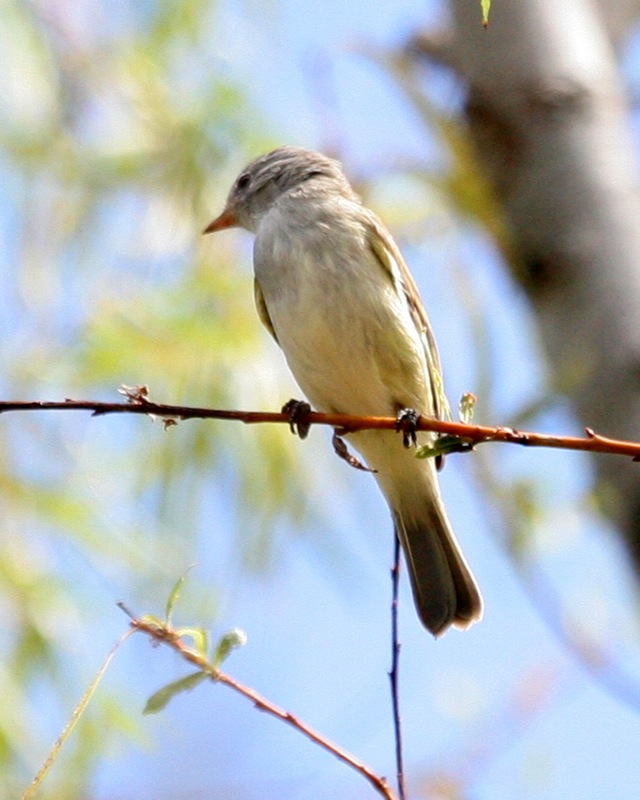
Yellow Tyrannulet
Capsiempis flaveola
Order: Passeriformes / Family: Tyrannidae

Wikimedia Commons
About the Yellow Tyrannulet
The Yellow Tyrannulet, scientifically named Capsiempis flaveola, is a small passerine bird belonging to the family Tyrannidae. It inhabits a wide range of neotropical regions, prominently across Central and South America. This bird species thrives in diverse habitats, including the dense underbrush of tropical forests, secondary growths, and even scrublands. It is notably prevalent in countries such as Costa Rica, Panama, Colombia, Venezuela, and Brazil, where its bright yellow plumage stands out against the lush greenery. The Yellow Tyrannulet plays a significant role in its ecosystem as an insectivore, aiding in controlling insect populations and thus contributing to ecological balance. During the breeding season, which varies across its range but generally peaks in the wet months, this bird engages in intricate courtship displays, strengthening pair bonds. These behaviors emphasize the bird's role in maintaining the intricate tapestry of tropical biodiversity. The Yellow Tyrannulet exhibits fascinating seasonal behaviors, often remaining within its established territories year-round. However, in regions where seasonal changes influence food availability, it may demonstrate localized movements, shifting to areas with more abundant resources. Its adaptability to various habitats underscores its resilience and ecological significance across its range.
The Yellow Tyrannulet belongs to the family Tyrannidae, within the order Passeriformes. These birds typically live average 3-4 years, with some individuals living up to 6 years..
How to Identify a Yellow Tyrannulet
The Yellow Tyrannulet is easily recognizable by its bright yellow underparts, which contrast vividly with its olive-green upperparts. Adult birds display a subtle differentiation in plumage, with males sometimes showing slightly more vibrant coloration than females. Juveniles, on the other hand, often exhibit a duller hue, lacking the full intensity of the adult yellow, which develops as they mature. One of the key identification features of the Yellow Tyrannulet is its slender, pointed bill, which is well-adapted for its insectivorous diet. In flight, the bird showcases rapid, fluttery wing movements, typical of many small tyrant flycatchers, and it often holds its tail cocked while perching, which is a helpful field mark for birders. Confusion may arise with similar species like the Yellow-bellied Elaenia, but the latter tends to have more prominent wing bars and a different vocalization pattern. The Yellow Tyrannulet's perching posture is often upright, enabling it to scan for prey effectively. These field marks are crucial for distinguishing this species from other small yellowish birds within its habitat.
Having trouble telling birds apart? Upload a photo to our bird identification tool for an instant species match.
Yellow Tyrannulet Habitat and Range
Preferred Habitat
The Yellow Tyrannulet inhabits a variety of tropical and subtropical environments, favoring dense undergrowth and thick vegetation. It often resides in humid lowland forests, secondary growth areas, and scrubby forest edges. In elevations, the bird typically occupies areas ranging from sea level up to 1,500 meters, though it is more commonly found in lower elevations. Seasonally, the Yellow Tyrannulet may shift its habitat slightly to exploit areas with more abundant food resources, especially during the breeding season. While primarily a bird of rural and wild habitats, it occasionally ventures into urban gardens and parks where suitable foliage exists. Its presence in both pristine and disturbed habitats highlights its adaptability and resilience, making it a fairly common sight within its range.
Geographic Range
The Yellow Tyrannulet boasts an extensive range across the neotropical regions of Central and South America. It can be found from southern Mexico through Central America, including countries like Costa Rica and Panama, extending into the northern and central parts of South America. Its range covers countries such as Colombia, Venezuela, Ecuador, Peru, and Brazil, with some populations extending into Bolivia and Paraguay. While it is primarily a resident species, certain populations may exhibit minor local movements in response to changes in food availability or habitat conditions. The Yellow Tyrannulet is often most abundant in areas with dense undergrowth and is a common sight across many of its range's forested and scrubby landscapes.
Want to know which birds visit your area? Browse our backyard birds by location guides for region-specific species lists.
What Does the Yellow Tyrannulet Eat?
The Yellow Tyrannulet primarily feeds on insects and other small arthropods, which it skillfully captures with quick, agile movements. Its diet includes a variety of insects such as flies, beetles, and caterpillars, making it an important player in controlling insect populations. During different seasons, the bird may adjust its diet based on the availability of prey, sometimes incorporating small fruits or seeds when insects are less abundant. The Yellow Tyrannulet employs a foraging technique known as 'gleaning,' where it picks insects off leaves and branches, often hunting in the lower to mid-levels of the forest canopy. This method allows it to exploit a wide range of prey sizes, from tiny insects to larger caterpillars. The bird typically feeds during daylight hours, with peak activity in the early morning and late afternoon when insect activity is high.
Yellow Tyrannulet Behavior and Social Structure
The Yellow Tyrannulet exhibits a range of interesting behaviors that reflect its adaptability and social nature. It often forages alone or in pairs, though it may occasionally join mixed-species foraging flocks, particularly during non-breeding seasons. This social behavior increases foraging efficiency and predator vigilance. The species is territorial, with males establishing and defending their territories through vocalizations and displays, especially during the breeding season. Courtship involves elaborate displays, where males perform fluttery flights and present food items to females as part of pair bonding. In response to predators, the Yellow Tyrannulet can be quite vocal, emitting sharp alarm calls to warn others. It follows a diurnal activity pattern, with most of its feeding and social interactions occurring during daylight, particularly in the cooler hours of morning and late afternoon.
Yellow Tyrannulet Nesting and Reproduction
The Yellow Tyrannulet constructs its nest with meticulous care, often choosing a concealed location within dense foliage. Nests are cup-shaped and crafted using fine plant fibers, grasses, and spider silk, offering both camouflage and stability. Preferred nest sites include low shrubs or small trees, typically at heights ranging from 1 to 3 meters above ground. The female lays a clutch of 2 to 3 eggs, which she incubates for approximately 14 days. During this period, the male plays an essential role by defending the nesting territory and sometimes assisting in feeding the female. After the eggs hatch, both parents partake in feeding the chicks, which fledge roughly 16 to 18 days after hatching. The species generally raises one or two broods per year, depending on environmental conditions and food availability.
Yellow Tyrannulet Sounds and Vocalizations
The Yellow Tyrannulet's vocalizations are distinctive, consisting of a series of high-pitched, whistling notes that are often repeated in quick succession. Its primary song is crisp and rhythmic, typically described as a sequence of 'pee-pee-pee' or 'tsee-tsee-tsee' notes. In addition to its song, the bird emits short, sharp call notes that serve as communication between mates or as alarm calls when predators are nearby. During the dawn chorus, the Yellow Tyrannulet's voice is often among the first to be heard, with its clear, piercing calls cutting through the ambient forest sounds. These vocalizations are a key element in territory establishment and mate attraction, particularly noticeable during the breeding season.
Interesting Facts About the Yellow Tyrannulet
- 1Despite its small size, the Yellow Tyrannulet can be fiercely territorial, often chasing away larger birds from its territory.
- 2The Yellow Tyrannulet's nests are sometimes parasitized by cowbirds, leading to the Tyrannulet raising cowbird chicks alongside its own.
- 3This bird's rapid and acrobatic flight makes it an efficient insect hunter, allowing it to catch prey mid-air.
- 4In Costa Rica, the Yellow Tyrannulet is found from sea level up to 1,200 meters, showing its adaptability to different elevations.
- 5The Yellow Tyrannulet has a lifespan of up to 7 years in the wild, which is notable for a bird of its size.
- 6Its bright plumage not only aids in mate attraction but also plays a role in territorial displays and deterrence of rivals.
- 7During the breeding season, the Yellow Tyrannulet's song frequency increases, serving to establish and defend its territory.
Yellow Tyrannulet Conservation Status
The Yellow Tyrannulet is currently classified as Least Concern by the IUCN, with stable population trends across much of its range. Despite habitat destruction in parts of its range, this species has shown a remarkable ability to adapt to altered environments, including secondary forests and plantations. The primary threat to its populations is the ongoing deforestation and habitat fragmentation, which can reduce suitable breeding and foraging areas. Conservation efforts focus on preserving large tracts of forest and promoting sustainable land-use practices. Historically, the Yellow Tyrannulet's range and population have remained relatively stable, thanks in part to its adaptability and broad geographical distribution.
Other Tyrannidae Species


Birds Similar to the Yellow Tyrannulet
These species are often confused with the Yellow Tyrannulet due to similar appearance or overlapping range.