Yellow-winged Vireo
Vireo carmioli
Order: Passeriformes / Family: Vireonidae

Wikimedia Commons
About the Yellow-winged Vireo
The Yellow-winged Vireo, known scientifically as Vireo carmioli, is a small yet robust songbird renowned for its vibrant wing markings and melodious vocalizations. This vireo is primarily found in the montane forests of Central America, particularly in Costa Rica and Panama, where it inhabits elevations ranging from 1,000 to 2,500 meters. Its presence in these lush, dense forests highlights its preference for subtropical and tropical environments. The bird plays a crucial role in the ecosystem by controlling insect populations and aiding in seed dispersal. The Yellow-winged Vireo is often observed foraging methodically through the foliage, searching for insects and larvae hidden among the leaves. During the breeding season, which generally takes place from March to June, the bird becomes more vocal and active, establishing territories and attracting mates with its rich and complex song. Its ecological role extends beyond pest control, as it also participates in the symbiotic relationships within its habitat, contributing to the forest's health and diversity. The Yellow-winged Vireo's seasonal behaviors include altitudinal migrations, where it may descend to lower elevations during adverse weather conditions or in search of food. This adaptability ensures its survival across varying environments and seasons. As a member of the Vireonidae family, the Yellow-winged Vireo shares its lineage with other North and Central American vireos, showcasing similar morphological traits yet distinct in its coloration and song patterns. The bird's significance extends to its potential as an indicator species, helping ecologists assess the health of the montane forest ecosystems it inhabits. Its presence or absence can signal changes in environmental conditions, alerting conservationists to potential threats. As deforestation and habitat fragmentation continue to pose challenges, the Yellow-winged Vireo remains a symbol of the delicate balance within these forested regions.
The Yellow-winged Vireo belongs to the family Vireonidae, within the order Passeriformes. These birds typically live average 5 years with a maximum recorded of 7 years..
How to Identify a Yellow-winged Vireo
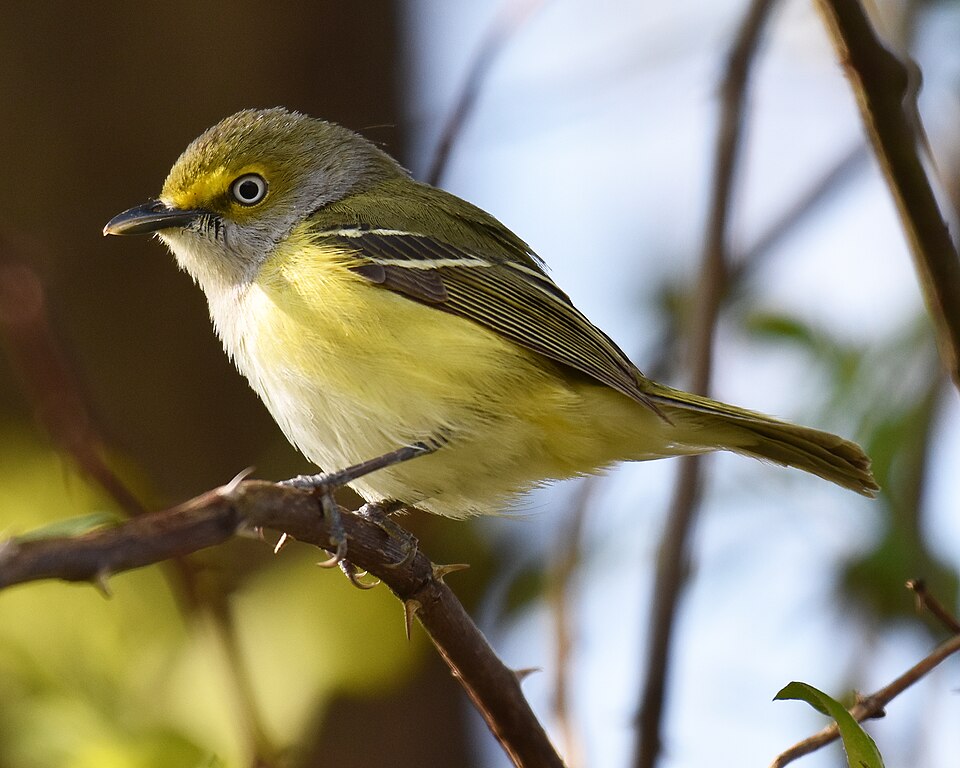
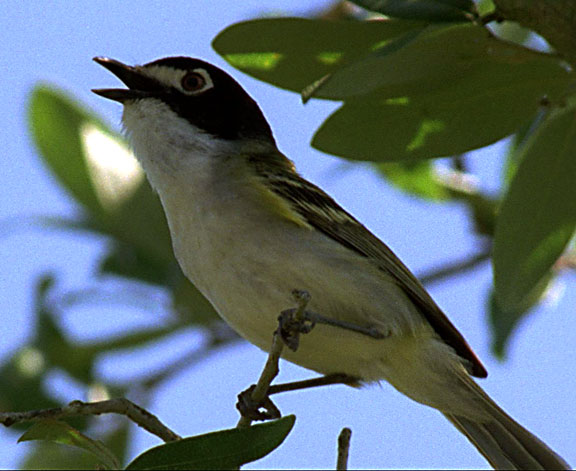
The Yellow-winged Vireo is a small songbird, measuring approximately 12 to 13 centimeters in length, with a wingspan of about 20 centimeters. Its most notable feature is the bright yellow wing bars that stand out against its olive-green upperparts. The underparts are a pale yellowish-white, providing a subtle contrast. The bird's head is characterized by a grayish cap and a distinct white eye stripe, giving it a sharp, alert appearance. Juvenile Yellow-winged Vireos resemble adults but may have slightly duller plumage and less pronounced wing bars. Males and females are similar in appearance, making it challenging to distinguish between the sexes in the field. The Yellow-winged Vireo can be confused with other vireos, such as the Bell's Vireo or the Warbling Vireo, but its unique wing coloration and song are reliable identifiers. In flight, the Yellow-winged Vireo exhibits a steady, direct flight pattern with rapid wing beats. When perched, it often adopts a horizontal posture, with its head held high and tail slightly raised, scanning for insects and other prey.
Having trouble telling birds apart? Upload a photo to our bird identification tool for an instant species match.
Yellow-winged Vireo Habitat and Range
Preferred Habitat
The Yellow-winged Vireo primarily inhabits montane forests, preferring the middle to upper elevations of the cloud forests in Costa Rica and Panama. These habitats are characterized by high humidity, dense foliage, and a rich diversity of plant and animal life. Within these forests, the vireo favors areas with abundant understory and canopy cover, which provide ample foraging opportunities and protection from predators. The bird is typically found at elevations ranging from 1,000 to 2,500 meters, although it may venture into lower elevations during certain times of the year. As a forest-dependent species, the Yellow-winged Vireo is less commonly found in urban or heavily disturbed areas, though it may occasionally be seen in edge habitats where forests transition into agricultural lands. Seasonal movements within its range allow the bird to exploit different habitat types as food availability and weather conditions change. This adaptability is crucial for its survival in the dynamic environments of Central America.
Geographic Range
The Yellow-winged Vireo's range is primarily restricted to the highland regions of Central America, specifically within Costa Rica and western Panama. During the breeding season, the bird occupies the montane forests at elevations between 1,000 and 2,500 meters, where it establishes territories and raises its young. In the non-breeding season, the vireo may move to lower elevations or slightly different areas within its range to access food resources and more favorable climatic conditions. The bird does not exhibit the long-distance migratory behavior seen in many other vireo species; instead, it engages in altitudinal movements that allow it to remain within a relatively confined geographic area. Population densities can vary within its range, with certain forested areas supporting higher concentrations of Yellow-winged Vireos due to optimal habitat conditions. The species' limited range underscores the importance of protecting the montane forest ecosystems that are crucial to its survival.
Want to know which birds visit your area? Browse our backyard birds by location guides for region-specific species lists.
What Does the Yellow-winged Vireo Eat?
The Yellow-winged Vireo primarily feeds on insects, including caterpillars, beetles, and spiders, which it gleans from the foliage while foraging through the forest canopy and understory. This insectivorous diet is supplemented by small fruits and berries, particularly during the non-breeding season when insect availability may decrease. The vireo's foraging technique is methodical and deliberate, involving short hops and flights as it searches for prey among leaves and branches. It uses its sharp bill to probe crevices and beneath leaves, often hanging upside down to reach hidden insects. The bird's diet varies seasonally, with a greater emphasis on fruit consumption during periods of lower insect abundance. The Yellow-winged Vireo typically forages alone or in pairs, though it may join mixed-species feeding flocks, especially outside the breeding season. This behavior enhances its foraging efficiency and reduces the risk of predation.
Yellow-winged Vireo Behavior and Social Structure
The Yellow-winged Vireo exhibits a variety of behaviors that are characteristic of its family. It is a solitary bird, particularly during the breeding season when males establish and defend territories through song and display. Courtship involves a series of vocalizations and displays, with males often singing from prominent perches to attract females. Once paired, the vireo becomes more secretive, focusing on nesting and raising young. Outside the breeding season, the Yellow-winged Vireo may participate in mixed-species flocks, which provide safety in numbers and increased foraging efficiency. This social behavior is more common during non-breeding periods when the bird is less territorial. The vireo is diurnal, actively foraging and singing during daylight hours while resting at night. When faced with predators, the bird may emit alarm calls and engage in distraction displays to protect its nest and young. Its daily activity patterns are influenced by weather conditions, with reduced activity during heavy rain or strong winds.
Yellow-winged Vireo Nesting and Reproduction
The Yellow-winged Vireo constructs a cup-shaped nest, typically situated in the fork of a horizontal branch well above the ground. The nest is constructed from a variety of materials, including grasses, leaves, and spider silk, which provide strength and flexibility. The female primarily builds the nest, although the male may assist by gathering materials. Clutch size ranges from two to four eggs, with an incubation period of approximately 12 to 14 days. Both parents share incubation duties, taking turns keeping the eggs warm. Once hatched, the chicks remain in the nest for about 10 to 12 days before fledging. During this time, both parents are actively involved in feeding and caring for the young. The Yellow-winged Vireo typically raises one brood per year, although favorable conditions may allow for a second brood. Nesting success is influenced by a variety of factors, including predation and habitat quality.
Yellow-winged Vireo Sounds and Vocalizations
The Yellow-winged Vireo's song is a melodious series of clear, whistled notes that are delivered in a deliberate, rhythmic pattern. Each phrase consists of two to five notes, often repeated several times in succession. The bird's song is both a territorial and courtship display, serving to establish boundaries and attract mates. In addition to its primary song, the vireo produces a variety of call notes, including short chips and trills that are used to communicate with mates and signal alarm. During the dawn chorus, the Yellow-winged Vireo is particularly vocal, contributing to the vibrant soundscape of its montane forest habitat. Its alarm calls are sharper and more staccato compared to its song, alerting other birds to potential threats.
Interesting Facts About the Yellow-winged Vireo
- 1The Yellow-winged Vireo is endemic to Central America, primarily found in Costa Rica and Panama.
- 2Despite its vibrant plumage, the Yellow-winged Vireo is often difficult to spot due to its preference for dense foliage.
- 3The species engages in altitudinal migration, moving to lower elevations in response to seasonal changes.
- 4Yellow-winged Vireos are known to join mixed-species foraging flocks, enhancing their feeding efficiency.
- 5The bird's song is a primary tool for territory establishment and mate attraction during the breeding season.
- 6Both male and female Yellow-winged Vireos participate in nest building and chick rearing.
- 7The Yellow-winged Vireo's diet shifts seasonally, incorporating more fruits when insects are less available.
Yellow-winged Vireo Conservation Status
The Yellow-winged Vireo is currently listed as Least Concern by the IUCN, with stable population trends. However, habitat loss due to deforestation and land conversion poses ongoing threats to its montane forest habitat. Conservation efforts focus on preserving and restoring these critical habitats, with protected areas established in parts of its range. Historically, the species has maintained stable populations, benefiting from the relatively intact cloud forests of Central America. Continued monitoring and habitat conservation are essential to ensure the long-term survival of the Yellow-winged Vireo, as changes in land use and climate could impact its habitat availability.