Afghan Babbler
Turdoides huttoni
Order: Passeriformes / Family: Leiothrichidae

Wikimedia Commons
About the Afghan Babbler
The Afghan Babbler, scientifically known as Turdoides huttoni, is a fascinating bird species found primarily in South Asia. This member of the Leiothrichidae family is widely recognized for its engaging social behavior and melodious vocalizations. The Afghan Babbler inhabits arid and semi-arid regions, often seen in scrublands, open fields, and near human settlements where it benefits from the availability of water and food resources. Found predominantly in Afghanistan, Pakistan, and parts of northwestern India, this bird plays a significant role in the ecosystem as both a predator of insects and a prey species for larger birds and mammals.
The Afghan Babbler thrives in regions where thorny scrubs and sparse vegetation dominate, allowing it to forage efficiently while remaining relatively concealed from predators. It is adaptable, often seen near agricultural lands where it can take advantage of irrigation and the abundance of insects. This adaptability makes the Afghan Babbler an important species in human-modified landscapes, contributing to pest control and the overall health of local ecosystems.
Seasonal behaviors of the Afghan Babbler include forming larger flocks during the non-breeding season to forage and roost communally. During the breeding season, these birds exhibit territorial behaviors, establishing and defending nesting areas through vocalizations and physical displays. While they are not migratory, Afghan Babblers may shift their range slightly in response to food availability and environmental conditions, ensuring access to resources throughout the year. Their presence is often marked by their continuous chattering calls, which serve as a means of maintaining social bonds within their groups.
The Afghan Babbler belongs to the family Leiothrichidae, within the order Passeriformes. These birds typically live average 5 years, with a maximum recorded of 9 years..
How to Identify a Afghan Babbler
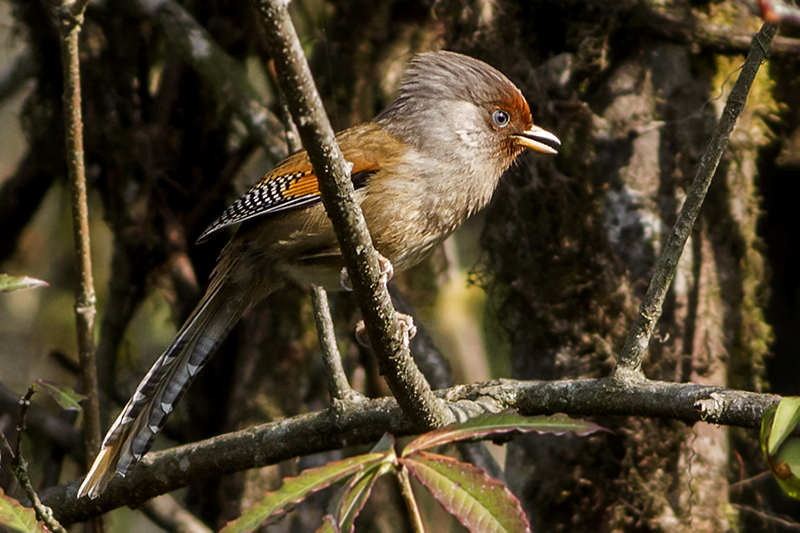
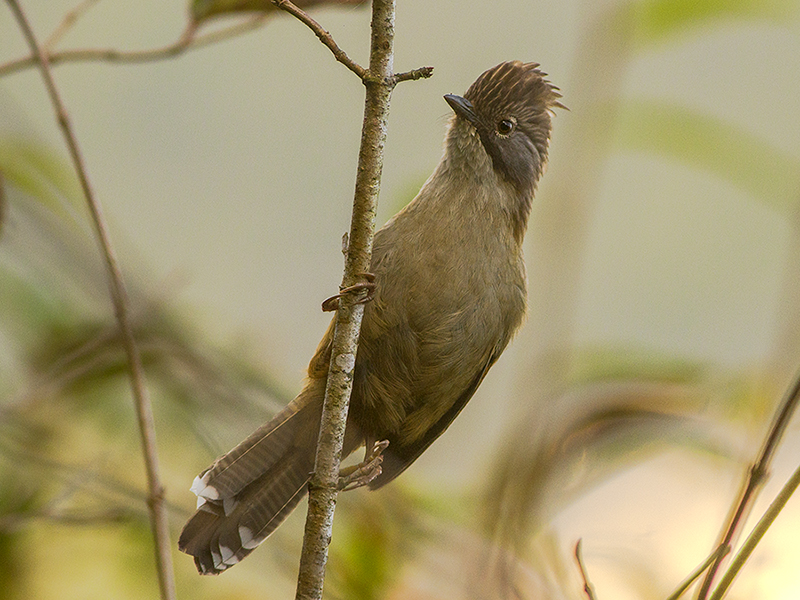
The Afghan Babbler is a medium-sized bird with predominantly brown plumage, which aids in its concealment within its natural habitat. Adult Afghan Babblers have a rich brown back and wings, with a slightly paler underbelly. The head is marked by a dark eye stripe, which contrasts with the lighter throat and cheeks, giving it a distinctive facial appearance. Juvenile birds tend to have a more uniform brown coloration, lacking the contrast seen in adults.
Both male and female Afghan Babblers appear similar, making it challenging to distinguish between the sexes based on plumage alone. However, slight variations in size can sometimes be observed, with males typically being slightly larger than females. The bird's long, graduated tail and stout bill are key features for identification, along with its characteristic perching posture. Afghan Babblers often perch with their tails slightly fanned, a common trait in the Leiothrichidae family.
In flight, the Afghan Babbler displays a somewhat undulating pattern, characterized by rapid wing beats followed by short glides. When perched, their posture is upright and alert, often observed in small, active groups. They can sometimes be confused with other babbler species, but the combination of their vocalizations and specific plumage patterns helps in accurate identification.
Having trouble telling birds apart? Upload a photo to our bird identification tool for an instant species match.
Afghan Babbler Habitat and Range
Preferred Habitat
The Afghan Babbler inhabits dry, open landscapes, preferring areas with sparse vegetation such as thorny scrublands, arid fields, and semi-desert regions. These birds are commonly found at elevations ranging from sea level up to 1500 meters, where they can exploit the diverse resources available in these environments. They are often observed near water bodies, even in arid regions, as these areas support a higher density of insect prey.
Although they prefer rural and semi-natural habitats, Afghan Babblers are also known to venture into urban and suburban areas, particularly where gardens or parks provide sufficient cover and food. During the dry season, they may congregate around water sources, which become crucial for their survival. Their presence in agricultural landscapes underscores their adaptability, as they take advantage of man-made environments to supplement their natural foraging grounds. This adaptability to various environments allows the Afghan Babbler to thrive across its range without the need for significant seasonal migrations.
Geographic Range
The Afghan Babbler is predominantly found in South Asia, with its range extending across Afghanistan, Pakistan, and parts of northwestern India. In Afghanistan, it is widespread across the arid and semi-arid regions, particularly in areas like the Helmand and Kandahar provinces. In Pakistan, its presence is notable in Baluchistan and the adjacent areas where the climate mirrors its preferred habitat conditions.
Although not migratory, the Afghan Babbler may exhibit local movements in response to seasonal variations in food availability and environmental conditions. These movements are generally limited to short distances within its established range. Despite its relatively stable range, the bird's population density is higher in regions where thorny scrub and open fields are prevalent, providing ample foraging opportunities.
Hotspots for observing the Afghan Babbler include the arid plains and low-altitude regions of its range, where it is often seen flitting through the underbrush and calling with its characteristic chattering sounds. Its adaptability to human-altered landscapes has also facilitated its presence in areas undergoing agricultural development.
Want to know which birds visit your area? Browse our backyard birds by location guides for region-specific species lists.
What Does the Afghan Babbler Eat?
The Afghan Babbler's diet primarily consists of insects and other small invertebrates, making it an important player in controlling pest populations within its range. This bird forages actively on the ground and in low vegetation, using its stout bill to probe and pick prey from leaves and branches.
During the breeding season, the Afghan Babbler increases its consumption of protein-rich insects, which are essential for the development of its young. Common prey items include beetles, ants, caterpillars, and grasshoppers, which it captures with agility and precision. Besides insects, it occasionally supplements its diet with seeds, berries, and small fruits, particularly during the dry season when insect abundance may decrease.
The Afghan Babbler employs a variety of foraging techniques, including hopping along the ground and gleaning insects from foliage. It is often seen foraging in small, cooperative groups, which enhances its ability to locate and capture scattered prey. This social foraging behavior not only increases feeding efficiency but also provides safety in numbers against potential predators.
Afghan Babbler Behavior and Social Structure
Afghan Babblers are highly social birds, often observed in small to medium-sized groups, which can consist of family units or unrelated individuals. This social structure plays a crucial role in their daily activities, including foraging, resting, and nesting. The birds communicate extensively through vocalizations, maintaining group cohesion and coordinating activities.
Territorial behavior is prominent during the breeding season, with pairs or groups defending an area against intruders. This territoriality is primarily communicated through vocal displays and physical posturing. Courtship involves elaborate displays, including synchronized movements and the presentation of nesting materials by the male to the female.
Afghan Babblers demonstrate a mix of diurnal activity and periods of rest, with foraging occurring primarily during the cooler parts of the day, such as early morning and late afternoon. These birds are vigilant against predators, relying on their group dynamics to alert and protect each other. Their communal roosting habits provide additional security against nocturnal predators.
Afghan Babbler Nesting and Reproduction
The Afghan Babbler constructs cup-shaped nests using a variety of materials, including twigs, grasses, and leaves. These nests are typically located in low shrubs or small trees, providing concealment from predators while remaining accessible for feeding and care.
A typical clutch consists of 2 to 4 eggs, which are incubated primarily by the female, although the male may assist in brooding. The incubation period lasts approximately 14 to 16 days. After hatching, both parents participate in feeding the nestlings, which fledge around 14 to 17 days after hatching.
Afghan Babblers usually produce one or two broods per year, depending on environmental conditions and food availability. The breeding season is closely tied to the availability of insect prey, ensuring that the young have a sufficient food supply during their critical growth stages.
Afghan Babbler Sounds and Vocalizations
The Afghan Babbler is known for its melodious song, which consists of a series of rich, warbling notes delivered in a rhythmic pattern. These vocalizations are often used in social interactions and territorial displays. The song is characterized by its varied pitch and lively tempo, making it distinctive among the bird's vocal repertoire.
In addition to its song, the Afghan Babbler emits a variety of call notes, including sharp chirps and whistles, which serve as contact calls between group members. Alarm calls are delivered in rapid succession when a threat is perceived, alerting other members of the group to potential danger.
The dawn chorus of the Afghan Babbler is a notable acoustic event, as the birds greet the new day with a cacophony of calls and songs, establishing their presence and reaffirming social bonds within their groups.
Interesting Facts About the Afghan Babbler
- 1The Afghan Babbler can be identified by its complex vocalizations, which include over 20 distinct sounds.
- 2These birds are known to form large foraging flocks, sometimes numbering up to 50 individuals.
- 3Afghan Babblers play a crucial role in pest control, consuming large quantities of insects daily.
- 4Their nests are often well-hidden in thorny shrubs, providing protection from predators.
- 5The Afghan Babbler is one of the few songbird species that thrive in arid and semi-arid environments.
- 6Social bonds in Afghan Babbler groups are reinforced through cooperative behaviors, including allopreening.
- 7Despite their social nature, Afghan Babblers are fiercely territorial during the breeding season.
Afghan Babbler Conservation Status
Currently, the Afghan Babbler is classified as Least Concern by the IUCN, owing to its wide range and stable population numbers. However, habitat destruction due to agricultural expansion and urbanization poses a potential threat to its habitat. Conservation efforts focus on preserving natural scrublands and ensuring sustainable land use practices. Historically, the population has shown resilience to environmental changes, partly due to its adaptability to altered landscapes. Nonetheless, continuous monitoring is necessary to ensure that population trends remain stable, particularly in regions experiencing rapid development. Protection of key habitats and awareness campaigns are essential components of conservation strategies for the Afghan Babbler.