Taiwan Barwing
Actinodura morrisoniana
Order: Passeriformes / Family: Leiothrichidae

Wikimedia Commons
About the Taiwan Barwing
The Taiwan Barwing (Actinodura morrisoniana) is a captivating bird species endemic to Taiwan, where it inhabits the island's lush montane forests. This bird is a member of the Leiothrichidae family, known for its social behavior and melodious calls. The Taiwan Barwing plays a significant ecological role in its environment, acting as both a seed disperser and insect predator. Its presence is most prominent in the central mountain ranges of Taiwan, including the Alishan and Yushan ranges, where the dense canopy provides ample cover and resources. This species prefers elevations ranging from 1,200 to 3,000 meters, thriving in mixed broadleaf and evergreen forests. During the breeding season, which spans from March to July, the Taiwan Barwing becomes highly vocal and visible, engaging in complex courtship displays and territorial defense. Its ecological significance extends beyond its role as a seed disperser, as it also helps control insect populations within its habitat. The bird's diet primarily consists of insects and small invertebrates, supplemented by berries and seeds during certain times of the year. As an indicator species for healthy forest ecosystems, the Taiwan Barwing's presence signifies a well-functioning environment. Its restricted range, however, makes it susceptible to habitat loss due to deforestation and land conversion. Conservation efforts have focused on preserving the montane forest habitats crucial for its survival. The Taiwan Barwing's unique behavioral patterns, combined with its striking appearance, make it an iconic symbol of Taiwan's avian biodiversity.
The Taiwan Barwing belongs to the family Leiothrichidae, within the order Passeriformes. These birds typically live average lifespan of 4-6 years, with some living up to 8 years..
How to Identify a Taiwan Barwing
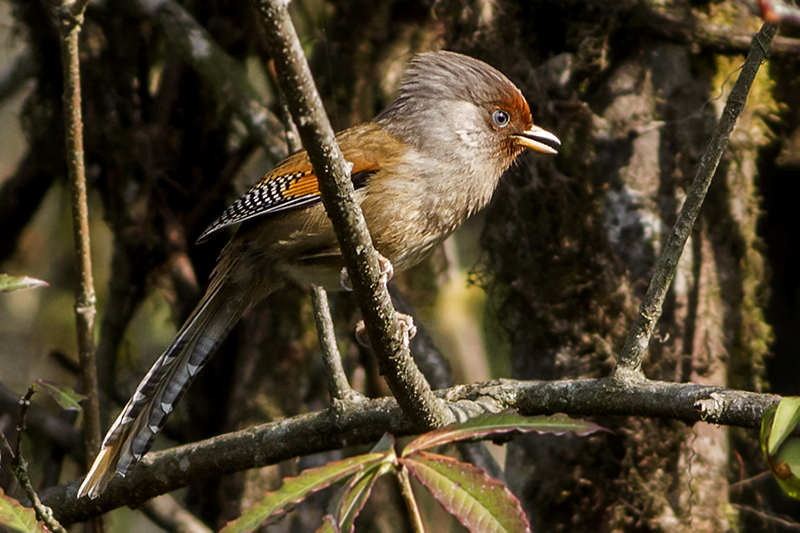
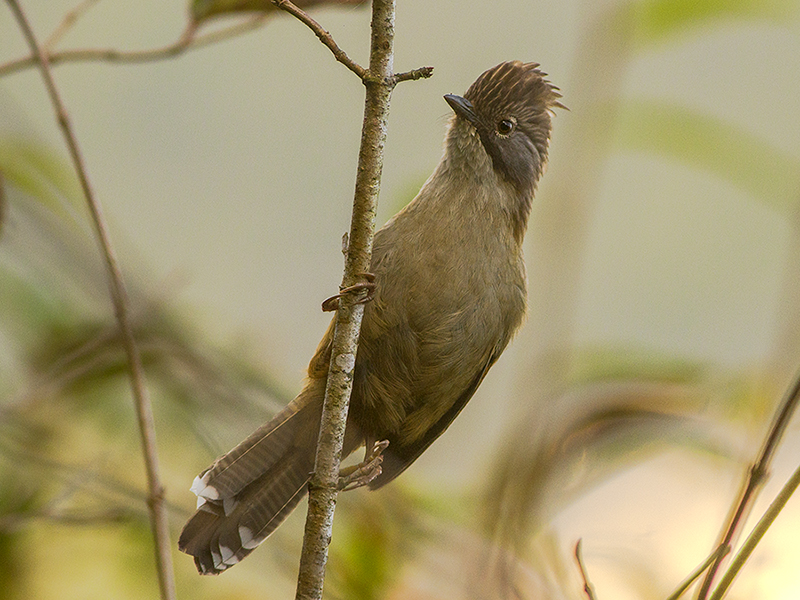
The Taiwan Barwing is a medium-sized bird measuring about 22 centimeters in length. It exhibits a striking plumage pattern characterized by brown and gray barring across its body, with distinct white streaks on the wings and tail. Adult Taiwan Barwings have a grayish-brown head with a pale supercilium and a slightly curved bill. The underparts are lighter, with a whitish throat and chest transitioning to a buffy belly. Both males and females share similar plumage, making sexual dimorphism minimal. Juvenile Taiwan Barwings resemble adults but possess slightly duller plumage and less defined barring. In flight, the Taiwan Barwing presents a distinctive silhouette with broad wings and a rounded tail, often seen fluttering between tree canopies. Its perching posture is upright, and it often holds its tail slightly cocked. Confusion with other local species is minimal due to its unique barred pattern, though beginners might mistake it for the Taiwan Scimitar-Babbler, which lacks the prominent barring.
Having trouble telling birds apart? Upload a photo to our bird identification tool for an instant species match.
Taiwan Barwing Habitat and Range
Preferred Habitat
The Taiwan Barwing inhabits the montane forests of Taiwan, preferring elevations between 1,200 and 3,000 meters. It thrives in mixed broadleaf and evergreen forests where dense vegetation provides ample cover and foraging opportunities. This species is predominantly found in primary forests but can occasionally be seen in secondary growth areas. During the breeding season, it remains in higher elevations, while during non-breeding periods, it may descend slightly into lower forested areas. Unlike some adaptable species, the Taiwan Barwing shows little presence in urban or heavily disturbed areas, relying on intact forest ecosystems for survival.
Geographic Range
The Taiwan Barwing is endemic to Taiwan, with its range confined to the central and southern mountainous regions of the island. Its presence is most concentrated in the Alishan, Yushan, and Xueshan mountain ranges. The bird is non-migratory, residing year-round in these montane forests. While its range is restricted to Taiwan, within the island, it occupies a variety of elevations and forest types, showing a preference for undisturbed habitats. Population density is highest in areas with minimal human intrusion and rich biodiversity, highlighting the importance of protected forest areas for its conservation.
Want to know which birds visit your area? Browse our backyard birds by location guides for region-specific species lists.
What Does the Taiwan Barwing Eat?
The diet of the Taiwan Barwing primarily consists of insects and small invertebrates, which it forages from the forest floor and mid-canopy levels. It employs an active foraging technique, often seen flitting through foliage and gleaning insects from leaves and branches. During the breeding season, its diet shifts slightly to include a higher proportion of protein-rich insects to support energy needs. In addition to insects, the Taiwan Barwing also consumes berries and seeds, particularly during the autumn months when fruit availability peaks. Its foraging activity peaks in the early morning and late afternoon, aligning with the activity of its insect prey. This varied diet allows it to adapt to seasonal changes in food availability within its montane habitat.
Taiwan Barwing Behavior and Social Structure
The Taiwan Barwing exhibits a complex social structure, often forming small, cohesive groups that engage in cooperative foraging and territorial defense. These groups consist of family units or pairs that remain together throughout the year. The bird displays strong territorial behavior, using vocalizations to mark territory boundaries and deter intruders. During the courtship season, which begins in early spring, males perform elaborate displays involving song and wing fluttering to attract mates. The Taiwan Barwing is diurnal, with peak activity occurring during the cooler parts of the day, such as early morning and late afternoon. In response to predators, it may freeze in place or use alarm calls to alert other group members. While generally non-migratory, the bird may exhibit altitudinal movements in response to food availability and weather conditions.
Taiwan Barwing Nesting and Reproduction
Taiwan Barwings construct cup-shaped nests using twigs, mosses, and grasses. These nests are typically located in dense vegetation, often in shrubs or low trees, providing concealment from predators. The breeding season ranges from March to July, with females laying a clutch of 2-4 eggs. The incubation period lasts approximately 14-16 days, during which both parents participate in incubating the eggs. After hatching, the chicks remain in the nest for another 14-18 days before fledging. Parental care extends beyond fledging, with both parents involved in feeding and protecting the young. Taiwan Barwings may produce one or two broods per year, depending on environmental conditions and food availability.
Taiwan Barwing Sounds and Vocalizations
The Taiwan Barwing's primary song is a melodious series of whistles and trills, often delivered from a concealed perch within the canopy. The rhythm is steady, with a medium pitch and a clear, resonant quality. In addition to its song, the Taiwan Barwing produces a variety of call notes, including sharp 'chip' sounds used for communication within groups. Alarm calls are harsher and more rapid, serving to alert group members of potential threats. During the dawn chorus, its song can be heard blending with those of other forest birds, creating a rich tapestry of sounds.
Interesting Facts About the Taiwan Barwing
- 1The Taiwan Barwing is one of the few bird species that are endemic to Taiwan, meaning it is found nowhere else in the world.
- 2Despite its medium size, the Taiwan Barwing is known for its loud and melodious song, which can be heard echoing through the forests.
- 3The Taiwan Barwing's distinct barred plumage provides excellent camouflage among the dappled light of the forest canopy.
- 4This bird has a preference for altitudes between 1,200 and 3,000 meters, showing an affinity for cooler montane climates.
- 5The Taiwan Barwing often forages in mixed-species flocks, benefiting from the vigilance and foraging success of other birds.
- 6Unlike many other species, the Taiwan Barwing does not migrate but may move altitudinally within its range based on food availability.
- 7Conservation efforts for the Taiwan Barwing are crucial, as its habitat is threatened by ongoing deforestation in Taiwan.
Taiwan Barwing Conservation Status
The Taiwan Barwing currently holds a status of Least Concern on the IUCN Red List, with population trends considered stable. However, its restricted range makes it vulnerable to habitat loss and fragmentation. Primary threats include deforestation for agriculture and development, which reduce the availability of its montane forest habitat. Conservation efforts focus on protecting key forest areas and fostering sustainable land-use practices. Historical population changes have been influenced by habitat conservation measures, with some areas showing signs of population recovery due to improved forest management.