Eastern Spectacled Barwing
Actinodura radcliffei
Order: Passeriformes / Family: Leiothrichidae
About the Eastern Spectacled Barwing
The Eastern Spectacled Barwing (Actinodura radcliffei) is a striking bird known for its unique spectacles that grace the region around its eyes. This medium-sized songbird belongs to the Leiothrichidae family and inhabits the lush forests of Southeast Asia. Notably, these birds are found in the subtropical and tropical montane forests that stretch across parts of Vietnam, Laos, and southern China. The species plays a vital role in the ecosystem as both predator and prey, contributing to the control of insect populations while providing sustenance for larger predators.
Eastern Spectacled Barwings are particularly important for maintaining the ecological balance within their habitat. They participate in mixed-species foraging flocks, enhancing their foraging efficiency and reducing predation risk. These flocks often include other species from the Leiothrichidae family, forming a complex social structure that benefits all participants. During the breeding season, which typically occurs from April to June, their role in their ecosystem becomes even more pronounced as they engage in territorial behaviors to secure optimal nesting sites.
The ecological significance of the Eastern Spectacled Barwing extends beyond their immediate interactions. By dispersing seeds through their droppings, they aid in forest regeneration, ensuring the health and longevity of their habitat. Seasonal behaviors further underscore their adaptability; during monsoon seasons, they shift their feeding strategies to take advantage of the increased insect activity. Their presence in these forests serves as an indicator of habitat health, highlighting the importance of conservation efforts in regions where deforestation and habitat degradation pose significant threats.
The Eastern Spectacled Barwing belongs to the family Leiothrichidae, within the order Passeriformes. These birds typically live average lifespan of 4-6 years, with some individuals reaching up to 8 years..
How to Identify a Eastern Spectacled Barwing
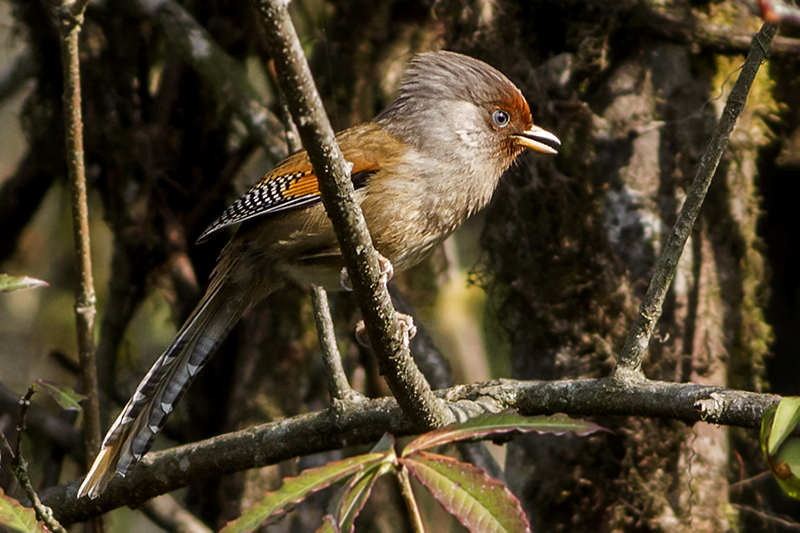
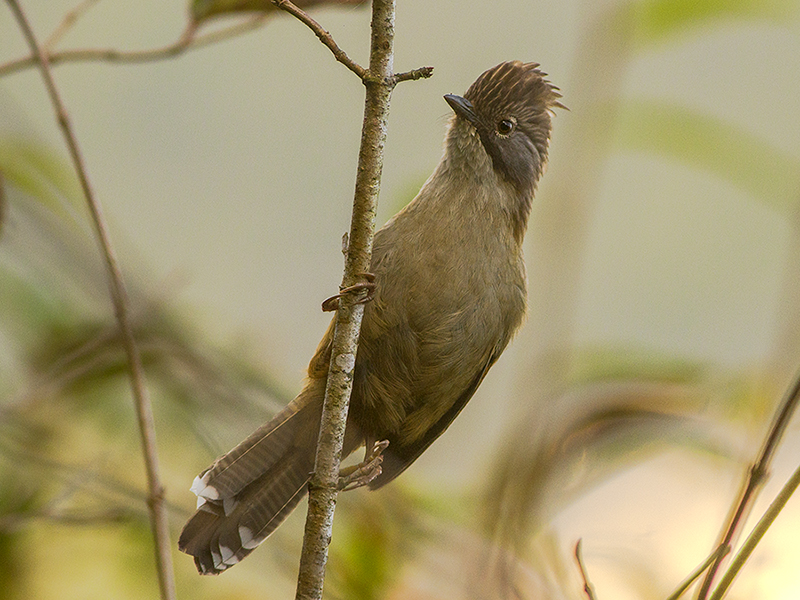
The Eastern Spectacled Barwing is easily identified by its distinctive facial pattern. Adult birds sport white spectacles around their eyes, which contrast sharply with their olive-brown head and back. The underparts are a paler grayish-white, providing a subtle yet effective camouflage among the forest foliage. Both males and females share similar plumage, making them indistinguishable by sight. Juveniles, however, feature a slightly duller coloration, lacking the vividness of the adults.
Field observations reveal a bird with a medium-sized body, approximately 22 cm in length. The wings are rounded, and the tail is relatively long and graduated, aiding in its agile movements through dense underbrush. In flight, the Eastern Spectacled Barwing presents a silhouette characterized by strong, direct wingbeats, which is typical for many species within the Leiothrichidae family.
While similar in appearance to other barwing species, the Eastern Spectacled Barwing is distinguished by its eye markings and overall coloration. Observers can differentiate it from related species like the Rusty-fronted Barwing by noting the lack of rufous coloring and the presence of the distinctive spectacles.
Having trouble telling birds apart? Upload a photo to our bird identification tool for an instant species match.
Eastern Spectacled Barwing Habitat and Range
Preferred Habitat
The Eastern Spectacled Barwing thrives in subtropical and tropical montane forests, often at elevations ranging from 1,000 to 2,500 meters. These forests, rich in biodiversity, provide the dense foliage and varied understory that the species prefers. Within these habitats, they are most commonly found in the understory and mid-canopy layers, where they forage and nest.
Seasonal shifts in habitat use are minimal, though they may move to slightly lower elevations during particularly harsh weather conditions. Unlike some species that adapt well to urban environments, the Eastern Spectacled Barwing remains predominantly within its forested habitats, relying on the natural resources these areas provide.
Geographic Range
The Eastern Spectacled Barwing primarily resides in Southeast Asia, with its range extending through Vietnam, Laos, and parts of southern China. Within these countries, the bird's presence is particularly notable in regions like the Annamite Range and the mountainous areas of Yunnan. These regions offer the ideal montane forest conditions necessary for their survival and breeding.
While the species is generally resident, local movements may occur in response to food availability or environmental changes. Population densities tend to be higher in areas where forest cover is dense and undisturbed, highlighting the importance of these habitats for the species' survival.
Want to know which birds visit your area? Browse our backyard birds by location guides for region-specific species lists.
What Does the Eastern Spectacled Barwing Eat?
The diet of the Eastern Spectacled Barwing primarily consists of insects, with a marked preference for caterpillars, beetles, and other small invertebrates. These birds employ a gleaning technique, often meticulously picking prey from leaves and branches. During different seasons, this diet may expand to include fruit and seeds, especially during periods when insect availability declines.
Foraging typically occurs in the early morning and late afternoon, taking advantage of periods when insects are most active. The barwing's foraging strategy is both solitary and social, as they may hunt alone or join mixed-species flocks to increase their success rate. Prey size is generally small, aligning with their medium-sized bill and agile feeding behavior.
Eastern Spectacled Barwing Behavior and Social Structure
Eastern Spectacled Barwings exhibit complex social behaviors, often forming part of mixed-species flocks that navigate the forest understory. These flocks, which can consist of various passerine species, provide increased foraging efficiency and protection against predators. Territorial during the breeding season, these birds defend their nesting areas vigorously, engaging in displays and calls to ward off intruders.
Courtship behaviors are subtle, involving mutual preening and soft vocalizations between potential mates. Once paired, both parents participate in nest building and chick rearing, demonstrating a cooperative breeding strategy. Daily activity patterns show a tendency toward peak activity in the cooler hours of the day, with rest periods during the hottest parts.
Eastern Spectacled Barwing Nesting and Reproduction
Eastern Spectacled Barwings construct cup-shaped nests, intricately woven with twigs, leaves, and moss. These nests are typically positioned in dense foliage, providing concealment from predators. Preferred nesting sites are often located in the understory, around 1 to 3 meters above the ground.
A typical clutch consists of 2 to 4 eggs, with both parents sharing incubation duties over a period of approximately 14 days. Once hatched, the young remain in the nest for about 12 to 15 days before fledging. During this time, both parents are actively involved in feeding and protecting the chicks. The species is known to have one to two broods per breeding season, depending on environmental conditions.
Eastern Spectacled Barwing Sounds and Vocalizations
The Eastern Spectacled Barwing produces a series of melodious whistles and chirps, characterized by a rhythmic, clear quality. These vocalizations serve various purposes, from mate attraction to territory defense. Call notes are typically sharp and concise, often used during flock interactions or when alarmed by potential threats.
An alarm call, higher-pitched and more staccato than their song, is used to alert others of danger. During the early morning, their songs contribute to the dawn chorus, adding to the symphony of sounds that fill the forest.
Interesting Facts About the Eastern Spectacled Barwing
- 1The Eastern Spectacled Barwing's distinctive eye markings resemble glasses, hence the name 'spectacled.'
- 2This species is part of the Leiothrichidae family, known for their complex social structures and vocalizations.
- 3Eastern Spectacled Barwings often participate in mixed-species flocks, enhancing their foraging success.
- 4Their diet primarily consists of insects, but they also consume fruits and seeds when available.
- 5Nesting in dense foliage provides protection from predators, ensuring higher chick survival rates.
- 6The barwing's song contributes to the rich soundscape of the Southeast Asian montane forests.
- 7Despite being classified as Least Concern, habitat degradation poses a significant threat to their populations.
Eastern Spectacled Barwing Conservation Status
According to the International Union for Conservation of Nature (IUCN), the Eastern Spectacled Barwing is currently classified as Least Concern. However, the population trend is decreasing, primarily due to habitat loss from deforestation and agricultural expansion. Conservation efforts focus on preserving the montane forests that are critical to their survival. Historically, population numbers have been relatively stable, but ongoing threats highlight the need for continued habitat protection. Efforts include establishing protected areas and promoting sustainable land-use practices in regions where the species is prevalent.