
Altai Falcon
Hierofalco altaicus
Order: Falconiformes / Family: Falconidae
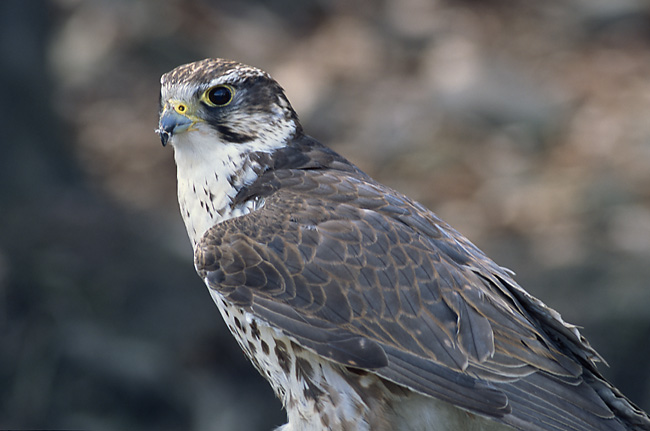
Wikimedia Commons
About the Altai Falcon
The Altai Falcon (Hierofalco altaicus) is a robust raptor renowned for its adaptability to harsh mountainous regions. This falcon thrives predominantly in the Altai Mountains stretching across Russia, China, Mongolia, and Kazakhstan. Its presence is significant as it plays a crucial role in controlling the populations of small mammals and birds, thus maintaining ecological balance. The Altai Falcon is a member of the Falconidae family, sharing characteristics with other larger falcons but distinguished by its preference for high-altitude habitats and cooler climates. These birds have adapted to a variety of environments within their range. During the breeding season, they are often found in rocky cliffs and high-altitude plains, providing vantage points for hunting. In the winter, some populations may descend to lower altitudes or move to more temperate regions in search of food. Seasonal behaviors are evident in the Altai Falcon's life cycle. During the breeding season, these falcons exhibit a strong territorial instinct, defending their nesting sites vigorously. Courtship involves aerial displays and vocalizations, a behavior crucial for pair bonding. Outside the breeding season, they may be seen alone or in pairs, rather than in large groups. The Altai Falcon's ecological role extends beyond mere predator-prey interactions. It contributes to the biodiversity of its environment by influencing the population dynamics of its prey species. Its presence indicates a healthy, thriving ecosystem, capable of supporting large predators. Conservation of the Altai Falcon and its habitat is vital for preserving the ecological integrity of the regions it inhabits. Efforts to monitor and protect this species are essential, given the pressures of habitat loss and climate change, which threaten not only the falcon but the entire ecosystem it supports.
The Altai Falcon belongs to the family Falconidae, within the order Falconiformes. These birds typically live average 10-15 years with a max recorded of 19 years.
How to Identify a Altai Falcon
The Altai Falcon, a medium-to-large raptor, exhibits a sturdy build with a wingspan ranging from 100 to 130 centimeters. Adults display a striking plumage with a mix of brown and creamy white on their upperparts, while their underparts are typically pale with darker streaks. The head is often light with a pronounced mustache mark typical of falcons, but less defined than in some related species. Juveniles resemble adults but with a more uniform brown coloration and less distinct streaking, which gradually gives way to the adult pattern as they mature. Males and females are similar in appearance, though females are generally larger, a common trait among raptors. In flight, the Altai Falcon's silhouette is characterized by long, pointed wings and a relatively short, broad tail. Its flight is powerful and direct, punctuated by rapid wingbeats and intermittent glides, a hunting adaptation for pursuing agile prey. When perched, the Altai Falcon exhibits an upright posture, often on rocky outcrops or cliff edges, where it can scan for prey. Confusion with similar species such as the Saker Falcon can occur, though the Altai Falcon's more robust physique and habitat preferences often assist in accurate identification.
Having trouble telling birds apart? Upload a photo to our bird identification tool for an instant species match.
Altai Falcon Habitat and Range
Preferred Habitat
The Altai Falcon predominantly inhabits mountainous regions, favoring areas with rocky cliffs and open spaces. It is most commonly associated with the Altai Mountains, but can also be found in other high-altitude areas within its range. These birds prefer elevations ranging from 1,500 to 4,000 meters, where they can find suitable nesting sites and ample hunting grounds. During winter, some populations may move to lower altitudes or valleys, where milder conditions and available prey make survival easier. The Altai Falcon is rarely found in urban environments, as it favors the solitude and expansiveness of rural and wilderness areas. Consequently, its presence in human-inhabited regions is minimal, underscoring its reliance on undisturbed habitats.
Geographic Range
The Altai Falcon's breeding range is concentrated in the Altai Mountains of central Asia, encompassing parts of Russia, Mongolia, China, and Kazakhstan. Its presence is most dense in these mountainous areas, where suitable nesting sites and prey populations are abundant. During the winter months, some birds may migrate short distances to lower altitudes within their range or to nearby regions with milder climates. Migration corridors are not well-defined for this species, as their movements are often influenced by local weather conditions and prey availability. Despite their relatively limited range, the Altai Falcon's population density is highest in areas with optimal nesting sites and minimal human disturbance, making conservation efforts in these regions particularly important.
Want to know which birds visit your area? Browse our backyard birds by location guides for region-specific species lists.
What Does the Altai Falcon Eat?
The Altai Falcon primarily preys on medium-sized birds and mammals, with diet composition varying seasonally. During the breeding season, birds such as partridges and pigeons are common targets, while in other seasons, they may hunt small mammals like pikas and hares. The falcon's hunting technique involves high-speed pursuits and surprise attacks, utilizing its powerful flight to outmaneuver agile prey. Typically, the Altai Falcon hunts during the early morning and late afternoon, when prey activity is at its peak. The size of its prey can range from small birds weighing a few grams to larger mammals up to 1 kilogram, showcasing its adaptability as a predator. Seasonal diet changes reflect the availability of prey in its mountainous habitat, underscoring the importance of a diverse and robust ecosystem to support its dietary needs.
Altai Falcon Behavior and Social Structure
The Altai Falcon exhibits a solitary or paired social structure, particularly during the breeding season when territorial behavior becomes pronounced. Males and females engage in elaborate courtship displays, including aerial acrobatics and vocalizations, which strengthen pair bonds and establish territories. These displays often involve high-speed chases and steep dives, highlighting the falcon's agility and strength. Outside the breeding season, the Altai Falcon remains solitary but may occasionally be seen in loose associations with other raptors when hunting in prey-rich areas. The falcon's territorial behavior includes aggressive defense of nesting sites against intruders, including other birds of prey. In response to predators, the Altai Falcon relies on its speed and agility, often mobbing larger birds or using evasive maneuvers to avoid capture. Daily activity patterns typically involve hunting during the cooler parts of the day, with periods of rest and preening in between, often on high perches that provide a clear view of the surrounding area.
Altai Falcon Nesting and Reproduction
The Altai Falcon prefers to nest on rocky cliffs and outcrops, choosing sites that offer protection from predators and a clear vantage point for hunting. Nests are typically built in crevices or ledges, using minimal materials such as sticks, grass, and feathers. The female lays a clutch of 2 to 4 eggs, which she incubates for about 28 to 32 days while the male provides food. Once hatched, the chicks remain in the nest for approximately 35 to 45 days before fledging. Both parents play active roles in feeding and protecting the young, with the male primarily responsible for hunting. The Altai Falcon usually raises one brood per year, although in optimal conditions, a second brood may occasionally occur. The fledging timeline is critical for the young falcons, as they must quickly learn to hunt and survive in the challenging mountain environment.
Altai Falcon Sounds and Vocalizations
The Altai Falcon's vocalizations are a key element of its behavior, particularly during the breeding season. Its primary call is a rapid, high-pitched 'kek-kek-kek' used during courtship and territorial disputes. These calls are sharp and piercing, carrying over long distances in the open mountain air. Alarm calls, similar in rhythm but more urgent in tone, serve to alert mates and offspring of potential danger. Unlike songbirds, the Altai Falcon does not participate in a dawn chorus but relies on its vocalizations to communicate essential information. The sound of its call is reminiscent of other falcons but with a distinctive cadence that reflects its robust mountain habitat.
Interesting Facts About the Altai Falcon
- 1The Altai Falcon can reach speeds of over 200 km/h during its hunting stoop, making it one of the fastest birds in the world.
- 2Despite its preference for solitude, the Altai Falcon has been observed cooperating with other raptors to hunt large prey.
- 3The Altai Falcon's nesting sites can be located up to 4,000 meters above sea level, showcasing its remarkable high-altitude adaptation.
- 4In some regions, the Altai Falcon is known to hybridize with the closely related Saker Falcon, resulting in unique hybrid offspring.
- 5The Altai Falcon's piercing 'kek-kek-kek' call can be heard echoing across mountain valleys, serving as a territorial warning.
- 6This falcon is known to migrate altitudinally rather than long distances, adapting to seasonal changes in food availability.
- 7The Altai Falcon's robust build allows it to tackle prey much larger than itself, demonstrating its prowess as a top predator.
Altai Falcon Conservation Status
The Altai Falcon currently holds a conservation status of least concern according to the IUCN, but certain regional populations are under threat due to habitat loss and human encroachment. The primary threats include infrastructure development, mining activities, and climate change, which impact the availability of prey and suitable nesting sites. Conservation efforts focus on habitat protection, research, and monitoring of population trends to ensure the long-term survival of this species. Historical population changes have shown fluctuations linked to environmental conditions and human activities, emphasizing the need for ongoing conservation initiatives to safeguard the Altai Falcon and its ecosystem.
Other Falconidae Species


Birds Similar to the Altai Falcon
These species are often confused with the Altai Falcon due to similar appearance or overlapping range.
