
Anchieta's Barbet
Stactolaema anchietae
Order: Piciformes / Family: Lybiidae

Wikimedia Commons
About the Anchieta's Barbet
Anchieta's Barbet (Stactolaema anchietae) is a vibrant and engaging member of the Lybiidae family, known for its colorful plumage and distinctive vocal behavior. This bird inhabits the subtropical and tropical regions of central and southern Africa, where it plays a vital role in the local ecosystem as both a seed disperser and an insect predator. In particular, the barbet is found in countries such as Angola, Zambia, and the Democratic Republic of the Congo, thriving in the miombo woodlands and other forested areas. Anchieta's Barbet is especially significant in its ecological community, contributing to the health of forest habitats by aiding in the control of insect populations and promoting plant diversity through seed dispersal. During the breeding season, which generally occurs from September to February, these barbets become more vocal and active as they establish territories and engage in courtship displays. Their presence is marked by a series of distinctive calls that resonate through the dense foliage, a sound that becomes a familiar backdrop to the African woodland environment. As a bird adapted to a variety of woodland habitats, Anchieta's Barbet can be found in both primary and secondary forests, often at elevations ranging from 800 to 2,500 meters. Their adaptability to different forest types makes them a resilient species, able to withstand some habitat disturbances, although they remain sensitive to large-scale deforestation and habitat fragmentation. The ecological role of Anchieta's Barbet extends beyond its direct interactions with the environment, as it also serves as prey for larger avian predators. This position in the food web underscores the interconnectedness of species within these diverse ecosystems. As seed dispersers, these barbets facilitate the regeneration of forests, thereby supporting a myriad of other species that depend on these habitats. Additionally, their diet shifts seasonally, allowing them to exploit different food resources throughout the year, which helps maintain ecological balance. As observers of nature, we can learn much from the behaviors and interactions of Anchieta's Barbet as they navigate their vibrant world, contributing to the rich tapestry of life in Africa's woodland landscapes.
The Anchieta's Barbet belongs to the family Lybiidae, within the order Piciformes. These birds typically live average lifespan is 5-7 years, with some reaching 9 years..
How to Identify a Anchieta's Barbet
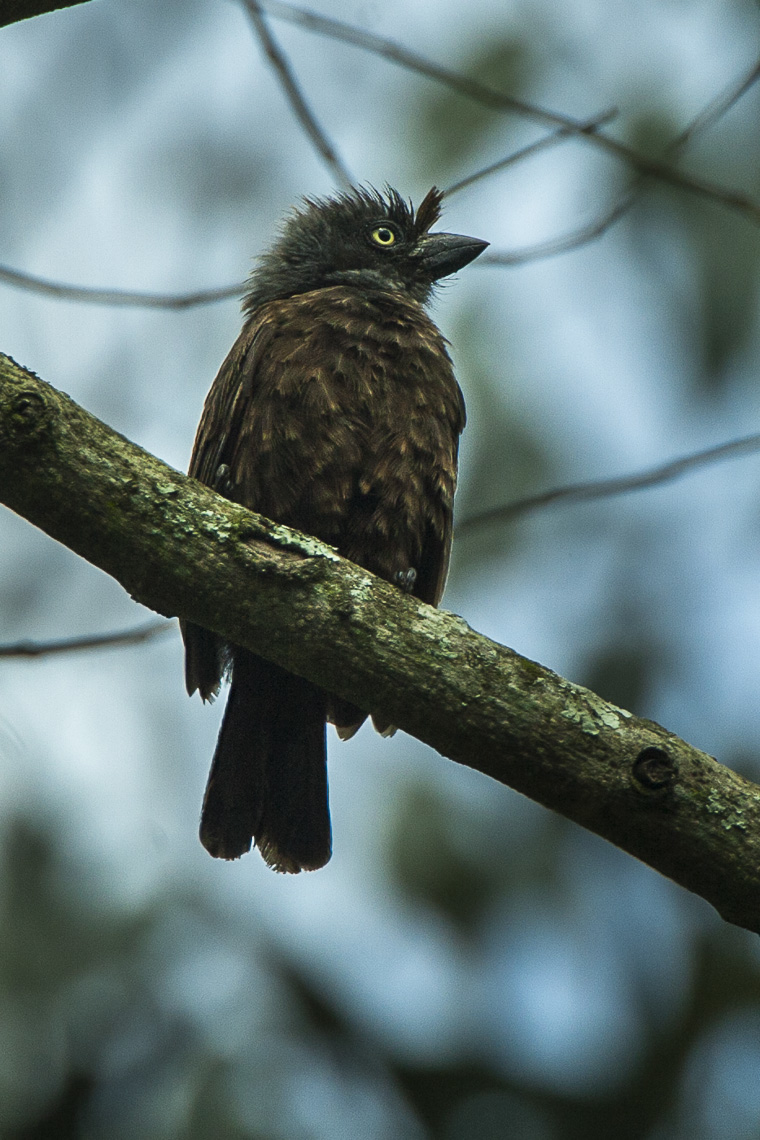
Anchieta's Barbet can be readily identified by its vivid green plumage, which provides excellent camouflage among the foliage. The adult barbet features a distinctive red forehead and a contrasting black crown, with a white throat and a yellow belly adding to its colorful appearance. Its stout, chisel-like bill is ideal for feeding on a variety of fruits and insects. Sexual dimorphism is subtle in this species, with males and females appearing similar in plumage, although males may exhibit slightly brighter colors during the breeding season. Juveniles resemble adults but display duller colors and lack the fully developed red and black markings on the head. In flight, Anchieta's Barbet presents a robust silhouette with broad wings and a short tail, allowing for agile maneuvering through dense forest canopies. When perched, the bird often adopts an upright posture, occasionally bobbing its head while calling or scanning for food. It is essential to distinguish Anchieta's Barbet from similar species, such as the Yellow-fronted Tinkerbird, which is smaller and lacks the distinctive red forehead and black crown. Observers should note the barbet's unique vocalizations, which further aid in identification.
Having trouble telling birds apart? Upload a photo to our bird identification tool for an instant species match.
Anchieta's Barbet Habitat and Range
Preferred Habitat
Anchieta's Barbet inhabits a variety of forested environments, predominantly within the miombo woodlands of central and southern Africa. These woodlands, characterized by their open canopy and diverse undergrowth, provide ample opportunities for foraging and nesting. The barbet thrives at elevations ranging from 800 to 2,500 meters, where it occupies areas with abundant fruiting trees and a rich insect population. While primarily a forest dweller, Anchieta's Barbet can also be found in secondary forests, where its adaptability allows it to exploit both native and disturbed habitats. Seasonal shifts may see barbets moving within their range to take advantage of fruiting cycles and insect availability. Although less common in urban settings, these birds may venture into gardens and orchards, especially where suitable food resources are present.
Geographic Range
Anchieta's Barbet boasts a range that encompasses central and southern Africa, primarily within Angola, Zambia, and the Democratic Republic of the Congo. This bird is a year-round resident, with no significant migratory movements documented across its range. Within these countries, the barbet occupies a variety of forest types, including both primary and secondary growth, adapting to the availability of food and nesting sites. The highest population densities occur in regions with extensive miombo woodlands, where the barbet finds ideal conditions for breeding and foraging. While its range is fairly stable, localized populations may fluctuate due to habitat changes, particularly those resulting from deforestation and land conversion. Despite these challenges, Anchieta's Barbet remains a relatively common sight within its preferred habitats, contributing to the ecological richness of the regions it inhabits.
Want to know which birds visit your area? Browse our backyard birds by location guides for region-specific species lists.
What Does the Anchieta's Barbet Eat?
The diet of Anchieta's Barbet is predominantly frugivorous, with a strong preference for a wide variety of fruits and berries available in its woodland habitat. The barbet exhibits a particular fondness for figs, which form a staple part of its diet when in season. In addition to fruits, Anchieta's Barbet supplements its diet with insects, particularly during the breeding season when protein demands increase. The bird employs a range of foraging techniques, such as gleaning and hawking, to capture insects from foliage and flying prey in mid-air. Its stout bill is well adapted to breaking into tough fruit skins and extracting insects from crevices. Seasonal variations in diet reflect the availability of food resources, with a notable shift towards insectivory during periods of fruit scarcity. Feeding primarily occurs during the early morning and late afternoon, allowing the bird to avoid the midday heat typical of its habitat.
Anchieta's Barbet Behavior and Social Structure
Anchieta's Barbet displays a fascinating array of behaviors that offer insights into its social and ecological interactions. These birds are generally found in pairs or small family groups, engaging in cooperative breeding and territorial defense. Territorial behavior is most pronounced during the breeding season, when pairs aggressively defend their chosen nesting sites and surrounding foraging areas. Vocalizations play a critical role in territory establishment and maintenance, with distinctive calls serving both as warnings to intruders and as bonding signals between mates. Courtship displays involve mutual preening and synchronized duets, reinforcing pair bonds and signaling readiness to breed. Although not highly gregarious, Anchieta's Barbet may join mixed-species foraging flocks, benefiting from increased vigilance against predators. The barbet exhibits a predictable daily routine, with peak activity during cooler morning and late afternoon hours. In response to predators, barbets employ alarm calls and may engage in mobbing behavior to deter threats such as raptors and snakes.
Anchieta's Barbet Nesting and Reproduction
Anchieta's Barbet constructs its nests in tree cavities, often using natural hollows or abandoned woodpecker holes. The barbet lines the cavity with plant material, creating a suitable environment for egg incubation. Clutch sizes typically range from two to four eggs, with both parents participating in incubation and feeding duties. The incubation period lasts approximately 14 to 18 days, followed by a fledging period of about three to four weeks. During this time, the parents exhibit a high level of care, feeding the chicks a diet rich in insects to meet their nutritional needs. Anchieta's Barbet may raise one or two broods per year, depending on food availability and environmental conditions. Parental roles are shared, with both male and female contributing to feeding and protection of the young, ensuring the survival and growth of the next generation.
Anchieta's Barbet Sounds and Vocalizations
Anchieta's Barbet is renowned for its vocal repertoire, characterized by a series of rhythmic and melodious calls. The primary song consists of a rapid series of 'hoo-hoo-hoo' notes, delivered in a steady, repetitive pattern that can carry over considerable distances. These calls serve various functions, including territory establishment, mate attraction, and communication between pair members. In addition to its song, the barbet emits a range of call notes, such as sharp 'pik' sounds used in alarm situations and softer contact calls to maintain group cohesion. During the dawn chorus, Anchieta's Barbet's song becomes particularly prominent, adding to the vibrant symphony of the African woodland soundscape.
Interesting Facts About the Anchieta's Barbet
- 1Anchieta's Barbet can be heard up to 1 km away, thanks to its powerful and far-carrying vocalizations.
- 2The bird is named after José Anchieta, a notable explorer and naturalist who contributed significantly to African ornithology.
- 3Despite their bright colors, Anchieta's Barbets blend seamlessly into the canopy, making them challenging to spot.
- 4These barbets are known to engage in mutual preening, a behavior that strengthens pair bonds and social cohesion.
- 5Anchieta's Barbet plays a crucial role in seed dispersal, aiding the regeneration of forest habitats where it resides.
Anchieta's Barbet Conservation Status
Anchieta's Barbet is currently classified as a species of Least Concern by the IUCN, reflecting its relatively stable population across its range. However, ongoing threats such as habitat loss due to deforestation and land conversion pose significant challenges to its continued survival. Conservation efforts focus on protecting key habitats, particularly the miombo woodlands, through sustainable land management practices and the establishment of protected areas. Historical population trends suggest some resilience to environmental changes, although localized declines may occur in areas experiencing intense human activity. Continued monitoring and targeted conservation actions are essential to ensure the long-term viability of Anchieta's Barbet populations and the ecosystems they inhabit.
Other Lybiidae Species


Birds Similar to the Anchieta's Barbet
These species are often confused with the Anchieta's Barbet due to similar appearance or overlapping range.

