
Anthus spipoletta
Anthus spipoletta
Order: Passeriformes / Family: Motacillidae

Wikimedia Commons
About the Anthus spipoletta
The Water Pipit, scientifically named Anthus spipoletta, is a member of the Motacillidae family and offers a fascinating glimpse into the adaptability of small passerine birds. Found primarily across Europe and Asia, this bird exhibits remarkable seasonal behaviors as it migrates between breeding and wintering grounds. During the breeding season, it favors alpine meadows and tundra regions, thriving in the open spaces of the Swiss Alps, the Pyrenees, and the Carpathians. In winter, its range extends to lower altitudes, including agricultural fields and coastal marshes in countries like France, Spain, and parts of southern Asia. This seasonal movement highlights the Water Pipit’s adaptability and ecological significance, as it plays a role in controlling insect populations across diverse habitats.
Water Pipits are integral to alpine and subalpine ecosystems, where they contribute to seed dispersal and the regulation of insect populations. Their presence in high-altitude areas coincides with the breeding season, where they take advantage of the rich insect life that emerges with the thaw. As they shift to lower elevations in winter, they continue their role in pest control, which can benefit agricultural lands. The Water Pipit also serves as an indicator species for environmental changes, particularly in alpine regions where climate change impacts are being closely monitored.
This bird’s adaptability and ecological role make it a subject of interest not only for ornithologists but also for conservationists concerned with habitat preservation. The Water Pipit’s presence across vast geographic regions underscores the importance of maintaining the integrity of both its high-altitude breeding grounds and lower elevation winter habitats. Conservation efforts aimed at preserving these areas are crucial for the continued survival of the Water Pipit and the ecological balance it helps maintain.
The Anthus spipoletta belongs to the family Motacillidae, within the order Passeriformes. These birds typically live Unknown; likely similar to other pipits..
How to Identify a Anthus spipoletta
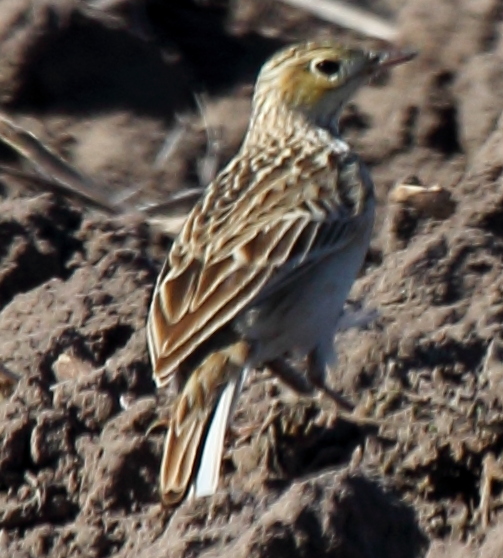
Water Pipits exhibit a fine, streaked appearance with brown upperparts and a paler underbelly, traits that adeptly blend into their surroundings. Adult plumage is characterized by subtle streaking on the back and faintly marked flanks, which can vary slightly between individuals. In flight, their slender build and long tail create a distinctive silhouette, marked by an undulating flight pattern that is typical of pipits.
Juvenile Water Pipits may have more pronounced streaking compared to adults, which aids in camouflage during their vulnerable early stages. There are subtle differences between the sexes, with males sometimes exhibiting slightly brighter plumage, although both sexes are generally similar in appearance. Their calls, a series of ‘tsip-tsip’ notes, are often heard before the bird is seen, providing an auditory cue for identification.
The Water Pipit can be confused with Meadow Pipits or Rock Pipits, especially at a distance. However, Water Pipits can be distinguished by their overall paler appearance and habit of frequenting higher altitudes during the breeding season. When perched, they have a characteristic upright posture, often bobbing their tail, which serves as another identification marker.
Having trouble telling birds apart? Upload a photo to our bird identification tool for an instant species match.
Anthus spipoletta Habitat and Range
Preferred Habitat
The Water Pipit is predominantly associated with high-altitude, open habitats during the breeding season. Alpine meadows, tundra, and rocky slopes in the Alps, Pyrenees, and Caucasus Mountains provide ideal conditions for nesting and feeding. These areas, above 1,500 meters in elevation, offer the solitude and resources that Water Pipits require for breeding.
As winter approaches, Water Pipits descend to lower elevations, often inhabiting coastal marshes, flooded fields, and river valleys. In these areas, such as the wetlands of southern France and the rice paddies of northern Italy, Water Pipits exploit the abundant food supply and milder conditions. They are less commonly found in urban areas, although they may occasionally venture into parks and gardens during migration stopovers.
Throughout their range, Water Pipits demonstrate a preference for open landscapes, avoiding dense forests and heavily urbanized areas. Their seasonal habitat shifts reflect their adaptability and the need to exploit different ecological niches throughout the year.
Geographic Range
The Water Pipit's breeding range spans mountainous regions across Central and Southern Europe and extends into parts of Asia. Significant populations breed in the Swiss Alps, Pyrenees, and Carpathians, where they occupy high-altitude meadows and rocky outcrops.
During winter, Water Pipit populations migrate to lower latitudes and altitudes, spreading across southern Europe into the Mediterranean basin, including countries such as Spain, Italy, and Greece. They also reach parts of North Africa and the Middle East, where they find suitable winter habitats in marshes and river valleys.
Migration corridors for the Water Pipit are primarily oriented along a north-south axis, with populations moving from their breeding grounds to wintering areas in a pattern that ensures access to food resources year-round. This species is not densely populated in any single area but maintains a widespread presence across its expansive range, with particular concentration in the Alps and Pyrenees during the breeding season.
Want to know which birds visit your area? Browse our backyard birds by location guides for region-specific species lists.
What Does the Anthus spipoletta Eat?
The diet of the Water Pipit primarily consists of insects and other small invertebrates, which they actively forage for in alpine meadows and moist grasslands. During the breeding season, they consume a variety of insect larvae and adult insects, including beetles, flies, and caterpillars, which are abundant in their high-altitude habitats.
As winter approaches and insect availability decreases, Water Pipits adapt by incorporating seeds and small berries into their diet. In their winter habitats, such as flooded fields and coastal marshes, they continue to forage for invertebrates, often probing soft mud with their slender bills to locate prey.
Water Pipits employ a methodical foraging technique, walking briskly across open ground and pausing frequently to scan for movement. They forage throughout the day, with peak activity occurring in the early morning and late afternoon when prey is most accessible. Their diet reflects their ecological role as both insectivores and opportunistic feeders, capable of adjusting to seasonal changes in food availability.
Anthus spipoletta Behavior and Social Structure
Water Pipits exhibit solitary or loosely associated behaviors, particularly during the breeding season when they establish territories in high-altitude regions. Males perform aerial displays and sing to attract mates, often engaging in elaborate flight patterns that showcase their agility and vocal abilities.
In winter, Water Pipits may form small flocks, often seen foraging together in marshes or agricultural fields. These loose associations provide safety in numbers while foraging. Water Pipits are generally non-territorial outside of the breeding season, allowing them to exploit food resources as they move through their winter range.
Their response to predators involves a combination of cryptic behavior and a rapid, low-to-the-ground flight that helps them evade detection. Water Pipits remain active throughout the day, with peak activity in the morning and late afternoon. During the breeding season, both males and females participate in nest building and rearing of the young, displaying a cooperative approach to parenting.
Anthus spipoletta Nesting and Reproduction
Water Pipits build their nests on the ground, often concealed among rocks or tufts of grass in alpine and subalpine zones. The nest is a cup-shaped structure made from grasses, moss, and other plant materials, lined with softer materials such as feathers and hair to provide insulation against the cold.
The typical clutch size for Water Pipits ranges from three to five eggs, which are incubated primarily by the female for about 14 days. During this period, the male plays a significant role in defending the territory and providing food for the incubating female.
Once hatched, the chicks are cared for by both parents, who feed them a diet rich in insects to ensure rapid growth. The fledging period lasts approximately 14-16 days, after which the young pipits begin to explore their surroundings but remain dependent on parental care for a short period. Water Pipits usually raise one brood per year, although in favorable conditions, especially in the southern part of their range, they may attempt a second brood.
Anthus spipoletta Sounds and Vocalizations
The song of the Water Pipit is a series of high-pitched, tinkling notes that rise and fall in a melodious cascade. These songs are often delivered during display flights, where the male ascends and then descends with wings outstretched, enhancing the acoustic reach of his performance.
Their calls include soft, repetitive 'tsip' notes, which serve as contact calls between individuals, particularly in winter when they forage in small groups. Alarm calls are higher-pitched and more insistent, used to alert others to the presence of potential threats.
Water Pipits contribute to the dawn chorus in their alpine habitats with a clear, sweet song that carries across open landscapes. Their vocalizations, while not as complex as some other passerines, are distinctive and serve as an essential part of their communication repertoire.
Interesting Facts About the Anthus spipoletta
- 1Water Pipits can cover up to 3,000 kilometers during migration, demonstrating remarkable endurance for such a small bird.
- 2Their high-altitude nests are often built over 2,000 meters above sea level, among the highest for any passerine bird.
- 3The Water Pipit's song is unique among pipits, characterized by a musical, cascading series of notes that can travel long distances in open alpine landscapes.
- 4During winter, Water Pipits can sometimes be found in the company of other birds like Skylarks and Meadow Pipits, forming mixed-species flocks.
- 5Water Pipits are known to adjust their migration routes and timings in response to annual weather patterns, showcasing their adaptability.
- 6Their methodical foraging behavior involves covering large areas of open ground, making them effective insect predators in their habitats.
- 7Despite their inconspicuous appearance, Water Pipits play a critical role in their ecosystems by controlling insect populations and contributing to seed dispersal.
Anthus spipoletta Conservation Status
The International Union for Conservation of Nature (IUCN) currently lists the Water Pipit as a species of Least Concern. This status reflects its wide distribution and stable population trends across its range. However, certain population segments face challenges due to habitat loss and climate change. Key threats include the degradation of alpine meadows due to tourism and agricultural expansion. Climate change poses a long-term threat by altering the availability of suitable breeding habitats at high altitudes. Conservation efforts focus on habitat protection and the preservation of natural landscapes in alpine regions. Monitoring programs track population trends to detect any negative impacts from environmental changes. Historical data suggest that while some local populations may fluctuate, the overall population remains robust.
Other Motacillidae Species



Birds Similar to the Anthus spipoletta
These species are often confused with the Anthus spipoletta due to similar appearance or overlapping range.

