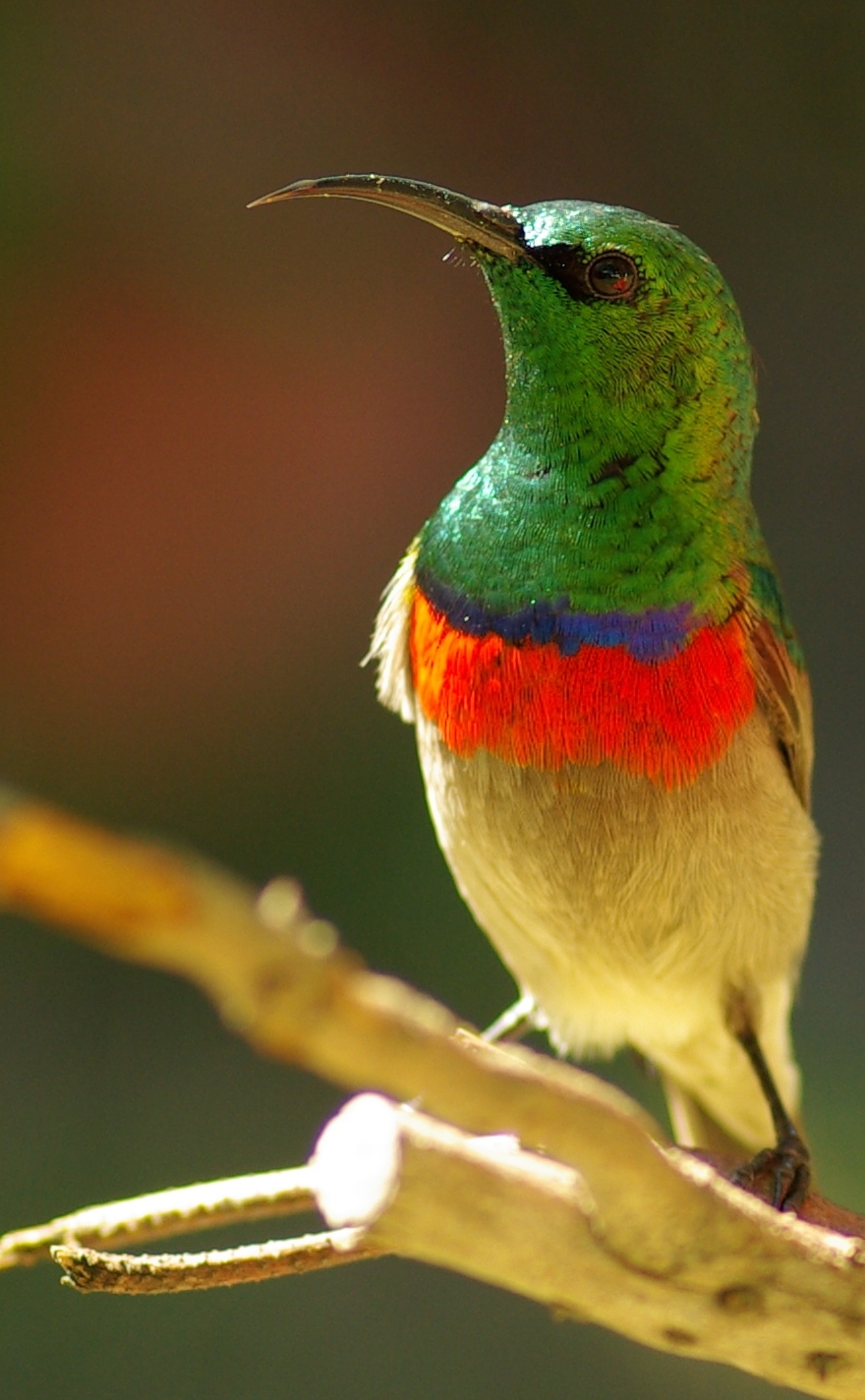
Apricot-breasted Sunbird
Cinnyris buettikoferi
Order: Passeriformes / Family: Nectariniidae

Wikimedia Commons
About the Apricot-breasted Sunbird
The Apricot-breasted Sunbird, Cinnyris buettikoferi, is a striking member of the Nectariniidae family, renowned for its vivid coloration and agile flight. This sunbird is primarily found in the tropical rainforests of Sulawesi, Indonesia, where it plays a crucial role in pollination. The species thrives in lowland and montane forests, often seen flitting among flowering plants and trees, which provide its primary food sources. The sunbird's ecological role in these regions is significant, as it aids in the fertilization of numerous plant species, contributing to the rich biodiversity of these ecosystems. Seasonal behaviors of the Apricot-breasted Sunbird include variations in foraging habits and territorial displays, which are particularly evident during breeding periods. During the rainy season, the availability of nectar and insects increases, leading to heightened activity levels. This species also exhibits notable adaptability, with some populations venturing into disturbed habitats such as secondary forests and plantations. Despite their vibrant appearance, Apricot-breasted Sunbirds can be elusive due to their rapid movements and preference for dense foliage. Their presence in a region often indicates a healthy, biodiverse ecosystem, as they are sensitive to environmental changes and habitat degradation. Conservation efforts focus on preserving their natural habitats, which are increasingly threatened by deforestation and land conversion. The Apricot-breasted Sunbird's contribution to pollination makes it an essential species for maintaining the ecological balance in its native range.
The Apricot-breasted Sunbird belongs to the family Nectariniidae, within the order Passeriformes. These birds typically live 5-8 years, with a maximum recorded of 10 years.
How to Identify a Apricot-breasted Sunbird
The Apricot-breasted Sunbird can be easily identified by its striking apricot-colored breast and iridescent green and blue upperparts. Adult males are particularly colorful, with a metallic sheen that glistens in sunlight. Females, while less vibrant, have a similar apricot hue on their breast but with more subdued upperparts, predominantly olive-green. Juveniles resemble females but with even duller plumage, lacking the glossy finish seen in mature birds. In flight, the sunbird's silhouette is distinctive, characterized by a rapid wingbeat and a tendency to hover momentarily near flowers. Perching, they display a typical sunbird posture with a slightly hunched back and tail held slightly below the body line. Similar species that might cause confusion include the Olive-backed Sunbird, but the latter lacks the distinctive apricot breast and has a more uniform olive back. Observing their behavior can also aid in identification, as the Apricot-breasted Sunbird often engages in rapid, darting flights interspersed with brief, hovering pauses.
Having trouble telling birds apart? Upload a photo to our bird identification tool for an instant species match.
Apricot-breasted Sunbird Habitat and Range
Preferred Habitat
The Apricot-breasted Sunbird predominantly inhabits tropical and subtropical rainforests, particularly favoring areas rich in flowering plants. These birds are most commonly found in the lowland and montane forests of Sulawesi, Indonesia, ranging up to elevations of 1,200 meters. While they primarily reside in undisturbed primary forests, they also adapt to secondary growth areas and edges of plantations where flowering plants are abundant. During breeding seasons, they may venture into more open areas, utilizing the increased availability of food resources. In urban areas, their presence is rare, as they prefer the dense cover and rich floral resources provided by forested habitats.
Geographic Range
The Apricot-breasted Sunbird is endemic to the island of Sulawesi in Indonesia, with its range confined to the tropical and subtropical forests on this island. Its distribution is primarily concentrated in the central and northern regions of Sulawesi, where suitable habitat conditions prevail. The species is non-migratory, residing year-round in its native range. However, local movements occur based on the availability of food resources and breeding requirements. Population densities are highest within well-preserved forest areas, though some individuals may be spotted in degraded habitats where flowering plants provide sustenance.
Want to know which birds visit your area? Browse our backyard birds by location guides for region-specific species lists.
What Does the Apricot-breasted Sunbird Eat?
The diet of the Apricot-breasted Sunbird primarily consists of nectar, which it extracts from a variety of flowering plants using its specialized, slender bill. This diet is supplemented by small insects and spiders, particularly during the breeding season when protein requirements increase. Foraging occurs throughout the day, with peak activity in the early morning and late afternoon. The sunbirds employ a hover-feeding technique, akin to hummingbirds, allowing them to access nectar from flowers while remaining airborne. They also glean insects from foliage, demonstrating flexibility in their foraging methods. Seasonal shifts in diet correspond with flowering cycles in the forest, ensuring a steady supply of food year-round.
Apricot-breasted Sunbird Behavior and Social Structure
The Apricot-breasted Sunbird exhibits a range of fascinating behaviors, particularly during the breeding season. Males are notoriously territorial, often engaging in aerial displays to ward off rivals and attract mates. These displays include rapid wingbeats and vocalizations, designed to showcase their vibrant plumage and vigor. In terms of social structure, these sunbirds are generally solitary or found in pairs, though loose flocks may form in areas with abundant food resources. Their response to predators is swift and agile, leveraging their rapid flight to evade threats. Daily activity patterns are characterized by active foraging interspersed with periods of rest in shaded areas.
Apricot-breasted Sunbird Nesting and Reproduction
Nesting for the Apricot-breasted Sunbird involves constructing a hanging purse-shaped nest, typically suspended from a thin branch or vine. These nests are woven from grasses, spider silk, and plant fibers, providing both camouflage and protection. Preferred nesting sites are usually located in dense foliage, offering additional concealment from predators. Clutch sizes range from two to three eggs, with an incubation period of approximately 14 days. Both parents participate in feeding the chicks, which fledge after about 18 to 20 days. The species is capable of raising multiple broods per year, taking advantage of the consistent availability of food in their habitat.
Apricot-breasted Sunbird Sounds and Vocalizations
The primary song of the Apricot-breasted Sunbird is a series of high-pitched, tinkling notes delivered in rapid succession. These vocalizations serve both territorial and mating functions, often performed from prominent perches. Call notes are sharper and more abrupt, used for communication between mates or signaling alarm. During the dawn chorus, their calls blend into the symphony of the rainforest, adding a sparkling quality to the early morning soundscape. Compared to other sunbirds, their vocalizations are relatively soft and melodic, lacking the harsher qualities found in some related species.
Interesting Facts About the Apricot-breasted Sunbird
- 1The Apricot-breasted Sunbird can hover like a hummingbird, allowing it to feed on nectar efficiently.
- 2Males display their iridescent plumage during courtship, creating dazzling visual spectacles in the forest.
- 3Their specialized bills are perfectly adapted to accessing deep flower corollas, aiding in effective pollination.
- 4Despite their size, they play a key role in the ecosystem by pollinating numerous plant species in their range.
- 5They are endemic to Sulawesi, highlighting the island's unique biodiversity and ecological importance.
Apricot-breasted Sunbird Conservation Status
According to the IUCN, the Apricot-breasted Sunbird is currently classified as Least Concern, but its population trend is decreasing due to habitat loss. Deforestation and land conversion for agriculture pose significant threats, prompting conservation efforts focused on habitat protection and restoration. Historical data suggests stable populations in the past, but recent pressures have heightened the importance of monitoring and preserving their natural environment. Conservation initiatives aim to maintain the integrity of Sulawesi's forests, ensuring this vibrant species continues to thrive.
Other Nectariniidae Species


Birds Similar to the Apricot-breasted Sunbird
These species are often confused with the Apricot-breasted Sunbird due to similar appearance or overlapping range.