
Southern Double-collared Sunbird
Cinnyris chalybeus
Order: Passeriformes / Family: Nectariniidae
Wikimedia Commons
About the Southern Double-collared Sunbird
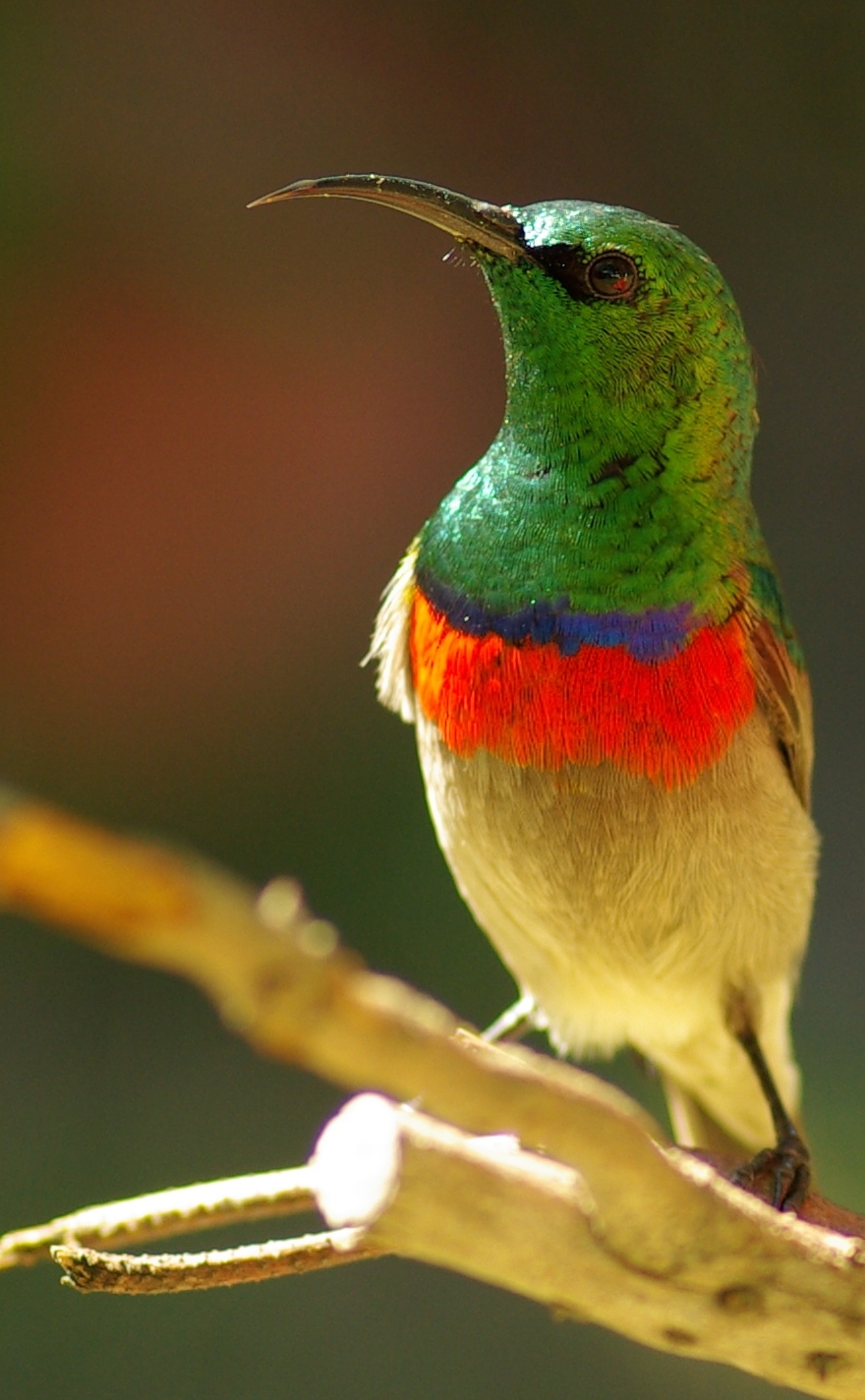
The Southern Double-collared Sunbird, scientifically known as Cinnyris chalybeus, is a small passerine bird native to southern Africa. It is part of the Nectariniidae family, known for its nectar-feeding habits and strikingly colorful plumage. Males of the species are particularly eye-catching, boasting a vivid combination of iridescent green, blue, and red on their upper parts and breasts, contrasting with a dark belly. Females, though less vibrant, exhibit a subtle beauty with olive-gray plumage and faint underpart streaking. This species plays a crucial role in pollination, as it frequently visits flowering plants in search of nectar. Their brush-tipped tongues are specially adapted for extracting nectar from flowers, making them vital pollinators in their ecosystems. The Southern Double-collared Sunbird inhabits a variety of landscapes, from coastal fynbos to montane grasslands and urban gardens. South Africa's Western Cape is particularly significant, where the fynbos biome supports a diverse array of plant species that these sunbirds help pollinate. Seasonal behavior includes altitudinal migrations, where they move to higher elevations during breeding months to exploit the seasonal abundance of flowers. During winter, they descend to lower, warmer areas where they can still find sufficient nectar sources. As a key component of the avian community in southern Africa, the Southern Double-collared Sunbird contributes to the ecological balance by aiding in seed dispersal and pollination, benefiting both natural habitats and cultivated gardens.
The Southern Double-collared Sunbird belongs to the family Nectariniidae, within the order Passeriformes. These birds typically live 5-7 years, with some living up to 10 years.
How to Identify a Southern Double-collared Sunbird
The Southern Double-collared Sunbird is easily identifiable by its size and plumage. Adult males, measuring around 12 cm in length, exhibit a dazzling metallic green head and back, with a striking iridescent blue band across the breast, just above a scarlet red band. In contrast, adult females are more subdued, with olive-gray above and pale gray below, allowing them to blend seamlessly into their surroundings. Juveniles resemble females but lack the distinct breast banding seen in mature males. Differences between males and females are pronounced, with the male's bright colors serving as a display during mating. In flight, these sunbirds have a rapid, direct flight pattern, with wings producing a whirring sound due to their speed. When perched, their relatively long, curved bills are prominent, a feature that aids their nectar-feeding. They may be confused with similar species like the Greater Double-collared Sunbird, but the Southern variety is smaller and has a narrower red breast band. Observers should note the unique combination of size, bill shape, and the male's specific coloration when identifying this bird.
Having trouble telling birds apart? Upload a photo to our bird identification tool for an instant species match.
Southern Double-collared Sunbird Habitat and Range
Preferred Habitat
The Southern Double-collared Sunbird thrives in diverse habitats across southern Africa. Its preferred habitat includes the fynbos regions of the Western and Eastern Cape provinces, where it can be found in coastal scrub and montane grasslands. These areas support a high density of flowering plants, providing abundant nectar. The bird is also found in forests and riverine thickets, adapting well to urban environments where gardens and parks offer additional foraging opportunities. It typically inhabits elevations from sea level to 1,800 meters, with seasonal movements that reflect changes in flower availability. They are more common in rural areas, but their adaptability allows them to flourish in urban settings as well.
Geographic Range
The Southern Double-collared Sunbird is predominantly found in southern Africa, with its range extending across South Africa, Lesotho, and parts of Swaziland. This species occupies a variety of regions, from the coastal strip of the Western Cape to the Drakensberg Mountains, where it breeds during the spring and summer months. The birds are largely resident but may engage in altitudinal migrations, moving to higher elevations to breed and returning to lower elevations in winter. High population densities are noted in the fynbos of the Western Cape, where the sunbird's role as a pollinator is especially critical.
Want to know which birds visit your area? Browse our backyard birds by location guides for region-specific species lists.
What Does the Southern Double-collared Sunbird Eat?
The diet of the Southern Double-collared Sunbird primarily consists of nectar, which it extracts from a range of flowering plants using its specialized brush-tipped tongue. This nectarivorous diet is supplemented by small insects and spiders, which provide essential proteins, especially during the breeding season. The sunbird's foraging behavior is dynamic; it hovers like a hummingbird or perches to access flowers. Seasonal variations in diet occur as the availability of flowering plants changes, with insects becoming a more significant part of their diet when nectar is scarce. Feeding occurs throughout the day, with peaks in activity during the early morning and late afternoon.
Want to attract Southern Double-collared Sunbirds to your yard? See our recommended feeders and seed types for the best results.
Southern Double-collared Sunbird Behavior and Social Structure
The Southern Double-collared Sunbird exhibits a range of behaviors that reflect its ecological niche. These birds are primarily solitary or found in pairs, becoming more territorial during the breeding season. Males perform spectacular aerial displays to attract females, showcasing their vibrant plumage. Territorial disputes with conspecifics or other nectarivores are common, involving rapid chases and vocalizations. In terms of social structure, they are not typically flocking birds, but loose associations may occur during non-breeding periods. Daily activity patterns include periods of intense foraging interspersed with rest. When faced with predators, these sunbirds rely on agility and speed to evade capture, often taking cover in dense vegetation.
Southern Double-collared Sunbird Nesting and Reproduction
The Southern Double-collared Sunbird constructs a distinctive, oval-shaped nest, often woven from grasses, leaves, and spider silk. These nests are typically suspended in shrubs or small trees, at varying heights from the ground. The female is primarily responsible for nest construction, with the male providing protection and support. A typical clutch comprises two to three eggs, which the female incubates for about 14-16 days. After hatching, both parents participate in feeding the chicks, which fledge approximately 18-21 days post-hatching. The species may produce multiple broods per year, particularly in regions with extended flowering seasons.
Southern Double-collared Sunbird Sounds and Vocalizations
The Southern Double-collared Sunbird produces a range of vocalizations. Its primary song is a rapid series of high-pitched, tinkling notes, often delivered from a prominent perch. Calls include sharp, metallic 'tsip' notes used in communication between mates or during territorial disputes. Alarm calls are harsher and more insistent, alerting other birds to potential danger. During the dawn chorus, males sing vigorously to establish territory and attract mates, with their song filling the early morning air.
Interesting Facts About the Southern Double-collared Sunbird
- 1The Southern Double-collared Sunbird can hover like a hummingbird, despite being part of a different avian family.
- 2These sunbirds have a specialized tongue, resembling a brush, ideal for extracting nectar.
- 3Males undergo a partial molt before the breeding season to enhance their vibrant plumage.
- 4This species is an important pollinator for plants like Proteas and Erica, ensuring seed production.
- 5The Southern Double-collared Sunbird can feed on over 30 different flower species in its range.
- 6During territorial disputes, males engage in dramatic aerial chases to assert dominance.
- 7The bird's iridescent plumage results from microscopic structures that reflect light, not pigments.
Southern Double-collared Sunbird Conservation Status
Currently classified as Least Concern by the IUCN, the Southern Double-collared Sunbird benefits from its wide distribution and adaptability. The population trend appears stable, with no major threats identified at present. However, habitat loss due to urban expansion and agricultural development poses potential risks. Conservation efforts focus on habitat preservation, particularly in the fynbos biome, where the sunbird plays a key role in pollination. Historical population changes have been minimal, thanks to the bird's ability to thrive in modified habitats.
Attracting Southern Double-collared Sunbirds to Your Feeder
The Southern Double-collared Sunbird is a regular visitor to backyard bird feeders across its range. At the Eye On The Fly feeding station, we observe Southern Double-collared Sunbirds regularly and capture footage with our feeder cameras.
Other Nectariniidae Species


Birds Similar to the Southern Double-collared Sunbird
These species are often confused with the Southern Double-collared Sunbird due to similar appearance or overlapping range.

