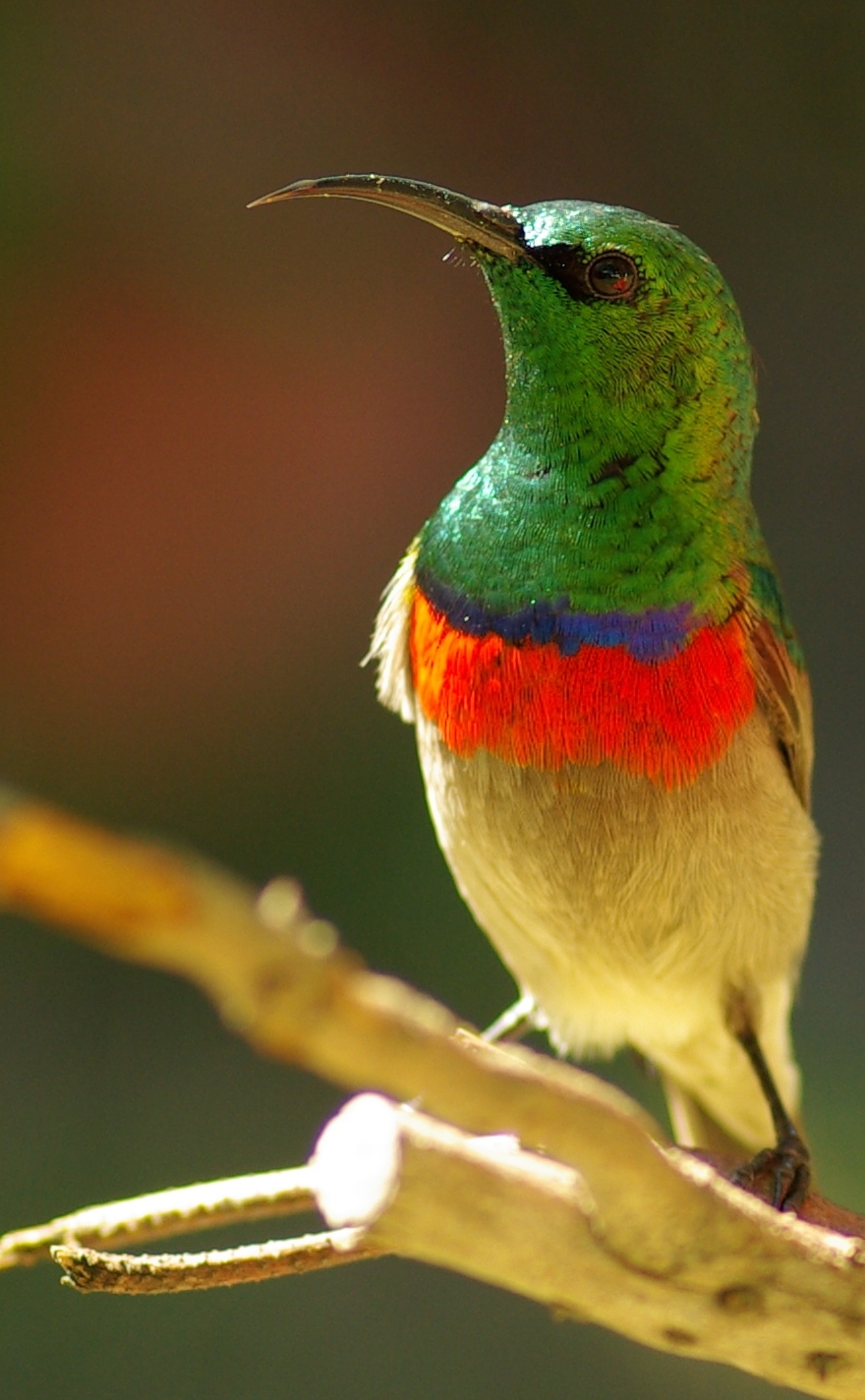
Olive-bellied Sunbird
Cinnyris chloropygius
Order: Passeriformes / Family: Nectariniidae

Wikimedia Commons
About the Olive-bellied Sunbird
The Olive-bellied Sunbird (Cinnyris chloropygius) is a small, vibrant bird native to the tropical regions of sub-Saharan Africa. These birds are particularly renowned for their striking iridescent plumage, which plays a critical role in their identification and appeal among bird watchers and ornithologists alike. Olive-bellied Sunbirds inhabit a variety of landscapes, ranging from moist lowland forests to savannas and even urban gardens, demonstrating their adaptability to different environments. They are most commonly found in countries like Nigeria, Cameroon, Gabon, and the Democratic Republic of the Congo, where dense forest canopies provide rich feeding grounds.
The ecological role of the Olive-bellied Sunbird is significant, as they contribute to the pollination of numerous plant species. Their long, curved bills are perfect for accessing the deep corollas of flowers, allowing them to reach nectar that many other birds cannot access. In exchange, they transport pollen from flower to flower, ensuring the survival and proliferation of various floral species. This mutualistic relationship underscores the bird's importance in maintaining the biodiversity of its ecosystem.
Seasonally, the Olive-bellied Sunbird's behaviors shift in response to changes in food availability and climatic conditions. During the breeding season, which typically occurs in response to the rainy season, these sunbirds become more territorial. Males are particularly conspicuous with their vibrant colors and elaborate courtship displays, which are designed to attract females. As the dry season progresses and nectar becomes less abundant, Olive-bellied Sunbirds may expand their diet to include more insects, showcasing their dietary adaptability. Despite these changes, their reliance on nectar remains a central part of their ecology, driving their movements and interactions with the environment.
The Olive-bellied Sunbird belongs to the family Nectariniidae, within the order Passeriformes. These birds typically live 4-7 years, with some reaching up to 9 years.
How to Identify a Olive-bellied Sunbird
The Olive-bellied Sunbird is a small bird, measuring about 9-10 cm in length, with males slightly larger than females. The adult male is particularly striking, with a metallic green head, throat, and upper breast, transitioning into an olive-brown belly that gives the species its common name. A distinguishing feature is the iridescent blue patch on the chin, which can appear almost black in poor lighting.
Females are less flamboyant, displaying more subdued coloration with olive-green upperparts and a paler, yellower underbelly. Juveniles resemble females but are even duller in color. This sexual dimorphism aids in quick identification during field observations, especially when males display their vivid plumage during courtship.
In flight, the Olive-bellied Sunbird can be identified by its rapid, darting movements and short wings. These birds are often seen hovering near flowers, a behavior facilitated by their unique wing structure. When perched, they exhibit a characteristic upright posture. While similar in size and shape to other sunbird species, their distinct coloration and specific markings help prevent confusion with related species like the Variable Sunbird.
Having trouble telling birds apart? Upload a photo to our bird identification tool for an instant species match.
Olive-bellied Sunbird Habitat and Range
Preferred Habitat
Olive-bellied Sunbirds inhabit a wide range of environments, predominantly preferring tropical and subtropical regions. They thrive in moist lowland forests, where dense vegetation offers ample feeding opportunities. These forests, often found in countries such as Cameroon and Gabon, provide the ideal setting for their nectar-feeding habits.
In addition to forests, Olive-bellied Sunbirds are adaptable enough to be found in savannas and scrublands, particularly where flowering plants are abundant. Urban areas and gardens also attract these birds, as they often host ornamental flowering plants that provide a steady nectar supply. Their elevation range typically extends from sea level up to 1,500 meters, although they are most commonly found in lowland areas.
Seasonal habitat shifts are primarily influenced by food availability, with sunbirds sometimes venturing into less typical habitats during times of abundance or scarcity. This adaptability has allowed them to maintain stable populations across a variety of landscapes, from rural to semi-urban settings.
Geographic Range
The Olive-bellied Sunbird has a widespread range across sub-Saharan Africa, primarily occupying the western and central regions. Its breeding range includes countries such as Nigeria, Cameroon, Gabon, and the Democratic Republic of the Congo, where it is a year-round resident. These areas provide the lush vegetation and extensive floral resources that are essential for their survival.
Unlike some other sunbird species, the Olive-bellied Sunbird does not undertake long-distance migrations. Instead, it exhibits localized movements, often dictated by seasonal variations in nectar availability. During the breeding season, individuals may become more concentrated in areas where flowering plants are abundant.
Population density hotspots are frequently found in regions with dense forest cover and diverse plant life. In these areas, Olive-bellied Sunbirds can be seen in significant numbers, particularly during the rainy season when flowering peaks occur. While they are not considered migratory, their ability to move within their range in response to environmental changes helps sustain their populations across different habitats.
Want to know which birds visit your area? Browse our backyard birds by location guides for region-specific species lists.
What Does the Olive-bellied Sunbird Eat?
The primary diet of the Olive-bellied Sunbird consists of nectar, which they extract from a variety of flowering plants. Their long, curved bills and specialized tongues allow them to reach deep into flowers, accessing nectar sources that are unavailable to many other bird species. This feeding strategy not only provides them with vital energy but also facilitates plant pollination.
In addition to nectar, Olive-bellied Sunbirds consume insects, particularly during the breeding season when the demand for protein increases. They often catch small insects in flight or glean them from foliage, making them effective insectivores when necessary. This dietary flexibility is crucial during times when nectar supplies are limited, such as during the dry season.
Foraging typically occurs throughout the day, with peaks in activity during the early morning and late afternoon when temperatures are cooler and flowers are more likely to produce nectar. Their ability to adapt their diet according to seasonal changes ensures that they can maintain their energetic lifestyle year-round.
Olive-bellied Sunbird Behavior and Social Structure
Olive-bellied Sunbirds display a range of behaviors that reflect their ecological adaptations and social structures. They are generally solitary or found in pairs, particularly during the breeding season when males become territorial. During this time, males are known for their elaborate courtship displays, which involve singing and wing-fluttering to attract potential mates.
Territorial interactions are common, with males defending their feeding and nesting areas vigorously against intruders. This territorial behavior is crucial for ensuring access to food resources and successful reproduction. Outside of the breeding season, however, Olive-bellied Sunbirds may join mixed-species feeding flocks, particularly when nectar sources are abundant.
These birds exhibit a characteristic diurnal activity pattern, with peak activity during the cooler parts of the day. Their response to predators involves swift, agile flight and quick retreats into dense foliage, where their small size and cryptic coloration offer protection. Despite their small size, Olive-bellied Sunbirds are resilient and resourceful, traits that contribute to their success across diverse habitats.
Olive-bellied Sunbird Nesting and Reproduction
The nesting habits of the Olive-bellied Sunbird are intricately linked to their surroundings and reflect their adaptability. Nests are typically constructed by the female, who weaves together plant fibers, leaves, and spider webs to create a small, suspended structure. This nest often hangs from a thin branch or vine, providing concealment and protection from predators.
Preferred nesting locations include areas with dense vegetation, such as forest edges or garden shrubs. These locations offer both the necessary materials for building and proximity to rich nectar sources. Clutch size generally ranges from one to three eggs, with incubation lasting about 14-16 days, predominantly undertaken by the female.
After hatching, the fledglings remain in the nest for approximately 15-21 days before venturing out. Both parents may assist in feeding the young, although the female plays a more significant role in brooding and initial care. Olive-bellied Sunbirds often raise multiple broods in a year, particularly in regions where food supplies remain consistent throughout the seasons.
Olive-bellied Sunbird Sounds and Vocalizations
The Olive-bellied Sunbird's vocalizations are characteristically sharp and melodious, often described as a series of high-pitched tinkling notes. Their primary song consists of rapid sequences that can vary in rhythm and pitch, creating a vibrant soundscape in their habitats.
Call notes are short and metallic, used frequently for communication between pairs or signaling alarm. Alarm calls are typically more abrupt, serving as a warning to other birds of potential threats.
During the dawn chorus, the Olive-bellied Sunbird's song adds a distinctive melody to the symphony of bird calls that greet the morning in tropical forests. These vocal expressions are essential for territory establishment and mate attraction, playing a crucial role in their daily interactions.
Interesting Facts About the Olive-bellied Sunbird
- 1Olive-bellied Sunbirds can flap their wings up to 50 times per second, allowing them to hover like hummingbirds.
- 2These birds play a vital role in pollinating over 100 plant species, making them key ecological players.
- 3The iridescent colors of the Olive-bellied Sunbird are due to microscopic structures in their feathers that refract light.
- 4Despite their small size, Olive-bellied Sunbirds can travel several kilometers a day in search of nectar.
- 5They are one of the few bird species that can see ultraviolet light, aiding in the detection of nectar-rich flowers.
- 6Male Olive-bellied Sunbirds are known to perform courtship displays that involve singing while perched near potential mates.
- 7These sunbirds are sometimes seen feeding in large groups when nectar is plentiful, but they remain territorial otherwise.
Olive-bellied Sunbird Conservation Status
The Olive-bellied Sunbird is currently listed as a species of Least Concern by the IUCN, with stable population trends. Despite facing threats such as habitat loss due to deforestation and urban expansion, their adaptability to various environments has helped maintain their numbers. Conservation efforts primarily focus on preserving natural habitats and mitigating the impacts of human encroachment. Protected areas and reserves in key regions play a critical role in safeguarding the ecosystems that support these sunbirds. Historically, the Olive-bellied Sunbird has maintained robust populations across its range, in part due to its ability to exploit altered landscapes, including gardens and parks. Continued conservation measures are vital to ensure that these vibrant birds remain a common sight in their native regions.
Other Nectariniidae Species


Birds Similar to the Olive-bellied Sunbird
These species are often confused with the Olive-bellied Sunbird due to similar appearance or overlapping range.