Australasian Bittern
Botaurus poiciloptilus
Order: Pelecaniformes / Family: Ardeidae
Wikimedia Commons
About the Australasian Bittern
The Australasian Bittern, Botaurus poiciloptilus, is a striking and elusive bird species renowned for its exceptional camouflage in dense wetland environments. This member of the Ardeidae family plays a vital ecological role by maintaining the health of wetland ecosystems in Australia and New Zealand. Its presence indicates high-quality, biodiverse wetlands, making it an essential species for environmental monitoring.
Primarily found in south-eastern Australia, Tasmania, and parts of New Zealand, the Australasian Bittern inhabits freshwater wetlands, reed beds, and marshes. These areas provide essential cover and feeding grounds. The bittern's cryptic coloration allows it to blend seamlessly into the reeds, where it waits patiently for prey. Seasonal movements are influenced by water levels, with drought conditions prompting dispersal to more favorable habitats.
Australasian Bitterns are solitary and secretive, making them challenging to observe. Their booming calls resonate through the wetlands during the breeding season, signaling territory establishment and mate attraction. As an apex predator, the bittern manages populations of fish, frogs, and insects, contributing to the balance of its ecosystem.
The bittern's ecological significance extends beyond its role as a predator. Its sensitivity to habitat changes makes it an important indicator species. Conservation efforts focus on preserving and restoring wetland habitats to ensure the survival of this enigmatic bird. Understanding the bittern's habits and requirements is crucial for conservationists aiming to protect these wetlands and the myriad species that rely on them.
The Australasian Bittern belongs to the family Ardeidae, within the order Pelecaniformes. These birds typically live average 10-12 years.
How to Identify a Australasian Bittern
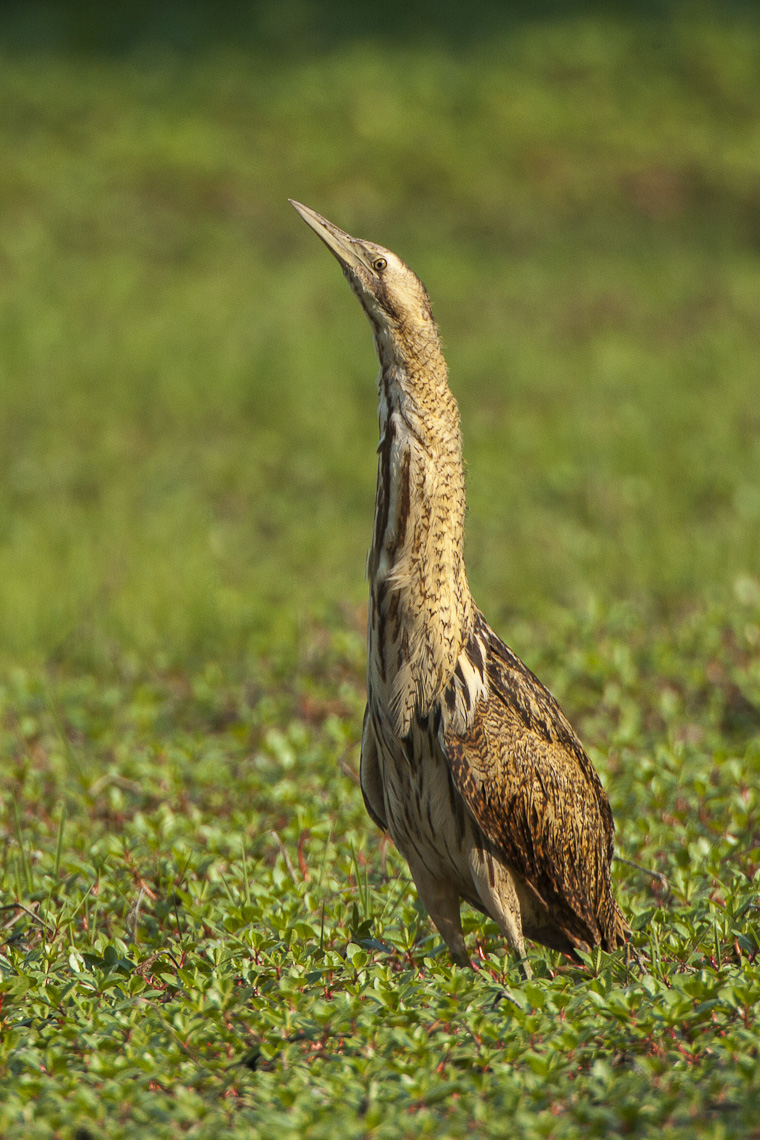
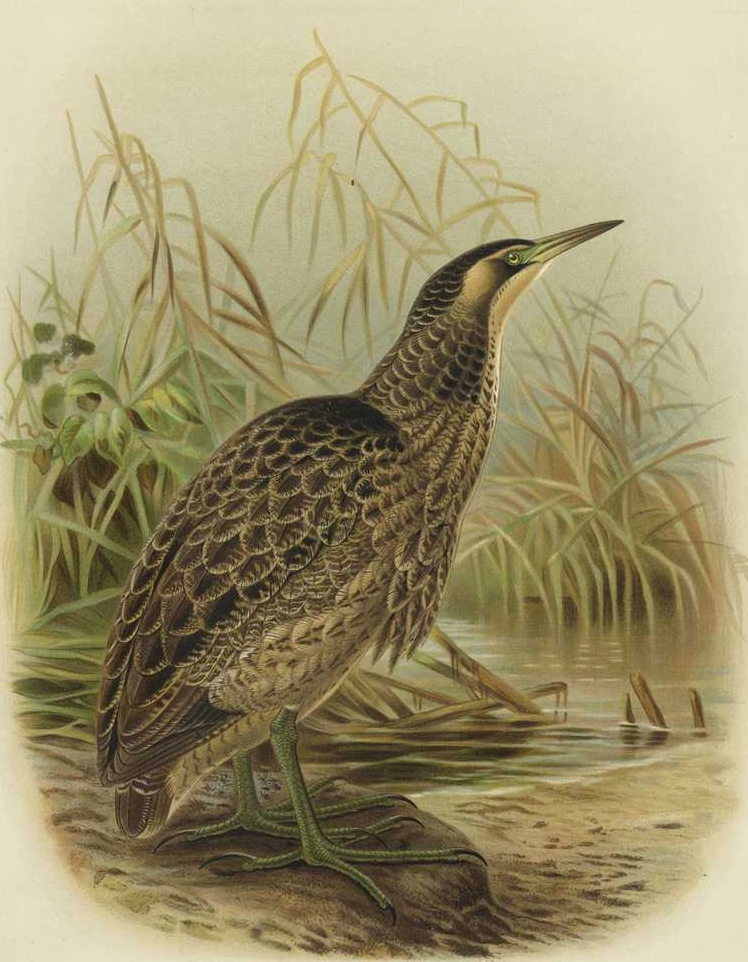
Australasian Bitterns display a mottled brown plumage with black streaks, providing excellent camouflage among reeds and grasses. Adults possess a distinctive buff-streaked breast and belly, while their backs are adorned with darker streaks and patches. The head is characteristically pointed with a dagger-like bill, and the neck is long and striped, a feature that enhances its stealthy demeanor.
Juvenile bitterns resemble adults but exhibit a slightly duller coloration, making them somewhat less effective at blending into their surroundings. Males and females are similar in appearance, though males may be slightly larger. The bittern's flight silhouette is unique, with broad, rounded wings and slow, deliberate wingbeats, giving it an owl-like appearance in flight.
In comparison to other species, the Australasian Bittern can be confused with the smaller and more slender Little Bittern. However, the Australasian Bittern's larger size, more robust body, and distinctive booming call set it apart. When perched, the bittern often adopts a vertical posture, extending its neck and bill skyward, further enhancing its ability to blend into the reeds.
Having trouble telling birds apart? Upload a photo to our bird identification tool for an instant species match.
Australasian Bittern Habitat and Range
Preferred Habitat
Australasian Bitterns thrive in freshwater wetlands, including reed beds, marshes, and swamps across south-eastern Australia and New Zealand. They prefer areas with dense vegetation, which provide cover and abundant prey. These habitats are typically found at low elevations, though the bitterns will venture to higher altitudes if suitable conditions exist.
During dry seasons or droughts, bitterns may shift to more permanent wetlands, illustrating their dependence on water availability. Urban development and agricultural practices pose significant threats to their habitats, leading to habitat fragmentation and loss. Conservation efforts aim to protect and restore these critical wetland environments, ensuring the survival of the bittern and other wetland-dependent species.
Geographic Range
The Australasian Bittern's breeding range extends across south-eastern Australia, including Victoria, South Australia, and New South Wales, as well as Tasmania and parts of New Zealand. Within these regions, they occupy suitable wetland habitats where conditions allow for successful breeding.
In winter, some populations may disperse locally in search of more favorable conditions, though they are generally non-migratory. Their range does not extend to other continents, limiting their global distribution and highlighting their reliance on specific wetland habitats. Population densities are highest in areas with extensive, undisturbed wetlands, though these are becoming increasingly rare due to human activities.
Want to know which birds visit your area? Browse our backyard birds by location guides for region-specific species lists.
What Does the Australasian Bittern Eat?
Australasian Bitterns primarily feed on a diet of fish, frogs, and aquatic invertebrates. They are opportunistic hunters, adapting their diet to the availability of prey. Insects, crustaceans, and small mammals also feature in their diet, particularly when other food sources are scarce.
Bitterns employ a patient, stealthy foraging technique, often standing motionless before striking with precision at unsuspecting prey. Prey size varies but is typically small enough to be swallowed whole. Feeding activity peaks at dawn and dusk, aligning with the increased activity of their prey. Seasonal changes in water levels and prey availability influence their diet, with bitterns adjusting their feeding strategies accordingly.
Australasian Bittern Behavior and Social Structure
Australasian Bitterns lead solitary and secretive lives, favoring dense reed beds where they are well-camouflaged. These birds are territorial, especially during the breeding season, when males establish and defend territories through their characteristic booming calls.
Courtship involves males vocalizing to attract females, with the intensity of their calls serving as a display of fitness. Once paired, bitterns tend to remain solitary outside of their breeding interactions, rarely forming flocks.
The bittern's response to predators relies heavily on its camouflage. When threatened, it adopts a 'freeze' posture, elongating its body and pointing its bill upwards to blend into surrounding vegetation. Daily activity patterns are crepuscular, with peak activity at dawn and dusk, minimizing exposure to predators while maximizing foraging success.
Australasian Bittern Nesting and Reproduction
Australasian Bitterns construct nests in dense reed beds, typically over water or in swampy areas with abundant cover. The nest is a platform of reeds and sedges, skillfully woven together to support a clutch of 3 to 5 eggs.
Incubation lasts about 25 days, with both parents involved in the process. After hatching, chicks remain in the nest for approximately 6 weeks before fledging. During this period, both parents contribute to feeding and protecting the young, though the female often assumes the primary caregiving role.
The bittern's nesting success is closely tied to water levels and habitat quality. High-quality, undisturbed wetlands are crucial for successful breeding, underscoring the need for habitat conservation. Typically, Australasian Bitterns raise one brood per year, though favorable conditions may occasionally allow for a second brood.
Australasian Bittern Sounds and Vocalizations
The Australasian Bittern's call is a distinctive, deep 'booming' sound, often described as resonating like a distant foghorn. This call, used primarily by males during the breeding season, can carry over long distances, serving to establish territories and attract mates.
In addition to the booming call, bitterns produce a series of softer, shorter notes that function as contact calls between mates or family groups. Alarm calls are less frequent but consist of harsh, grating sounds used to deter potential threats.
The dawn chorus of Australasian Bitterns, characterized by these booming calls, is a defining feature of their breeding wetlands, often echoing through the still morning air and adding to the enigmatic aura surrounding these birds.
Interesting Facts About the Australasian Bittern
- 1Australasian Bitterns can remain motionless for hours, relying on their cryptic plumage to avoid detection by predators and prey alike.
- 2The booming call of the Australasian Bittern is so low in frequency that it can be felt as a vibration when standing nearby.
- 3Despite their large size, Australasian Bitterns can be incredibly difficult to spot, even in open wetland habitats, due to their exceptional camouflage.
- 4During courtship, male Australasian Bitterns engage in vocal displays that can last for several hours, attracting females with their persistence and volume.
- 5Australasian Bitterns have been known to use tools, such as sticks or grass, to lure fish within striking distance, showcasing their intelligence and adaptability.
Australasian Bittern Conservation Status
The Australasian Bittern is listed as Endangered on the IUCN Red List, with populations facing a declining trend. Primary threats include habitat loss due to wetland drainage, agricultural expansion, and urban development. Conservation efforts focus on habitat protection and restoration, with initiatives aimed at preserving and rehabilitating key wetland areas. Monitoring programs track population changes and habitat conditions, providing valuable data for conservation planning. Historical population declines highlight the urgent need for effective wetland management to prevent further losses. Public awareness campaigns and community involvement are integral to ensuring the continued survival of this iconic wetland species.
Other Ardeidae Species


Birds Similar to the Australasian Bittern
These species are often confused with the Australasian Bittern due to similar appearance or overlapping range.