
Bahama Barn Owl
Tyto pollens
Order: Strigiformes / Family: Tytonidae
Wikimedia Commons
About the Bahama Barn Owl
The Bahama Barn Owl, known scientifically as Tyto pollens, is a fascinating and elusive bird of prey endemic to the Bahamian archipelago. Historically, it was believed to be extinct until rediscovered in the late 20th century. This owl plays a critical role in its ecosystem by controlling rodent populations, thereby maintaining a balance within its habitat. The Bahama Barn Owl inhabits the pine forests and open woodlands of the northern Bahamian islands, including Andros, Grand Bahama, and Abaco. It is often found in areas where human activity is minimal, showcasing a preference for secluded environments that provide ample hunting grounds. Unlike other barn owls that may adapt to urban settings, the Bahama Barn Owl remains largely tied to its natural habitats. During the breeding season, typically from February to July, the Bahama Barn Owl's activity intensifies as it engages in courtship and nesting behavior. The owl exhibits strong site fidelity, often returning to the same nesting location each year. As a nocturnal hunter, it becomes most active during twilight and nighttime hours, utilizing its acute hearing and silent flight to locate prey in the darkness. Its ecological role extends beyond predation; it influences the vegetative composition of its habitat by indirectly affecting seed dispersal through its interaction with prey species. Conservation efforts focus on habitat preservation and reducing human impact on its dwindling populations.
The Bahama Barn Owl belongs to the family Tytonidae, within the order Strigiformes. These birds typically live Unknown due to extinction.
How to Identify a Bahama Barn Owl
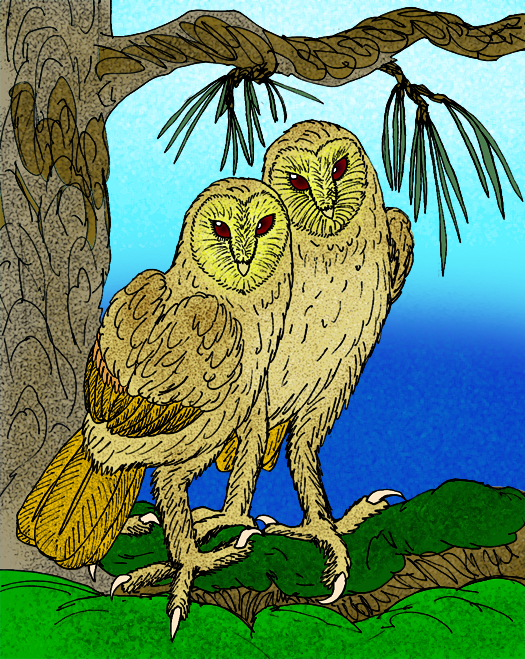
The Bahama Barn Owl is medium-sized with a wingspan ranging from 85 to 95 cm. Its plumage features a distinctive white facial disc that contrasts with the buff and gray speckling of its back and wings. This owl exhibits a white underbelly with occasional buffy patches, enhancing its striking appearance. Juvenile Bahama Barn Owls resemble adults but have fluffier plumage and more pronounced buff coloration on their underparts. Males and females appear similar, though females may display slightly darker markings. In flight, the Bahama Barn Owl's long, rounded wings and short tail create a buoyant, hovering silhouette. When perched, the owl stands tall, often maintaining an erect posture that highlights its heart-shaped face. It can be confused with other barn owl species, but the Bahama Barn Owl's specific size and coloration help distinguish it. Additionally, its vocalizations differ from similar species, being more muted and softer.
Having trouble telling birds apart? Upload a photo to our bird identification tool for an instant species match.
Bahama Barn Owl Habitat and Range
Preferred Habitat
The Bahama Barn Owl thrives in the pine forests and open woodlands of the Bahamas, particularly in areas with sparse human disturbance. It prefers low-elevation areas, typically not exceeding 15 meters above sea level. The owl's habitat selection is influenced by the availability of prey and suitable nesting sites. While it primarily inhabits rural environments, it occasionally ventures into less populated urban fringes. Seasonal habitat shifts are minimal, given its non-migratory nature, but it may adjust its hunting range based on prey distribution during different seasons.
Geographic Range
The Bahama Barn Owl's range is restricted to the northern islands of the Bahamas, including Andros, Grand Bahama, and Abaco. It remains a resident bird throughout the year, with no significant migratory movements observed. Population density hotspots are concentrated in areas where natural habitats are preserved, such as national parks and protected reserves. Despite its limited range, the owl's adaptability within its natural habitat allows it to maintain relatively stable populations in these areas.
Want to know which birds visit your area? Browse our backyard birds by location guides for region-specific species lists.
What Does the Bahama Barn Owl Eat?
The Bahama Barn Owl primarily feeds on small mammals, such as rodents, which constitute the bulk of its diet. It also consumes small birds and insects when available, demonstrating a degree of dietary flexibility. Seasonal changes in prey availability may lead to shifts in diet, with a greater reliance on insects during the summer months. The owl employs a sit-and-wait hunting strategy, using its keen hearing to locate prey before silently swooping down for the capture. Typically, it hunts during the late evening and early morning, aligning with its nocturnal activity patterns.
Bahama Barn Owl Behavior and Social Structure
The Bahama Barn Owl exhibits solitary behavior outside of the breeding season, maintaining defined territories that it vigorously defends from intruders. During courtship, males perform aerial displays, including hovering and diving, to attract mates. These displays are often accompanied by vocalizations that signal readiness to breed. The owl shows strong territorial instincts but may tolerate the presence of its mate within its established range. Its daily activity peaks at night, with hunting and territorial patrols occurring primarily under the cover of darkness. When confronted by predators, the Bahama Barn Owl utilizes evasive flight and camouflage to avoid detection.
Bahama Barn Owl Nesting and Reproduction
Bahama Barn Owls typically nest in tree cavities or abandoned buildings, often selecting sites that offer protection from the elements and predators. Nest construction involves minimal material use, primarily consisting of regurgitated pellets and surrounding detritus. The typical clutch size ranges from 3 to 5 eggs, with an incubation period of approximately 30 to 33 days. Both parents participate in feeding the chicks, which fledge about 50 to 55 days after hatching. The species usually raises one brood per year, although favorable conditions may lead to occasional second broods.
Bahama Barn Owl Sounds and Vocalizations
The Bahama Barn Owl's primary vocalization is a soft, hissing screech, lacking the harshness of other barn owl calls. This call is often repeated during territorial disputes and courtship. Its alarm call consists of a series of sharp, barking notes used to deter potential threats. Unlike many songbirds, the Bahama Barn Owl does not participate in a dawn chorus; instead, its vocalizations are most frequent at night. These sounds bear a resemblance to the rustling of leaves, offering a natural auditory camouflage.
Interesting Facts About the Bahama Barn Owl
- 1The Bahama Barn Owl was thought extinct until its rediscovery in the late 1980s, highlighting its elusive nature.
- 2Unlike many owl species, Bahama Barn Owls remain largely silent, using vocalizations sparingly.
- 3These owls can rotate their heads up to 270 degrees, an adaptation essential for spotting prey.
- 4The Bahama Barn Owl's silent flight is attributed to the specialized fringed feathers on its wings.
- 5Their heart-shaped facial disc functions like a satellite dish, amplifying sound to locate prey.
- 6Despite its medium size, the Bahama Barn Owl can consume prey up to one-third of its own body weight.
- 7The owl's eyes are fixed in their sockets, necessitating head movement for visual scanning.
Bahama Barn Owl Conservation Status
The Bahama Barn Owl is currently classified as vulnerable by the IUCN, with populations experiencing a gradual decline due to habitat loss and human disturbance. Primary threats include deforestation, urban development, and predation by introduced species. Conservation efforts focus on habitat protection and restoration, alongside public awareness campaigns to reduce human impact. Historically, the population faced challenges due to hunting and habitat degradation, but recent measures aim to stabilize and eventually increase numbers.


