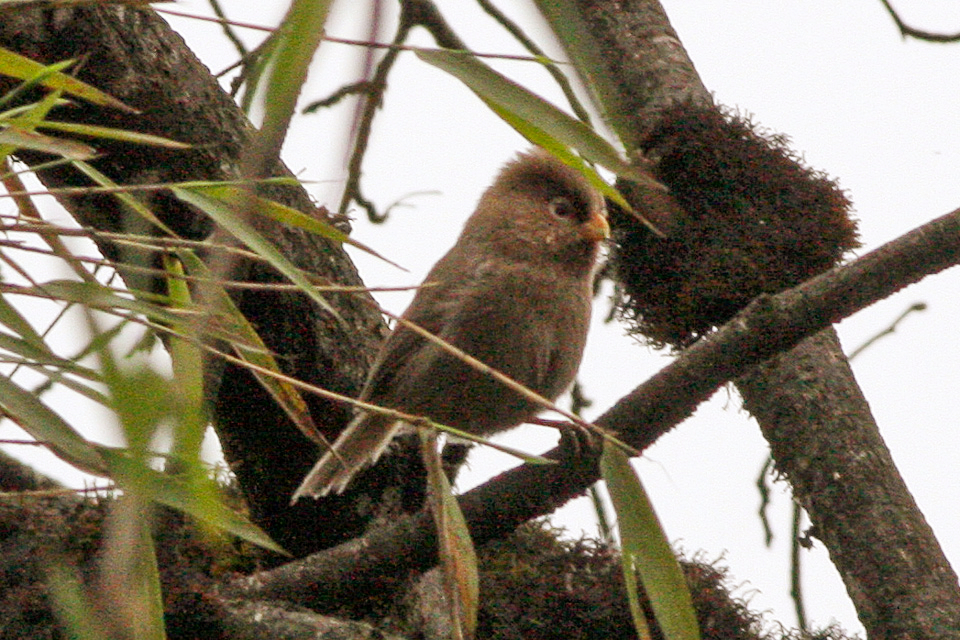
Balearic Warbler
Sylvia balearica
Order: Passeriformes / Family: Sylviidae

Wikimedia Commons
About the Balearic Warbler
The Balearic Warbler, Sylvia balearica, is a small, elusive songbird endemic to the Balearic Islands, a Mediterranean archipelago off the eastern coast of Spain. Primarily found on the islands of Mallorca, Menorca, and Ibiza, this species has a significant ecological role in its native habitat. As a member of the Sylviidae family, the Balearic Warbler contributes to the control of insect populations and the dispersal of seeds, playing a vital part in maintaining the ecological balance of the Mediterranean shrubland and garrigue, where it predominantly resides.
The species is of particular interest to ornithologists and conservationists due to its restricted range and specific habitat requirements. The Balearic Warbler prefers dense, low shrublands and areas abundant in matorral vegetation, where it can find both shelter and ample foraging opportunities. Its presence is a strong indicator of the health of these Mediterranean ecosystems.
During the breeding season, typically from March to July, the Balearic Warbler becomes more vocal and territorial. Males engage in complex singing displays to attract mates and ward off competitors, making them more conspicuous than at other times of the year. However, outside the breeding season, they become more reclusive, blending seamlessly into their environment. The bird's behavior and its reliance on specific habitats make it a focal point for conservation efforts aimed at preserving the biodiversity of the Balearic Islands.
The Balearic Warbler belongs to the family Sylviidae, within the order Passeriformes. These birds typically live average 4 years with a maximum recorded of 6 years..
How to Identify a Balearic Warbler
The Balearic Warbler is a small songbird, measuring approximately 13 centimeters in length with a wingspan of around 17 centimeters. It is characterized by its rich brown plumage that provides excellent camouflage against the Mediterranean vegetation. The underparts are paler, with a subtle buff tint, while the upperparts are darker, giving the bird a distinctly earthy appearance. Males and females are similar in appearance, although males may exhibit slightly more vivid coloring during the breeding season.
Juvenile Balearic Warblers resemble adults but tend to have duller plumage, which helps them remain inconspicuous while they learn to fend for themselves. The bird's eye is surrounded by a prominent white eye-ring, which contrasts with its otherwise muted coloration and aids in identification. In flight, the Balearic Warbler displays a rapid, fluttering movement, with its tail often cocked upwards.
Confusion with other Sylvia species is possible, but the Balearic Warbler's unique combination of size, plumage, and vocalizations set it apart. Its perching posture is typically upright, with frequent flicks of the tail, a characteristic behavior of many sylviid warblers.
Having trouble telling birds apart? Upload a photo to our bird identification tool for an instant species match.
Balearic Warbler Habitat and Range
Preferred Habitat
The Balearic Warbler inhabits Mediterranean scrubland, preferring areas with dense shrubs and matorral vegetation. It is most commonly found in garrigue and maquis, where low, aromatic bushes like rosemary, thyme, and heather provide shelter and feeding grounds. The species is typically found at elevations ranging from sea level to about 900 meters, with a preference for coastal and lowland areas.
There is little seasonal shift in habitat preference, as the Balearic Warbler remains largely sedentary throughout the year. Urban presence is rare, as the bird avoids developed areas, favoring the tranquility and cover provided by natural landscapes. Conservation of its habitat is crucial, as any encroachment or degradation can significantly impact its population.
Geographic Range
The Balearic Warbler is geographically restricted to the Balearic Islands, specifically Mallorca, Menorca, and Ibiza. Unlike many other warbler species, it does not migrate, making it a year-round resident of these islands. Its range is limited to the Mediterranean biome, and it is not found on the mainland or in other parts of Europe.
Population density is highest in areas where suitable shrubland habitats are abundant, with Mallorca hosting the largest populations. Although the bird is confined to a small geographic area, it has adapted well to the specific conditions of the islands, provided that its habitat remains intact and protected from anthropogenic threats.
Want to know which birds visit your area? Browse our backyard birds by location guides for region-specific species lists.
What Does the Balearic Warbler Eat?
The Balearic Warbler primarily feeds on insects and other small invertebrates, which it forages from the foliage and undergrowth. Its diet includes beetles, caterpillars, spiders, and ants, with occasional consumption of berries and seeds, particularly during the autumn and winter months when insect availability decreases.
The bird employs a methodical foraging technique, hopping and flitting through dense shrubs in search of prey. It uses its slender bill to probe into crevices and under leaves, demonstrating both patience and agility. Feeding occurs throughout the day, with peak activity in the early morning and late afternoon, aligning with periods of cooler temperatures and higher insect activity.
Balearic Warbler Behavior and Social Structure
The Balearic Warbler exhibits solitary and territorial behavior, especially during the breeding season. Males defend their territories vigorously, engaging in singing displays from prominent perches to assert dominance and attract potential mates. These vocalizations serve as both courtship displays and deterrents to rival males.
Outside of breeding season, the Balearic Warbler becomes more elusive, often remaining hidden in dense vegetation. It is primarily a diurnal bird, with most of its activities, including feeding and territorial defense, occurring during daylight hours.
Its response to predators includes alarm calls and evasive flight into dense cover. Flocking behavior is uncommon, as the species prefers to maintain its independence within its established territory. The Balearic Warbler's social structure is relatively simplistic, centering around pair bonds during the breeding period and solitary life outside of it.
Balearic Warbler Nesting and Reproduction
The Balearic Warbler constructs a cup-shaped nest, typically low to the ground within dense shrubs. The nest is intricately woven from grasses, twigs, and other plant materials, providing a secure environment for the eggs and chicks. Preferred nesting sites include thick matorral and maquis, where the dense foliage offers protection from predators and the elements.
A typical clutch consists of 3 to 5 eggs, which are incubated by the female for approximately 12 to 14 days. Both parents participate in feeding the chicks, which fledge about 10 to 12 days after hatching. The species typically raises one brood per year, although a second brood is possible under favorable conditions.
Parental roles are well defined, with the female primarily responsible for incubation and brooding, while the male contributes significantly to feeding and territorial defense. This division of labor ensures the successful rearing of offspring in the challenging Mediterranean environment.
Balearic Warbler Sounds and Vocalizations
The Balearic Warbler's song is a complex, melodious series of trills and whistles, delivered with a distinctive staccato rhythm. Its primary song can be heard most prominently during the breeding season, serving as both a mating call and territorial signal.
Call notes are shorter, often sharp and metallic, serving as alerts or communication between mates. Alarm calls are harsher and more abrupt, signaling the presence of potential threats. The bird participates in the dawn chorus, adding its unique voice to the symphony of Mediterranean dawns.
Compared to other warblers, the Balearic Warbler's song is less repetitive and more varied, reflecting its adaptive communication strategies within its habitat.
Interesting Facts About the Balearic Warbler
- 1The Balearic Warbler is one of the few Sylvia species confined exclusively to an island environment, adapting specifically to the Balearic Islands.
- 2Despite its limited range, the Balearic Warbler has a surprisingly varied song repertoire, aiding in its complex territorial communications.
- 3The Balearic Warbler's primary habitats, garrigue and maquis, are characterized by aromatic plants like rosemary and thyme, which also attract many insects.
- 4During the breeding season, Balearic Warbler males can sing up to 200 times per hour, establishing territory and attracting mates.
- 5The species' nest construction is meticulous, with females selecting sites that provide optimal protection from predators and environmental factors.
- 6Balearic Warblers play a key role in controlling insect populations, acting as natural pest managers within their habitats.
- 7Their eye-ring and tail-flicking behavior are critical identification features that help differentiate them from similar Sylvia species.
Balearic Warbler Conservation Status
Currently, the Balearic Warbler is classified as Near Threatened by the IUCN, with its population trend considered stable. The primary threats to its survival include habitat loss due to urbanization, agricultural expansion, and wildfires, which can severely impact the dense shrublands it relies upon. Conservation efforts focus on habitat protection and restoration, ensuring that the bird's natural environments remain undisturbed. Monitoring programs have been established to track population changes and assess the effectiveness of conservation strategies. Historically, the population has faced challenges due to human encroachment, but recent conservation measures have helped stabilize numbers. Continued efforts are essential to safeguard this endemic species and its fragile habitat.