Bare-headed Laughingthrush
Garrulax calvus
Order: Passeriformes / Family: Leiothrichidae

Wikimedia Commons
About the Bare-headed Laughingthrush
The Bare-headed Laughingthrush, known scientifically as Garrulax calvus, is a captivating member of the Leiothrichidae family, renowned for its distinctive bare head, which sets it apart from other members of the laughingthrush genus. This bird inhabits the dense montane forests of Southeast Asia, primarily found in regions such as Yunnan in China and northern Vietnam. The Bare-headed Laughingthrush thrives in subtropical and tropical moist forest environments, where it plays a critical role in seed dispersal, thus contributing to the forest ecosystem's health. This species often forms small, noisy flocks, which aid in its survival by providing protection against predators through collective alarm calls. During the breeding season, which typically spans from March to July, the Bare-headed Laughingthrush becomes more territorial, often engaging in elaborate courtship displays to attract mates. Its ecological significance cannot be overstated, as it helps maintain the balance of its native habitats by controlling insect populations and aiding in plant reproduction. The Bare-headed Laughingthrush's adaptability to various altitudes, from 600 to 2,600 meters, highlights its resilience in diverse environmental conditions. However, habitat destruction poses a significant threat, underscoring the need for conservation efforts to ensure the preservation of this unique avian species.
The Bare-headed Laughingthrush belongs to the family Leiothrichidae, within the order Passeriformes. These birds typically live typically 5-10 years, with some individuals potentially reaching 12 years..
How to Identify a Bare-headed Laughingthrush
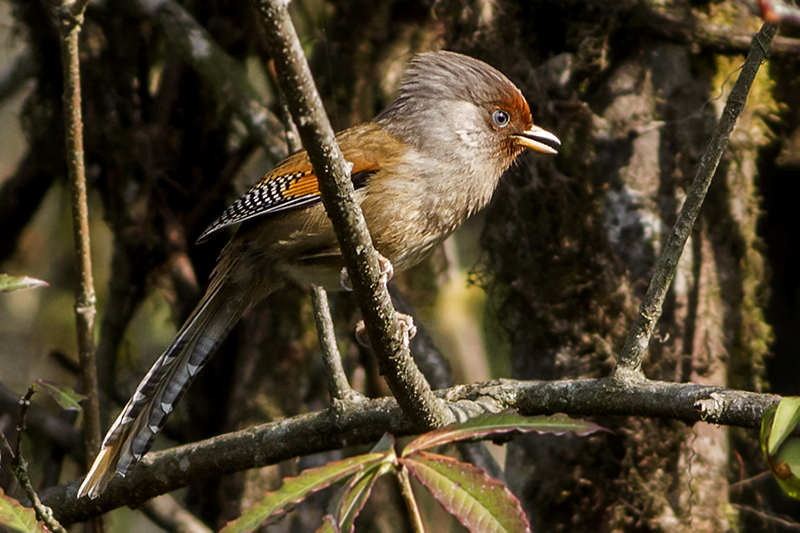
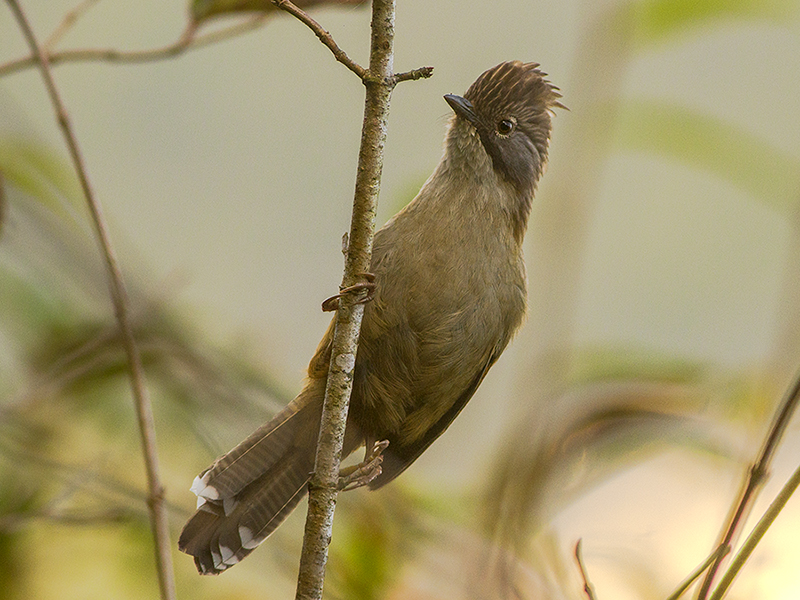
The Bare-headed Laughingthrush is easily recognized by its bare, pinkish head, which contrasts sharply with its otherwise rich brown plumage. Its wings and tail showcase a more subdued, darker brown, while the underparts tend to be a lighter shade. Juveniles resemble adults but have a more mottled appearance on their body feathers. There are no significant size differences between males and females, both measuring around 24 centimeters in length. The lack of plumage on the head can cause confusion with other laughingthrush species, but the Bare-headed Laughingthrush's vocalizations and bare head are key identifiers. When in flight, this bird exhibits a rounded wing shape and a steady, direct flight pattern. Perched, it often adopts an upright posture, allowing for easy observation of its unique head and overall plumage characteristics.
Having trouble telling birds apart? Upload a photo to our bird identification tool for an instant species match.
Bare-headed Laughingthrush Habitat and Range
Preferred Habitat
The Bare-headed Laughingthrush primarily inhabits montane forests in Southeast Asia. It favors subtropical and tropical moist broadleaf forests, often at elevations ranging from 600 to 2,600 meters. Within these environments, the bird is typically found in dense undergrowth and forest edges, which provide ample cover and foraging opportunities. Though primarily a forest dweller, it occasionally ventures into secondary growth areas and edges of cultivated lands, displaying some adaptability to habitat changes. Seasonal shifts do not significantly alter its habitat preferences, as it tends to remain within the same forested regions year-round. Urban and rural presence is minimal, with the species favoring undisturbed forest environments.
Geographic Range
The range of the Bare-headed Laughingthrush is relatively restricted, with its primary habitat located in the Yunnan province of China and northern regions of Vietnam. These areas represent the bird's breeding and year-round range, as it does not engage in long-distance migrations. Within these regions, the species is often found in montane forest habitats, particularly those at higher elevations. Local populations may exhibit some altitudinal movement in response to seasonal changes, but overall, the Bare-headed Laughingthrush remains a resident species within its core range. Population density hotspots tend to correspond with well-preserved forest areas, where human impact is minimal.
Want to know which birds visit your area? Browse our backyard birds by location guides for region-specific species lists.
What Does the Bare-headed Laughingthrush Eat?
The Bare-headed Laughingthrush's diet primarily consists of insects and other small invertebrates, which it forages for on the forest floor and among dense vegetation. Its secondary food sources include fruits and seeds, particularly during the non-breeding season when insect availability decreases. The bird employs a methodical foraging technique, using its bill to probe leaf litter and foliage. Prey size varies, but it typically includes small arthropods such as beetles, caterpillars, and spiders. Feeding usually occurs during the early morning and late afternoon, aligning with the periods of peak insect activity. This varied diet allows the Bare-headed Laughingthrush to adapt to seasonal changes in food availability.
Bare-headed Laughingthrush Behavior and Social Structure
The Bare-headed Laughingthrush exhibits a highly social structure, often forming flocks of up to 12 individuals. These flocks engage in cooperative behaviors, such as group foraging and communal roosting, which enhance their survival prospects. Territorial behavior becomes more pronounced during the breeding season, with pairs defending their nesting areas vigorously. Courtship displays involve both vocal and visual components, with males performing elaborate songs and displaying their plumage to attract females. Flocking patterns remain consistent throughout the year, though groups may become more fragmented during the breeding period. In response to predators, the Bare-headed Laughingthrush relies on a combination of alarm calls and evasive flight. Daily activity patterns include periods of intense foraging interspersed with resting intervals during the heat of midday.
Bare-headed Laughingthrush Nesting and Reproduction
The nesting habits of the Bare-headed Laughingthrush involve constructing cup-shaped nests from twigs, leaves, and other plant materials. These nests are typically situated in dense shrubs or low trees, providing concealment from predators. Clutch size generally ranges from two to four eggs, with the female primarily responsible for incubation, which lasts approximately 14 days. Both parents participate in feeding the chicks, which fledge around 16 days after hatching. The species typically raises one to two broods per year, depending on environmental conditions and food availability. The cooperative nature of the flock often extends to nesting, with non-breeding individuals occasionally assisting in feeding and protecting the young.
Bare-headed Laughingthrush Sounds and Vocalizations
The Bare-headed Laughingthrush is renowned for its vocal repertoire, which includes a melodious and varied primary song characterized by a series of clear, flute-like notes. These songs are often used in territorial displays and courtship. Call notes are sharper and more abrupt, serving as contact calls among flock members. Alarm calls are distinct, consisting of rapid, repeated notes that alert the group to potential threats. The species participates in a dawn chorus, with vocal activity peaking at sunrise when they establish their presence within their territory. The sounds of the Bare-headed Laughingthrush are reminiscent of a musical ensemble, with each individual contributing unique notes to the overall chorus.
Interesting Facts About the Bare-headed Laughingthrush
- 1The Bare-headed Laughingthrush gets its name from its unique bare head, a rare trait among songbirds.
- 2Despite its name, the Bare-headed Laughingthrush's vocalizations are more musical than laughter-like.
- 3This species exhibits cooperative breeding behavior, with non-breeding individuals helping care for young.
- 4Bare-headed Laughingthrushes are known for their sociable nature, often forming flocks of up to 12 birds.
- 5The bird's bare head may help reduce overheating in the humid climates it inhabits.
- 6Bare-headed Laughingthrushes communicate using a complex repertoire of songs and calls.
- 7While not migratory, the species may move to different elevations seasonally to find food.
Bare-headed Laughingthrush Conservation Status
The Bare-headed Laughingthrush is currently listed as Near Threatened on the IUCN Red List, with populations believed to be in decline due to ongoing habitat loss and fragmentation. Primary threats include deforestation for agriculture and infrastructure development, which reduce the availability of suitable habitats. Conservation efforts focus on habitat protection and restoration, as well as raising awareness about the species' ecological role. Historical population data indicate a more widespread distribution, suggesting that conservation interventions are critical to prevent further declines. Continued monitoring and research are necessary to ensure the long-term survival of this unique bird.