
Bare-necked Fruitcrow
Gymnoderus foetidus
Order: Passeriformes / Family: Cotingidae

Wikimedia Commons
About the Bare-necked Fruitcrow
The Bare-necked Fruitcrow (Gymnoderus foetidus) is a fascinating member of the Cotingidae family, native to the lush rainforests of South America. This bird is notable for its striking appearance and ecological role within its habitat. Found primarily in the Amazon Basin, it extends through countries like Brazil, Colombia, Peru, and Venezuela. The Bare-necked Fruitcrow thrives in tropical lowland forests, often inhabiting areas near rivers and swamps, where fruit-bearing trees are abundant.
This species plays a significant role in seed dispersal, promoting forest regeneration. As frugivores, Bare-necked Fruitcrows consume a wide variety of fruits, aiding in the spread of seeds across large areas. Their presence indicates a healthy, biodiverse ecosystem. During the breeding season, these birds exhibit unique courtship displays that involve elaborate postures and vocalizations, underscoring their importance in the forest's acoustic landscape.
The Bare-necked Fruitcrow is not only a marvel for bird enthusiasts but also an important subject for ecological studies. Its behavior, diet, and interactions with other species offer insights into the complexities of rainforest ecosystems. While not currently endangered, the continued health of its populations is closely tied to the preservation of its forest habitat. Efforts to conserve these environments benefit not only the Bare-necked Fruitcrow but countless other species that share its home.
The Bare-necked Fruitcrow belongs to the family Cotingidae, within the order Passeriformes. These birds typically live averages 8-10 years, with a maximum recorded of 12 years..
How to Identify a Bare-necked Fruitcrow
The Bare-necked Fruitcrow is a medium-sized bird, measuring approximately 30-35 cm in length. Its most striking feature is the bare skin on its neck, which can vary in color from blue to pink. This bare patch is bordered by glossy black plumage, contributing to its unique appearance. Adult males and females exhibit slight differences; males tend to have more pronounced bare skin patches, while females may show more subdued coloration.
Juvenile Bare-necked Fruitcrows resemble adults but have less vibrant bare skin and slightly duller plumage. In flight, the Fruitcrow displays broad, rounded wings and a relatively short tail, creating a distinctive silhouette. When perched, it often adopts a horizontal stance, which, combined with its unique neck coloration, makes it identifiable even at a distance.
While similar to other cotingas in terms of shape, the Bare-necked Fruitcrow's distinctive neck and glossy black body set it apart. Birders should note these features to avoid confusion with other black-plumaged forest birds.
Having trouble telling birds apart? Upload a photo to our bird identification tool for an instant species match.
Bare-necked Fruitcrow Habitat and Range
Preferred Habitat
The Bare-necked Fruitcrow inhabits tropical lowland rainforests, thriving in areas where fruit trees are plentiful. It is particularly associated with primary forests near rivers and swamps, where the humidity supports lush vegetation. Typically found at elevations ranging from sea level to about 800 meters, it prefers dense canopy covers that offer abundant food sources.
Seasonally, the Bare-necked Fruitcrow may shift its habitat slightly depending on fruit availability, occasionally venturing into secondary forests. While it may visit the edges of urban areas, it primarily resides in undisturbed forest environments, away from significant human activity. This preference underscores the importance of intact tropical forests for its survival.
Geographic Range
The Bare-necked Fruitcrow's range encompasses the vast Amazon Basin, covering parts of Brazil, Colombia, Peru, and Venezuela. It is a resident bird, present year-round in these areas, although it may exhibit local movements in response to fruit availability. This species does not undertake long-distance migrations, instead relying on the consistent climate of the equatorial forests.
In Brazil, it is most commonly observed in the Amazonian regions, with population density hotspots around the Rio Negro and Rio Solimões. In Peru, sightings are frequent in the Loreto and Madre de Dios regions. The bird's presence in Colombia is concentrated in the Amazonian departments, while in Venezuela, it is found in the southern Amazonas state.
Want to know which birds visit your area? Browse our backyard birds by location guides for region-specific species lists.
What Does the Bare-necked Fruitcrow Eat?
The Bare-necked Fruitcrow primarily feeds on fruits, with a diet dominated by figs and berries. As a frugivore, it plays a crucial role in seed dispersal. It forages by perching on branches and plucking fruit directly from trees, often swallowing them whole. This bird may also consume insects and small invertebrates, supplementing its diet, especially during fruit scarcity.
Seasonal changes in fruit availability can influence the Bare-necked Fruitcrow's diet, prompting it to explore different areas of the forest. Its feeding schedule is diurnal, actively foraging throughout the day, with peak activity during early morning and late afternoon when fruits are most abundant.
Bare-necked Fruitcrow Behavior and Social Structure
The Bare-necked Fruitcrow exhibits intriguing social behavior, often seen in small groups or pairs. While not strictly territorial, it may defend fruit-rich areas from other birds, displaying aggressive behaviors like chasing intruders. Courtship involves elaborate displays, where males showcase their bare necks and perform rhythmic movements accompanied by vocalizations.
This species remains relatively calm when faced with predators, often relying on its cryptic plumage to blend into the dense foliage. Its daily activity patterns revolve around foraging and resting, with periods of inactivity during midday heat. Flocking behavior is common when fruit sources are plentiful, facilitating social interactions among individuals.
Bare-necked Fruitcrow Nesting and Reproduction
Bare-necked Fruitcrows construct platform nests high in the forest canopy, using twigs, leaves, and other plant materials. These nests are often positioned on sturdy branches, providing stability. The female typically lays 1-2 eggs per clutch, with an incubation period lasting around 20 days.
Both parents partake in feeding the chicks, which fledge approximately 25-30 days after hatching. The species usually raises one brood per year, timed with peak fruit availability to ensure ample food supply for the growing young.
Bare-necked Fruitcrow Sounds and Vocalizations
The Bare-necked Fruitcrow's calls are a series of low, guttural notes, often described as 'croaking' or 'growling.' Its primary song, though not melodic, serves as a communication tool within the dense forest. Alarm calls are sharper and more abrupt, alerting others to potential threats.
Dawn chorus behavior is understated, with the Fruitcrow's sounds blending into the background of more vocal species. The bird's calls are reminiscent of a distant frog, an adaptation to its humid, forested environment.
Interesting Facts About the Bare-necked Fruitcrow
- 1The Bare-necked Fruitcrow can consume fruits larger than its own head, showcasing its impressive gape size.
- 2Despite its ominous name, Gymnoderus foetidus, the Bare-necked Fruitcrow does not emit a foul odor.
- 3This species' bare skin patches can change color slightly, reflecting its mood or environmental conditions.
- 4The Bare-necked Fruitcrow is one of the few birds that can thrive in both primary and secondary forests.
- 5It contributes significantly to forest regeneration by dispersing seeds over vast areas.
- 6The Bare-necked Fruitcrow's vocalizations are among the most distinctive sounds of the Amazon rainforest.
- 7Their group foraging behavior increases efficiency in locating and consuming fruit resources.
Bare-necked Fruitcrow Conservation Status
The IUCN currently lists the Bare-necked Fruitcrow as a species of Least Concern, with stable population trends. However, habitat destruction due to deforestation poses a significant threat. Conservation efforts focus on preserving tropical rainforests and maintaining biodiversity. Historical data suggests populations have remained robust, yet ongoing monitoring is crucial. Initiatives to curb illegal logging and promote sustainable land use are vital to safeguarding its future.
Other Cotingidae Species


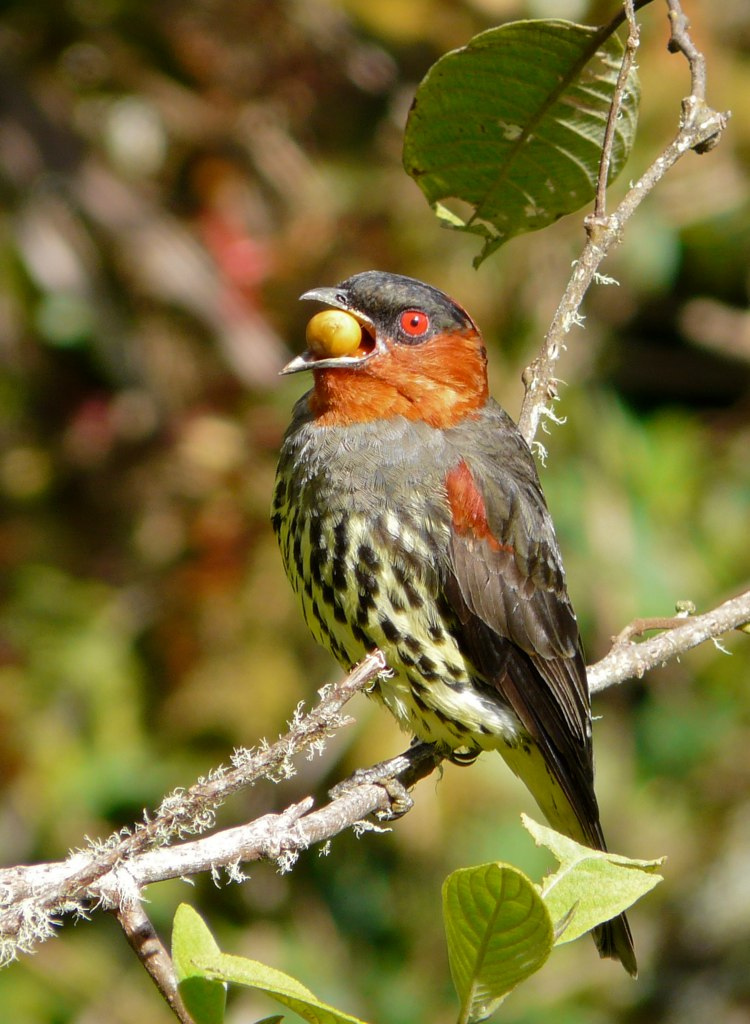

Birds Similar to the Bare-necked Fruitcrow
These species are often confused with the Bare-necked Fruitcrow due to similar appearance or overlapping range.
