
Kinglet Calyptura
Calyptura cristata
Order: Passeriformes / Family: Cotingidae

Wikimedia Commons
About the Kinglet Calyptura
The Kinglet Calyptura (Calyptura cristata) is a small bird that has captured the fascination of ornithologists due to its rarity and mysterious presence. Endemic to Brazil's Atlantic Forest, this bird has historically been considered one of the most enigmatic members of the Cotingidae family. Its existence is so obscure that sightings have been exceedingly rare, with only a handful of confirmed records over the past century. Despite its elusive nature, the Kinglet Calyptura plays a vital ecological role as part of the forest's intricate food web. As a frugivore, it contributes to seed dispersal, assisting in the regeneration and sustainability of its forest habitat. The bird's presence serves as an indicator of the health of the biodiversity-rich Atlantic Forest, a critical global biodiversity hotspot that is under threat from deforestation and habitat degradation. These factors have contributed to the Kinglet Calyptura's status as a symbol of conservation urgency in the region. The Kinglet Calyptura's ecological significance is heightened by its habitat preferences. It primarily resides in the subtropical and tropical moist lowland forests of southeastern Brazil, including areas in the states of Rio de Janeiro, São Paulo, and Espírito Santo. The bird's habitat requirements include dense forest canopies, which provide the necessary cover and food sources for its survival. Seasonal behaviors of the Kinglet Calyptura remain largely undocumented due to its rarity and the challenges associated with studying it in the field. However, it is believed that its movements are relatively localized within the forest, with no significant migratory patterns observed. Its rarity and the dense habitats it occupies make it a species of significant importance in studies of avian biodiversity and conservation in the Atlantic Forest.
The Kinglet Calyptura belongs to the family Cotingidae, within the order Passeriformes. These birds typically live estimated at 3-5 years, but data is limited due to rarity..
How to Identify a Kinglet Calyptura
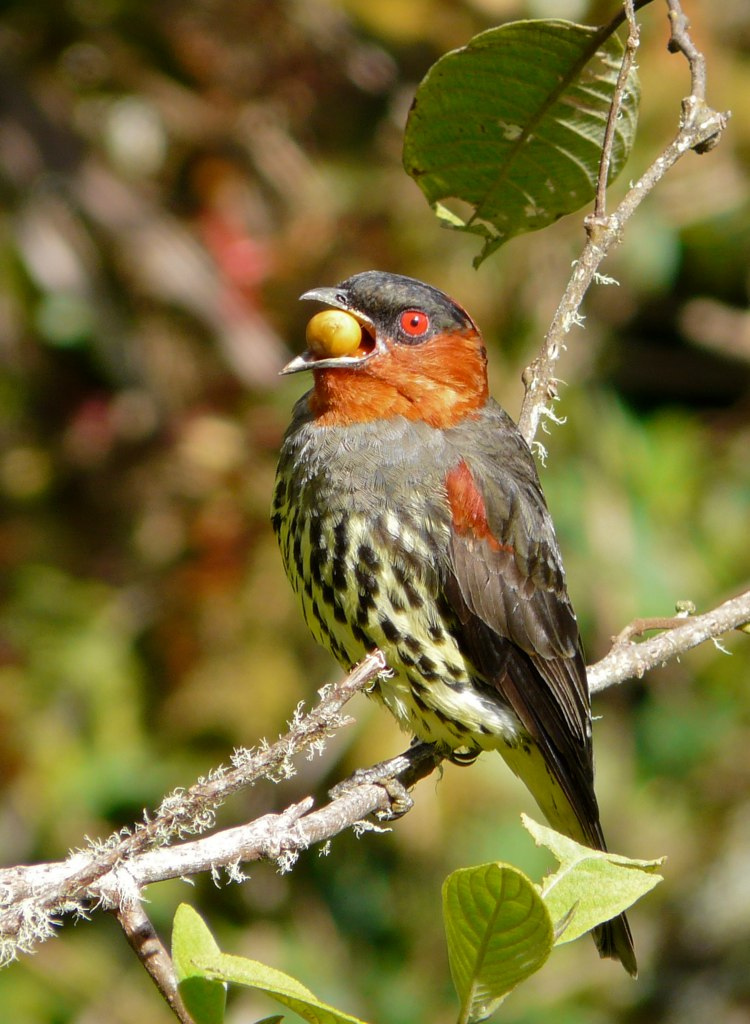
The Kinglet Calyptura is distinctive yet elusive, characterized by its small size and vibrant plumage. Adult birds measure around 8.5 to 9 cm in length, making them one of the smallest members of the Cotingidae family. Their most notable feature is a vivid red crest, which can be raised or flattened depending on the bird's activity and mood. The rest of the plumage is primarily green, providing excellent camouflage in its forest habitat. A subtle yellowish hue can sometimes be observed on the underparts, which may vary slightly between individuals. Juvenile Kinglet Calypturas are less vividly colored, with a more subdued crest and generally duller overall plumage. This difference can aid in distinguishing younger birds from adults. Males and females appear similar, though males may exhibit a slightly brighter crest. Potential confusion with other species is limited due to the unique combination of size and crest coloration. In flight, the Kinglet Calyptura exhibits a rapid and direct movement, often staying close to the canopy where it blends seamlessly with the foliage. When perched, its posture is upright, often with the crest prominently displayed, particularly when agitated or curious. Its small size and distinctive crest make it relatively easy to identify if spotted, although such encounters are rare.
Having trouble telling birds apart? Upload a photo to our bird identification tool for an instant species match.
Kinglet Calyptura Habitat and Range
Preferred Habitat
The Kinglet Calyptura inhabits the Atlantic Forest, a biome known for its high biodiversity and endemism. This forest type is characterized by dense, moist lowland forests found primarily along Brazil's southeastern coast. Within this habitat, the Kinglet Calyptura prefers areas with rich canopy cover and ample fruit availability. It thrives at elevations ranging from sea level up to 1,000 meters, though it is most commonly found in the lower elevations where the forest remains dense and undisturbed. Seasonal habitat shifts are minimal, as the Kinglet Calyptura is not known to migrate extensively. Instead, it likely moves locally within the forest in response to food availability and environmental conditions. The bird's presence is predominantly rural, as urban expansion and habitat destruction limit its range to the more pristine and undisturbed forest areas. Conservation of its habitat is critical for the survival of this species, requiring ongoing efforts to preserve and restore the Atlantic Forest.
Geographic Range
The Kinglet Calyptura's range is confined to the Atlantic Forest of southeastern Brazil, making it an endemic species with a limited geographical distribution. Its primary range includes the states of Rio de Janeiro, São Paulo, and Espírito Santo, areas known for their rich biodiversity yet facing significant ecological pressures. Within these states, the bird is found in fragmented forest patches that have remained relatively untouched by human development. The Kinglet Calyptura does not exhibit long-distance migration, remaining within its forest habitat year-round. However, its movements within this range are not well-documented due to its rarity. There are no known population density hotspots, as sightings are infrequent and sporadic. The bird's continued existence relies on the preservation of the Atlantic Forest, which has been reduced to a fraction of its original size due to agricultural expansion, urban development, and logging.
Want to know which birds visit your area? Browse our backyard birds by location guides for region-specific species lists.
What Does the Kinglet Calyptura Eat?
The Kinglet Calyptura primarily feeds on fruits, making it an important frugivore within its ecosystem. It plays a crucial role in seed dispersal, aiding in the propagation of various plant species within the Atlantic Forest. Its diet includes a variety of small fruits and berries, which it forages for within the dense forest canopy. The bird's small size allows it to access fruits that might be unreachable to larger frugivores. Seasonal diet changes may occur, with the Kinglet Calyptura adjusting its food preferences based on the availability of different fruiting plants throughout the year. In addition to fruits, it may occasionally consume small insects, supplementing its diet with protein. Foraging occurs primarily during the morning and late afternoon, with the bird actively searching for food among the leaves and branches of the forest canopy. Its foraging technique involves short flights and agile maneuvers through the foliage, often hanging upside down or flitting between branches to access food.
Kinglet Calyptura Behavior and Social Structure
The Kinglet Calyptura exhibits intriguing behaviors, although detailed observations remain limited due to its rarity. It is generally solitary or found in pairs, displaying a social structure typical of many frugivorous birds. Its territorial behavior is not well-documented, but it is likely that individuals maintain territories within their preferred forest patches to secure food resources. Courtship displays, though scarcely described, likely involve crest displays and vocalizations to attract mates. During the breeding season, which aligns with the abundance of food resources, courtship behaviors become more prominent. The Kinglet Calyptura's response to predators involves utilizing its small size and agility to evade threats within the dense forest. Its flight is quick and direct, allowing it to rapidly escape potential dangers. The bird is most active during the cooler parts of the day, engaging in foraging and social interactions primarily in the early morning and late afternoon. Its elusive nature makes it a challenge for birdwatchers and researchers to study extensively, contributing to the mystery surrounding its behaviors.
Kinglet Calyptura Nesting and Reproduction
Nesting details of the Kinglet Calyptura remain largely undocumented due to the bird's rarity and the difficulty in locating nests. However, it is presumed that the species constructs its nests in the dense foliage of the Atlantic Forest, utilizing materials such as leaves, twigs, and mosses to create a secure structure. The nest is likely placed high in the canopy to protect from ground-dwelling predators and disturbances. Clutch size is estimated to be small, potentially consisting of two to three eggs, aligning with the reproductive strategies of other small passerines. The incubation period, though not specifically documented for this species, may last around two weeks, with both parents likely involved in caring for the young. Fledging timelines are similarly speculative, but the young birds are assumed to leave the nest within a few weeks of hatching. The Kinglet Calyptura may produce only one brood per year, given its limited range and the challenges of raising young in a habitat under threat.
Kinglet Calyptura Sounds and Vocalizations
The Kinglet Calyptura's vocalizations are not well-documented, adding to the challenges of studying this elusive bird. Its primary song, if recorded, would likely consist of high-pitched, melodious notes similar to those of other small songbirds. These songs may serve as a means of communication between mates or as territorial displays. Call notes, while not specifically described, might include soft chips or whistles, used to maintain contact between individuals or to signal alarm at potential threats. During the dawn chorus, the Kinglet Calyptura may contribute its voice to the symphony of forest sounds, though its contributions remain largely unknown. Observations of its vocal behavior, if possible, would offer valuable insights into the social dynamics and interactions of this rare species.
Interesting Facts About the Kinglet Calyptura
- 1The Kinglet Calyptura was first described in 1824, yet sightings remain extremely rare even today.
- 2This bird's striking red crest sets it apart from other members of the Cotingidae family.
- 3Despite its small size, the Kinglet Calyptura plays a significant role in forest seed dispersal.
- 4The Atlantic Forest, home to the Kinglet Calyptura, harbors over 20,000 plant species.
- 5The last confirmed sighting of the Kinglet Calyptura occurred in the 1990s, highlighting its elusiveness.
- 6The bird is named for its similarity to kinglets, despite belonging to a different family.
- 7Conservation of the Atlantic Forest is critical, as it holds 60% of Brazil's threatened species.
Kinglet Calyptura Conservation Status
The Kinglet Calyptura is classified as Critically Endangered on the IUCN Red List, reflecting its precarious status and the urgent need for conservation action. Its population trend is believed to be decreasing, primarily due to habitat loss and fragmentation driven by agriculture, urbanization, and logging in the Atlantic Forest. The bird's rarity and the limited distribution make it highly vulnerable to these threats. Conservation efforts are focused on preserving and restoring the Atlantic Forest, with initiatives aimed at reforestation, creating protected areas, and promoting sustainable land use practices. Historical population changes are difficult to assess due to the scarcity of data, but the Kinglet Calyptura serves as a flagship species for conservation efforts in the region. Protecting this enigmatic bird requires collaborative efforts from local communities, governments, and international conservation organizations.
Other Cotingidae Species



Birds Similar to the Kinglet Calyptura
These species are often confused with the Kinglet Calyptura due to similar appearance or overlapping range.
