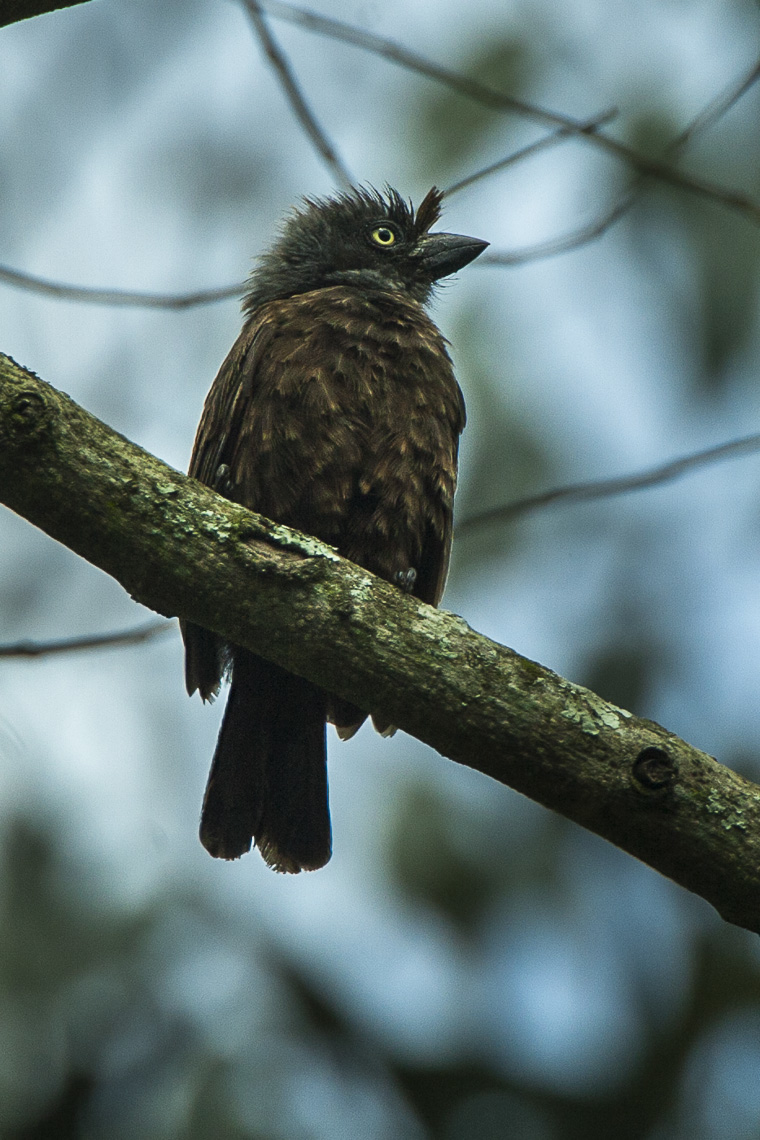
Bearded Barbet
Lybius dubius
Order: Piciformes / Family: Lybiidae

Wikimedia Commons
About the Bearded Barbet
The Bearded Barbet, Lybius dubius, is a captivating avian species belonging to the family Lybiidae. It is renowned for its vibrant colors and striking appearance, making it one of the most visually appealing members of the barbet family. Predominantly found in the savannahs and woodlands of sub-Saharan Africa, the Bearded Barbet plays a significant role in its ecosystem. Its strong, curved bill is perfectly adapted for its frugivorous diet, enabling it to consume a variety of fruits that are vital for seed dispersal in its habitat. The presence of the Bearded Barbet often indicates a healthy and balanced ecosystem, as it thrives in areas with abundant fruit-bearing trees.
The areas where the Bearded Barbet thrives include countries such as Senegal, Gambia, and Nigeria. These regions provide the open woodlands and savannahs that the species prefers, where trees like figs and parasitic mistletoe flourish. This habitat choice not only supports their dietary needs but also provides ample nesting opportunities. The Bearded Barbet's ecological role extends beyond its diet as it participates in mutualistic relationships with the plants it feeds on, aiding in seed dispersal and promoting forest regeneration.
Seasonally, the Bearded Barbet exhibits some movement within its range, although it is not considered a long-distance migrant. It may relocate locally in response to food availability, typically following the fruiting cycles of its preferred trees. This seasonal behavior ensures that the Bearded Barbet can exploit food resources optimally while contributing to the health of its environment. As a species, it is essential for maintaining the ecological balance in the regions it inhabits, underlining its importance in sub-Saharan ecosystems.
The Bearded Barbet belongs to the family Lybiidae, within the order Piciformes. These birds typically live average 7-10 years with a maximum recorded of 12 years..
How to Identify a Bearded Barbet
The Bearded Barbet is easily identified by its vivid plumage, which includes striking red feathers covering most of its body. This red is complemented by a contrasting black head and a prominent 'beard'-a tuft of black feathers-that gives this bird its name. The adult Bearded Barbet also features a broad, yellow eye ring that stands out against its dark head, adding to its distinctive look. Juvenile barbets, while similar in coloration, tend to have slightly duller plumage and lack the fully developed beard seen in adults.
In terms of sexual dimorphism, the Bearded Barbet shows little variation between males and females, both sporting similar color patterns. However, a keen observer might note that females can be slightly smaller in size. When perched, the Bearded Barbet maintains an upright posture, often seen on tree branches where it can easily access fruit. In flight, it presents a robust silhouette, characterized by short, broad wings and a relatively short tail, which gives it a stout appearance when viewed from a distance.
Although the Bearded Barbet is quite distinctive, it can occasionally be confused with the Double-toothed Barbet, which shares some red and black coloration. However, the Double-toothed Barbet lacks the unique beard and yellow eye ring of the Bearded Barbet, providing key differentiators for accurate identification.
Having trouble telling birds apart? Upload a photo to our bird identification tool for an instant species match.
Bearded Barbet Habitat and Range
Preferred Habitat
The Bearded Barbet is predominantly found in open woodlands and savannahs across sub-Saharan Africa. These habitats offer an abundance of fruit-bearing trees, such as figs and parasitic mistletoe, which are crucial to its diet. The species is relatively adaptable, thriving at elevations ranging from sea level up to about 1,500 meters. While the Bearded Barbet primarily inhabits rural areas with dense vegetation, it can also be found in semi-urban environments where suitable trees are present.
Seasonal habitat shifts are influenced by food availability, as the barbet may move to areas where fruiting trees are in abundance, especially during dry seasons. However, it does not typically venture into deep forests or heavily urbanized areas, preferring the transitional zones between open grasslands and woodlands. This habitat preference not only supports its dietary needs but also provides suitable nesting sites, often using tree cavities or abandoned woodpecker nests.
Geographic Range
The Bearded Barbet's range extends across a significant portion of West Africa, with its presence confirmed in countries such as Senegal, Gambia, Guinea, Sierra Leone, Liberia, Ivory Coast, Ghana, Togo, Benin, and Nigeria. Within this range, the species shows a preference for the savannah and open woodland habitats typical of these regions, thriving in areas with abundant fruiting trees.
While the Bearded Barbet is not a migratory species in the traditional sense, it does exhibit localized movement patterns. These movements are often dictated by the availability of food resources, particularly during dry seasons when certain fruit trees are in peak production. As a result, the population density of the Bearded Barbet can vary significantly depending on the season and the fruiting cycles of its preferred trees.
The species does not typically extend its range into the more arid regions of the Sahara or the dense rainforests of Central Africa, instead maintaining a steady presence in the regions where savannah and woodland ecosystems dominate. Population hotspots are often associated with areas that have a high density of fruiting trees, particularly where human activity has not heavily impacted the landscape.
Want to know which birds visit your area? Browse our backyard birds by location guides for region-specific species lists.
What Does the Bearded Barbet Eat?
The Bearded Barbet primarily follows a frugivorous diet, relying heavily on a variety of fruits to meet its nutritional needs. Its strong bill allows it to effectively consume large fruits, such as figs and berries, which are abundant in its woodland and savannah habitats. In addition to figs, the Bearded Barbet also consumes fruits from parasitic mistletoes, which play a significant role in its diet.
Seasonal changes impact the Bearded Barbet's dietary habits, as it shifts its foraging locations based on fruit availability. During certain times of the year, particularly in the dry season, the bird may venture into areas with concentrated fruiting trees to access food. This seasonal movement highlights the barbet's adaptability to varying environmental conditions.
In addition to fruits, the Bearded Barbet occasionally supplements its diet with small insects and other invertebrates, providing additional protein. This dietary flexibility ensures that the bird can maintain its energy levels even when fruit supplies are low. The Bearded Barbet typically forages during the cooler parts of the day, such as early morning and late afternoon, to avoid the heat of the day.
Bearded Barbet Behavior and Social Structure
The Bearded Barbet is a social bird, often seen in pairs or small family groups. Its social structure extends to its territorial behavior, as pairs establish and defend territories from other barbets during the breeding season. This territoriality ensures access to food resources and suitable nesting sites within their range.
Courtship displays of the Bearded Barbet are notable for their vibrancy and vocalizations. Males often engage in call-and-response patterns with potential mates, showcasing their prowess and readiness to breed. These vocal exchanges, combined with visual displays such as wing-fluttering and tail-fanning, form an integral part of their courtship rituals.
In terms of daily activity, the Bearded Barbet is most active during early morning and late afternoon, aligning its foraging habits with cooler temperatures. During the heat of the day, it tends to remain stationary or seek shade to conserve energy. When faced with predators, the Bearded Barbet relies on its strong flight and alert nature to evade threats, often retreating to dense foliage for protection.
Bearded Barbet Nesting and Reproduction
The Bearded Barbet nests in tree cavities, often utilizing abandoned woodpecker holes or natural hollows in trees. The choice of nesting site is crucial, as it provides protection from predators and environmental elements. The bird's nesting material is minimal, primarily consisting of wood chips or natural debris found within the cavity.
Clutch size typically ranges from two to four eggs, with both parents sharing the responsibility of incubation, which lasts around 13 to 15 days. After hatching, the chicks remain in the nest for about 30 days, during which both parents are actively involved in feeding and caring for them.
The Bearded Barbet generally raises one brood per year, although in optimal conditions with abundant food resources, a second brood may be possible. Parental roles are well-defined, with both the male and female participating in feeding and protecting the young, ensuring their survival until they fledge.
Bearded Barbet Sounds and Vocalizations
The Bearded Barbet's vocalizations are an essential aspect of its behavior, with a primary song characterized by rhythmic, repetitive notes that can carry over long distances. The song consists of a series of deep, resonant 'boop-boop' sounds that are often repeated in rapid succession, creating a distinctive auditory signature within its habitat.
In addition to its primary song, the Bearded Barbet emits various call notes, including softer 'chup-chup' sounds used in close communication between pairs or family groups. Alarm calls are sharper and more urgent, signaling the presence of predators or other threats.
During the dawn chorus, the Bearded Barbet's song contributes to the rich tapestry of sounds typical of its environment, often intertwined with the calls of other bird species. Its vocalizations serve not only as a means of communication but also as a tool for establishing territory and attracting mates.
Interesting Facts About the Bearded Barbet
- 1The Bearded Barbet can consume fruits nearly as large as its own head, thanks to its strong, curved bill.
- 2Despite its vivid colors, the Bearded Barbet is well-camouflaged among the lush foliage of its habitat.
- 3The Bearded Barbet's call can be heard over 100 meters away, making it a prominent feature of its soundscape.
- 4Barbets belong to the Piciformes order, which also includes woodpeckers, indicative of their shared arboreal lifestyle.
- 5During courtship, the male Bearded Barbet often presents a fruit to the female as a sign of his suitability as a mate.
- 6The Bearded Barbet's unique 'beard' is not only decorative but may also play a role in species recognition during mating.
Bearded Barbet Conservation Status
Currently, the Bearded Barbet is listed as a species of Least Concern on the IUCN Red List, reflecting a stable population trend across its range. However, the primary threats to its habitat include deforestation and land conversion for agriculture, which can lead to habitat fragmentation and loss of food resources. Conservation efforts focus on preserving the natural savannah and woodland habitats that the Bearded Barbet relies on. Initiatives aimed at sustainable land management and reforestation are critical for maintaining the ecological balance necessary for the species' survival. While the Bearded Barbet has historically maintained stable population numbers, ongoing monitoring and habitat protection remain essential in mitigating potential threats.