
Beautiful Sibia
Heterophasia pulchella
Order: Passeriformes / Family: Leiothrichidae

Wikimedia Commons
About the Beautiful Sibia
The Beautiful Sibia, scientifically known as Heterophasia pulchella, is a medium-sized bird that captivates bird watchers with its stunning appearance and melodious calls. Belonging to the family Leiothrichidae, this bird is native to the montane forests of Southeast Asia, including parts of Myanmar, Thailand, Laos, Vietnam, and southern China. Its vibrant blue and white plumage makes it a sought-after sight for bird enthusiasts visiting these regions.
In its natural habitat, the Beautiful Sibia plays a significant ecological role as both a seed disperser and insect predator. By feeding on fruits and insects, it helps maintain the balance of its ecosystem. This bird's presence indicates a healthy forest environment, as it thrives in areas with abundant vegetation and a rich insect population.
The Beautiful Sibia is a highly social species, often seen in small flocks, which enhances its survival and efficiency in foraging. During the breeding season, these birds form monogamous pairs, working together to build nests and rear their young. In the winter months, the Beautiful Sibia's behavior becomes more communal, as individuals join larger groups to forage and roost. These seasonal behaviors reflect the bird's adaptability to changing environmental conditions, making it a resilient species in its native habitats.
The Beautiful Sibia belongs to the family Leiothrichidae, within the order Passeriformes. These birds typically live average 6-8 years, with a maximum recorded of 11 years..
How to Identify a Beautiful Sibia
The Beautiful Sibia stands out with its striking blue, white, and black coloration. Adult birds exhibit a brilliant azure blue on their back, wings, and tail, contrasted with a pristine white underbelly. A distinctive black mask covers the eyes, providing a sharp contrast to the white throat and cheek area. The wings have black primaries that are edged with blue, giving the bird a dynamic appearance in flight.
Juvenile Beautiful Sibias resemble adults but have somewhat duller plumage, lacking the full intensity of blue seen in mature birds. Males and females are similar in appearance, making gender identification challenging without observing behavioral cues during the breeding season.
The Beautiful Sibia can sometimes be confused with the related Long-tailed Sibia (Heterophasia picaoides), but the latter has a noticeably longer tail and lacks the distinctive deep blue coloration. In flight, the Beautiful Sibia shows a robust body and relatively short tail compared to some sibias, with a strong, direct flight pattern that aids in maneuvering through dense forest canopies.
Having trouble telling birds apart? Upload a photo to our bird identification tool for an instant species match.
Beautiful Sibia Habitat and Range
Preferred Habitat
The Beautiful Sibia inhabits subtropical and temperate montane forests, thriving at elevations between 1,000 to 3,000 meters. It favors areas with dense foliage, where it can forage for insects and fruits. In regions such as the Shan Hills of Myanmar and the Annamite Range in Vietnam, the Beautiful Sibia is commonly found in primary forests and mature secondary growth.
During the breeding season, it prefers secluded forest interiors, where ample cover provides protection for nesting. In contrast, during non-breeding periods, the bird may venture into forest edges and semi-open areas, taking advantage of the diverse foraging opportunities.
While primarily a forest-dwelling species, the Beautiful Sibia can occasionally be observed in rural gardens and orchards, especially when fruiting trees are abundant. However, it avoids urban environments, maintaining its presence in more natural settings.
Geographic Range
The Beautiful Sibia's range extends across several countries in Southeast Asia, including Myanmar, Thailand, Laos, Vietnam, and southern China. Within these areas, it occupies montane regions, where suitable forest habitats are available. In southern China, it is found primarily in the provinces of Yunnan and Guangxi.
This species does not engage in long-distance migrations, instead exhibiting altitudinal movements within its range based on seasonal changes. During the breeding season, it remains at higher elevations, while in winter, it may descend to lower altitudes where food resources are more readily available.
Population densities are highest in areas like the Annamite Range and the hills of northern Thailand, where extensive forest habitats remain intact. In these regions, the Beautiful Sibia is a common sight for bird watchers, reflecting its adaptation to the montane ecosystems it calls home.
Want to know which birds visit your area? Browse our backyard birds by location guides for region-specific species lists.
What Does the Beautiful Sibia Eat?
The Beautiful Sibia's diet consists primarily of insects and fruits, reflecting its role as both a predator and a seed disperser. It forages actively among the foliage of trees and shrubs, using its sharp bill to glean insects from leaves and branches. Common prey includes caterpillars, beetles, and other small arthropods.
During the fruiting season, the Beautiful Sibia shifts its diet towards available berries and other soft fruits. This dietary flexibility allows it to exploit seasonal food resources effectively. The bird's fruit consumption aids in seed dispersal, contributing to the regeneration of its forest habitat.
The Beautiful Sibia typically forages in small flocks, which increases its efficiency in locating food. Its feeding activity peaks during the early morning and late afternoon, times when insect activity is high and fruit is most appealing.
Beautiful Sibia Behavior and Social Structure
Social by nature, the Beautiful Sibia often forms small flocks, especially outside the breeding season. These flocks can include other species, forming mixed-species foraging groups that benefit from the collective vigilance against predators. Within these flocks, the Beautiful Sibia demonstrates a cooperative foraging strategy, reducing competition and increasing overall foraging success.
During the breeding season, pairs become more territorial, defending their nesting sites from intruders. Courtship involves vocal displays and mutual preening, strengthening the pair bond. Once breeding concludes, the birds revert to their more communal lifestyle, joining larger flocks.
The Beautiful Sibia displays diurnal activity, with peaks in the morning and late afternoon. It uses a combination of vocal calls and visual cues to communicate with flock members and signal the presence of potential threats. When predators, such as birds of prey, are nearby, the Beautiful Sibia engages in alarm calling, alerting others to danger.
Beautiful Sibia Nesting and Reproduction
The Beautiful Sibia constructs cup-shaped nests using twigs, moss, and leaves, often lined with softer materials for insulation. These nests are typically situated in the forks of trees, at heights ranging from 2 to 10 meters, providing protection from ground predators and harsh weather.
During the breeding season, which spans from April to July, the female lays a clutch of 3 to 4 eggs. Both parents share responsibilities for incubation, which lasts approximately 14 to 16 days. Once hatched, the chicks remain in the nest for about 14 to 18 days before fledging.
Parental roles are well-defined, with both male and female participating in feeding the chicks. The provision of food is frequent, ensuring rapid growth and development. The Beautiful Sibia typically raises one brood per year, though in areas with extended favorable conditions, a second brood may occur.
Beautiful Sibia Sounds and Vocalizations
The Beautiful Sibia's primary song consists of a series of melodious whistles and trills, with a rhythm that is both lively and intricate. These vocalizations serve to establish territory and attract mates during the breeding season.
Beyond its song, the Beautiful Sibia produces a variety of calls, including sharp alarm notes that alert flock members to danger. Its calls are clear and carry well through the forest, facilitating communication over distances.
During the dawn chorus, the Beautiful Sibia contributes its voice to the symphony of forest sounds, adding a distinctive musical element. Its vocalizations can be compared to the rich, flute-like quality of other passerine birds, making its presence known to both human observers and avian neighbors.
Interesting Facts About the Beautiful Sibia
- 1The Beautiful Sibia is part of a group of birds known as laughingthrushes, named for their often gregarious and vocal nature.
- 2This bird's scientific name, Heterophasia pulchella, highlights its beauty, with 'pulchella' meaning 'pretty' or 'beautiful' in Latin.
- 3In some regions, the Beautiful Sibia is known to follow troops of monkeys, taking advantage of insects disturbed by their movements.
- 4The Beautiful Sibia can consume up to 50% of its body weight in food per day during peak feeding periods.
- 5Despite its name, the Beautiful Sibia is not a true sibia but shares its habitat with actual sibias, leading to some taxonomic confusion.
- 6Bird watchers prize the Beautiful Sibia for its striking plumage and melodious song, making it a highlight of birding trips in Southeast Asia.
- 7The bird's adaptability to mixed-species foraging groups demonstrates its intelligence and ability to thrive in complex ecosystems.
Beautiful Sibia Conservation Status
Currently, the Beautiful Sibia holds a status of Least Concern according to the IUCN Red List, with populations considered stable. However, habitat loss due to deforestation poses a potential threat, particularly in regions where forest cover is rapidly diminishing. Conservation efforts focus on preserving montane forest habitats through protected areas and sustainable land management practices. These measures aim to mitigate the impact of human activities and ensure the long-term survival of the Beautiful Sibia's natural environments. While historical population data is limited, recent surveys indicate that the species remains common within its range, suggesting resilience in the face of localized habitat changes.
Other Leiothrichidae Species

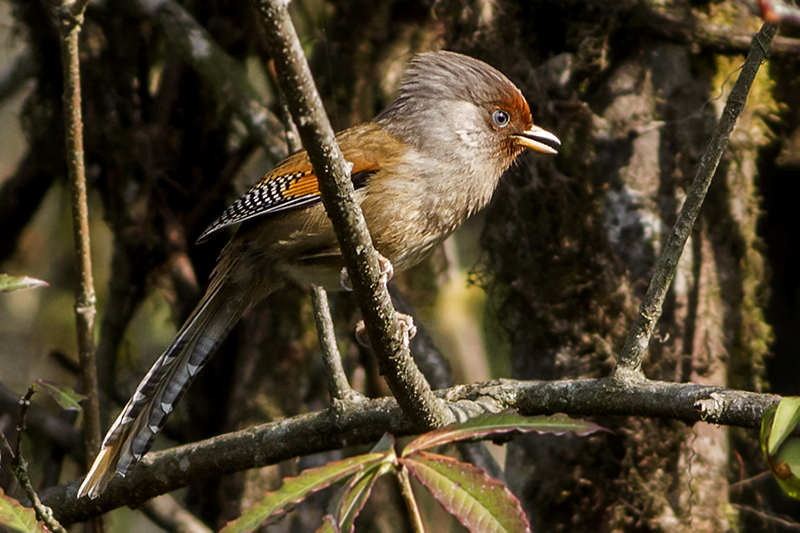

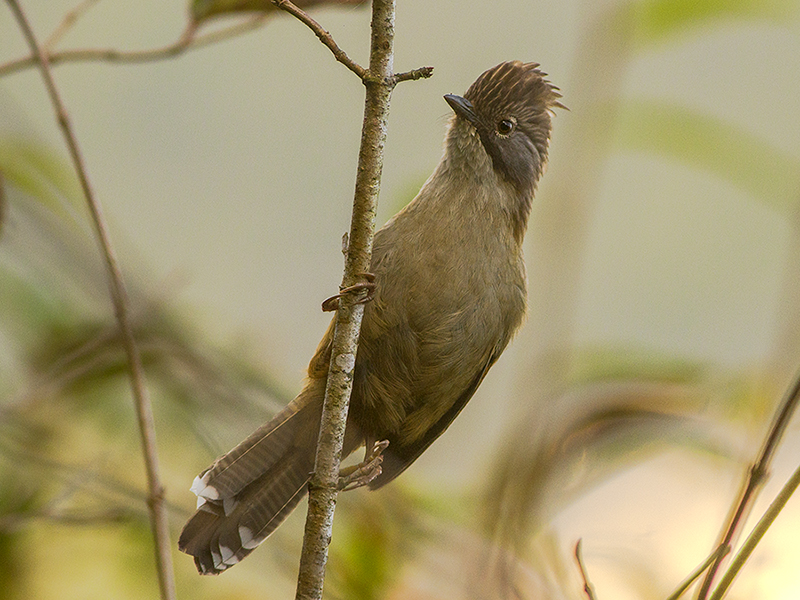
Birds Similar to the Beautiful Sibia
These species are often confused with the Beautiful Sibia due to similar appearance or overlapping range.

