
Bishop's Oo
Moho bishopi
Order: Passeriformes / Family: Mohoidae

Wikimedia Commons
About the Bishop's Oo
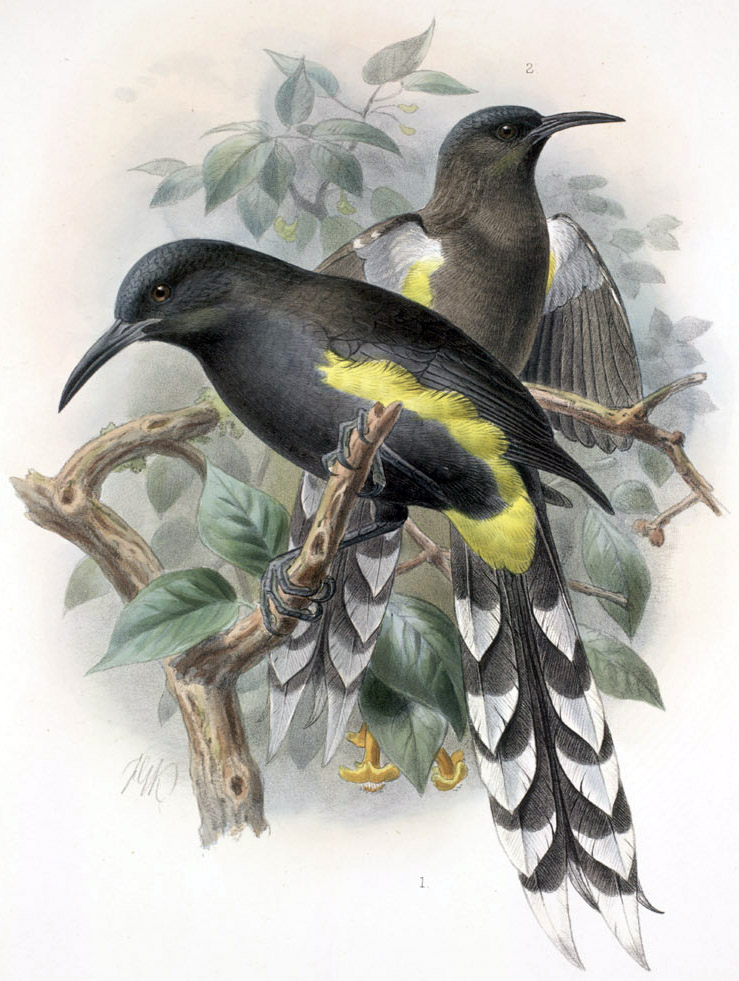
The Bishop's Oo, scientifically known as Moho bishopi, was once a unique avian species endemic to the Hawaiian Islands. It belonged to the Mohoidae family and held a special place in the Hawaiian ecosystem. As a member of the Passeriformes order, the Bishop's Oo was one of the honeycreepers, a group known for its diverse adaptations to island life. This bird was notable for its glossy black plumage, which caught the light with a metallic sheen, giving it a distinctive appearance in its lush, forested habitat. The Bishop's Oo played a crucial role in pollination and seed dispersal within its native ecosystem. Its specialized feeding behavior involved sipping nectar from native Hawaiian flowers, thereby facilitating the pollination process. The bird's curved bill was adapted to the specific shape of certain flowers, showcasing a unique evolutionary relationship between the Bishop's Oo and its environment. Historically, the Bishop's Oo inhabited the dense montane forests of Molokai, where it found ample resources and protection. Its presence was a symbol of the intricate balance within these ecosystems, where birds, plants, and the landscape were intricately linked. Sadly, the Bishop's Oo is now extinct, with the last confirmed sighting occurring in the late 19th century. The causes of its extinction are multifaceted, including habitat destruction, introduction of invasive species, and diseases brought by non-native birds. Its extinction serves as a poignant reminder of the fragility of island ecosystems and the importance of conservation efforts to protect remaining species. The Bishop's Oo's ecological role may no longer be active, but its legacy continues to influence conservation strategies aimed at preserving Hawaii's unique natural heritage. Efforts to restore and protect similar habitats are ongoing, with a focus on preventing further loss of endemic species. While the Bishop's Oo is no longer present in the wild, its story underscores the importance of understanding and safeguarding the biodiversity that still thrives in Hawaii. Conservationists and researchers continue to learn from the past to ensure a brighter future for the region's remaining avian inhabitants.
The Bishop's Oo belongs to the family Mohoidae, within the order Passeriformes. These birds typically live Unknown, as the species is extinct..
How to Identify a Bishop's Oo
Identifying the Bishop's Oo, Moho bishopi, was a remarkable experience due to its unique and striking appearance. This bird featured glossy black plumage with a metallic sheen, particularly noticeable when sunlight hit its feathers. The Bishop's Oo was a medium-sized bird, measuring around 30 cm in length, which made it one of the larger honeycreepers. Its long, slightly curved bill was adapted for nectar feeding, a key characteristic that differentiated it from other species. Adults of both sexes shared similar plumage, with no significant differences between males and females, making it challenging to distinguish between the two based solely on appearance. Juvenile Bishop's Oos exhibited duller plumage, lacking the glossy sheen of adults, but retained the same overall structure. In flight, the Bishop's Oo displayed a graceful silhouette, aided by its long wings and slightly curved tail. When perched, the bird maintained an upright posture, often seen clinging to branches as it foraged for nectar or insects. Confusion with similar species, such as the Hawaiian Crow, was unlikely due to its distinctive coloration and unique bill shape. The Bishop's Oo's glossy black plumage and characteristic song made it unmistakable in its native habitat, providing a visual and auditory delight for those fortunate enough to have observed it.
Having trouble telling birds apart? Upload a photo to our bird identification tool for an instant species match.
Bishop's Oo Habitat and Range
Preferred Habitat
The Bishop's Oo thrived in the lush montane forests of Molokai, where it found its ideal habitat among dense vegetation and native flowering plants. These forests, located at elevations ranging from 900 to 1,500 meters, offered the necessary resources and climate conditions for the Bishop's Oo to flourish. The bird primarily resided in areas with high humidity and consistent rainfall, which supported the growth of its preferred nectar sources, such as the native lobelioids. Seasonal habitat shifts were minimal due to the relatively stable climate of the Hawaiian Islands. The Bishop's Oo was not found in urban or heavily disturbed areas, as it depended on the specific flora of the Hawaiian forests. The presence of tall, mature trees and a diverse understory was crucial for its survival, providing both food and nesting sites. Its reliance on native plant species meant that habitat degradation and the introduction of invasive plants posed significant threats to its existence. As a forest-dependent bird, the Bishop's Oo was not commonly observed in open or coastal areas. Its specialized habitat preferences highlight the importance of preserving native forest ecosystems to maintain the biodiversity and ecological balance of the Hawaiian Islands.
Geographic Range
The Bishop's Oo was endemic to the Hawaiian Islands, specifically restricted to the island of Molokai. Its range was limited to the montane forests, where it relied on the unique flora and fauna for survival. Within these forests, the Bishop's Oo occupied a relatively small geographic area, contributing to its vulnerability to environmental changes and human activities. The lack of a broad range meant that any alterations to its habitat had a pronounced impact on its population. The Bishop's Oo did not exhibit migratory behavior, remaining within its confined range year-round. Its presence was concentrated in the interior regions of Molokai, where the altitude and climate conditions were most favorable. This limited range, coupled with its specialized habitat requirements, made the Bishop's Oo particularly susceptible to extinction pressures. Population densities were likely patchy, with hotspots corresponding to areas with abundant flowering plants and suitable nesting sites. The Bishop's Oo's restricted range and non-migratory nature underscore the importance of protecting its native habitat to prevent the loss of other endemic species facing similar threats.
Want to know which birds visit your area? Browse our backyard birds by location guides for region-specific species lists.
What Does the Bishop's Oo Eat?
The Bishop's Oo had a specialized diet that primarily consisted of nectar from native Hawaiian flowers. Its long, curved bill was perfectly adapted to accessing the nectar of tubular flowers, such as those of the lobelioids and ohia lehua. This nectar-feeding behavior played a vital role in pollination, as the bird transferred pollen from flower to flower while feeding. In addition to nectar, the Bishop's Oo also consumed insects and spiders, which provided essential proteins and nutrients. The bird's foraging technique involved probing flowers and foliage with its bill, skillfully extracting nectar and small invertebrates. Seasonal diet changes were minimal, as the Hawaiian climate allowed for year-round flowering of native plants. However, fluctuations in flower abundance could influence the Bishop's Oo's feeding patterns. The bird's feeding schedule was primarily diurnal, with peak activity occurring during the early morning and late afternoon. Its reliance on specific plant species for food made it vulnerable to habitat changes that affected the availability of these resources. The Bishop's Oo's diet highlights the intricate connections between species within Hawaii's ecosystems and underscores the importance of conserving native flora to support the island's unique avian fauna.
Bishop's Oo Behavior and Social Structure
The Bishop's Oo exhibited fascinating behaviors that reflected its adaptation to the Hawaiian montane forests. Socially, the bird was relatively solitary or observed in pairs, particularly during the breeding season. Territorial behavior was prominent, with males defending feeding areas and nesting sites from intruders. The Bishop's Oo's courtship displays involved vocalizations and aerial acrobatics, showcasing its agility and strength. Its melodious song, characterized by a series of clear whistles and trills, played a crucial role in communication and mate attraction. The bird was most active during the day, with feeding and foraging peaking in the early morning and late afternoon. Its response to predators, such as introduced rats and mongooses, involved alarm calls and evasive flight maneuvers. The Bishop's Oo's daily activity patterns revolved around feeding, preening, and maintaining its territory. Despite its solitary tendencies, the bird occasionally joined mixed-species flocks, benefiting from the increased vigilance against predators. These behaviors highlight the Bishop's Oo's adaptability and its role within the dynamic ecosystem of the Hawaiian forests.
Bishop's Oo Nesting and Reproduction
The Bishop's Oo constructed cup-shaped nests using twigs, moss, and lichens, carefully woven together to provide a secure environment for its eggs. Nests were typically located high in the canopy of native trees, offering protection from ground-dwelling predators. The bird's preference for elevated nesting sites underscored the importance of mature forest habitats with tall trees. The clutch size of the Bishop's Oo generally ranged from two to three eggs, with both parents sharing incubation duties. The incubation period lasted approximately 14 to 16 days, after which the chicks hatched. Parental roles were well-defined, with both male and female birds participating in feeding and caring for the young. Fledging occurred about 18 to 20 days post-hatching, during which time the chicks developed the ability to fly and forage independently. The Bishop's Oo typically produced one to two broods per year, depending on environmental conditions and food availability. Its nesting behavior emphasized the need for undisturbed forest habitats to support successful reproduction and the continuation of the species.
Bishop's Oo Sounds and Vocalizations
The Bishop's Oo was renowned for its melodious song, consisting of a series of clear whistles and melodious trills. The primary song displayed a rhythmic pattern with varying pitch, often described as both sweet and haunting. Call notes were shorter and more abrupt, used for communication between mates and signaling alarm. Alarm calls were sharp and urgent, alerting other birds to the presence of predators. During the dawn chorus, the Bishop's Oo's song was particularly prominent, filling the forest with its distinctive melody. Its vocalizations were likened to the sound of a flute, evoking a sense of tranquility and beauty within its native habitat.
Interesting Facts About the Bishop's Oo
- 1The Bishop's Oo was one of the few Hawaiian birds with such a glossy black plumage, giving it a unique visual appeal.
- 2Its extinction in the late 19th century marked the loss of one of Hawaii's unique avian pollinators.
- 3Despite its extinction, the Bishop's Oo continues to influence conservation efforts aimed at protecting Hawaii's remaining endemic species.
- 4The Bishop's Oo's song was once a familiar sound in the montane forests of Molokai, contributing to the island's natural soundscape.
- 5The bird's bill shape was a perfect example of co-evolution with the native flowers it pollinated.
- 6The Bishop's Oo's diet of nectar and insects illustrated its ecological role as both a pollinator and insect controller.
- 7Its extinction highlights the vulnerability of island ecosystems to introduced species and habitat changes.
Bishop's Oo Conservation Status
The Bishop's Oo is listed as extinct by the IUCN, with the last confirmed sightings occurring in the late 19th century. Its extinction resulted from a combination of factors, including habitat destruction, introduced predators, and diseases from non-native birds. Conservation efforts have focused on preventing similar extinctions by protecting remaining habitats and controlling invasive species. Historical population declines highlight the importance of proactive conservation measures to safeguard Hawaii's unique biodiversity. The extinction of the Bishop's Oo serves as a poignant reminder of the impacts of human activities on island ecosystems and the urgent need for conservation action.
Other Mohoidae Species



Birds Similar to the Bishop's Oo
These species are often confused with the Bishop's Oo due to similar appearance or overlapping range.