
Kioea
Chaetoptila angustipluma
Order: Passeriformes / Family: Mohoidae

Wikimedia Commons
About the Kioea
The Kioea, scientifically named Chaetoptila angustipluma, was a striking member of the now-extinct Mohoidae family, native to the Hawaiian Islands. This bird was historically found in the tropical forests of Hawaii, where it played a crucial role in the pollination of native flowers. Known for its vibrant plumage and distinctive long, curved bill, the Kioea was an integral part of the island's ecosystem. The Kioea was a nectarivore, primarily feeding on the nectar of native flowers such as the lobelia and ohia, and acted as a pollinator for these plants. The bird likely had a territorial nature, with individuals or pairs defending feeding territories against other nectar-feeding species. Seasonal behaviors probably included shifts in foraging strategies as different plants came into bloom. These seasonal shifts would have been closely tied to the flowering cycles of the native flora, highlighting the bird's ecological role. The Kioea's significance extended beyond its ecological contributions. It held cultural importance for native Hawaiians, who admired its beauty and saw it as a symbol of the islands’ unique biodiversity. Unfortunately, like many of Hawaii's native birds, the Kioea fell victim to habitat loss, introduced predators, and diseases brought by non-native species. The decline of the Kioea, alongside other members of the Mohoidae family, underscores the fragility of island ecosystems and the impact of human activity on biodiversity. Today, the Kioea serves as a poignant reminder of the need for conservation efforts to protect remaining native species and restore their habitats. Its extinction highlights the interconnectedness of species within an ecosystem and the cascading effects that the loss of a single species can have on the environment.
The Kioea belongs to the family Mohoidae, within the order Passeriformes. These birds typically live Unknown, as the species is extinct..
How to Identify a Kioea
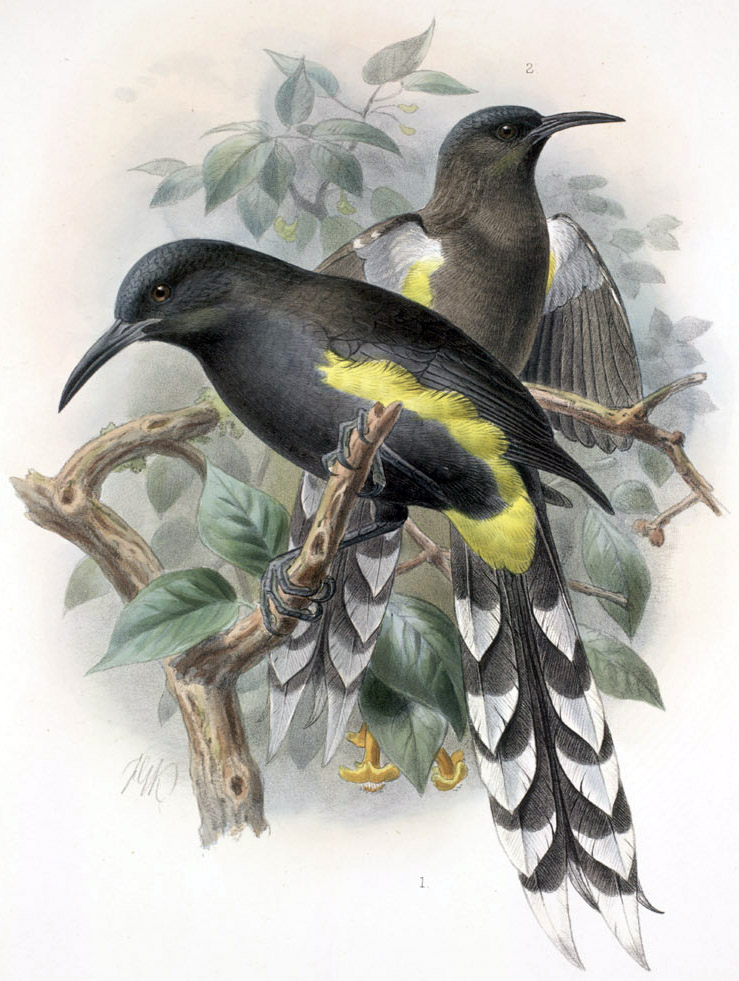
The Kioea was known for its striking appearance, characterized by a blend of vibrant and contrasting colors. Adult Kioeas exhibited a predominantly olive-green plumage with a yellowish wash on the underparts, accentuated by a long, decurved bill that was perfectly adapted for nectar feeding. The wings and tail feathers were darker, providing a sharp contrast to the lighter body. Juvenile Kioeas likely exhibited duller plumage, similar to many bird species, with less pronounced color contrasts. Male and female Kioeas were similar in appearance, making it difficult to differentiate between the sexes based on plumage alone. However, the size and shape of the bill might have varied slightly, with females potentially having a slightly shorter bill. In terms of flight silhouette, the Kioea would have had a distinctive profile with its long bill and tail, aiding in its identification in flight. Its perching posture was typical of nectar-feeding birds, often seen hanging or clambering among branches as it sought out flowers. The Kioea's vibrant colors and unique bill set it apart from other Hawaiian birds, reducing the likelihood of confusion with similar species. However, its extinction means that these identification traits are now primarily of historical interest.
Having trouble telling birds apart? Upload a photo to our bird identification tool for an instant species match.
Kioea Habitat and Range
Preferred Habitat
The Kioea inhabited the lush, tropical forests of the Hawaiian Islands, particularly favoring areas with abundant flowering plants. These forests, located at elevations ranging from 500 to 1,500 meters, provided the ideal environment for the Kioea's nectar-feeding lifestyle. The bird thrived in regions with a high density of native flora like lobelias and ohia trees, which offered plentiful nectar sources. Seasonal habitat shifts were likely driven by the flowering cycles of its preferred plants, causing the Kioea to move between different forest areas in search of blooming flowers. Unlike some other species, the Kioea was not known to frequent urban areas, remaining predominantly in forested regions. The loss of these forests due to human activities, such as agriculture and urban development, significantly contributed to the bird's decline. Conservation of these habitats is now crucial for the survival of remaining native species that once shared the Kioea's environment.
Geographic Range
Historically, the Kioea was endemic to the Hawaiian Islands, primarily found on the Big Island of Hawaii. Its range was limited to the island’s higher-elevation forests, where it could find the necessary resources for survival. The bird did not migrate, instead relying on the diverse flowering plants available throughout the year in its habitat. Within this limited range, population density would have varied based on the availability of nectar sources and suitable nesting sites. The Kioea's range did not extend beyond Hawaii, making it particularly vulnerable to the changes in its isolated environment. The bird's extinction highlights the challenges faced by endemic species with such restricted ranges, as they are more susceptible to habitat changes and the introduction of predators and diseases.
Want to know which birds visit your area? Browse our backyard birds by location guides for region-specific species lists.
What Does the Kioea Eat?
The Kioea was primarily a nectarivore, feeding on the nectar of native Hawaiian plants like lobelia and ohia. This diet played a crucial role in the bird's ecology, as it also contributed to pollination. In addition to nectar, the Kioea likely supplemented its diet with insects and arachnids, providing an important protein source. This secondary food source was particularly vital during the breeding season, when nutritional demands increased. The bird foraged by probing flowers with its long, curved bill, an adaptation that allowed it to access nectar deep within blossoms. Foraging occurred primarily during daylight hours, with increased activity in the early morning and late afternoon when nectar production peaked. Seasonal diet changes were minimal, as the bird's habitat provided a relatively constant supply of flowering plants throughout the year. The Kioea's specialized feeding habits underscore the intricate connections between Hawaiian flora and fauna.
Kioea Behavior and Social Structure
The Kioea exhibited a range of behaviors typical of nectar-feeding birds, including territoriality and complex social interactions. Individuals or pairs defended feeding territories, often engaging in vocal displays and aggressive chases to deter intruders. The bird's social structure likely included monogamous pair bonds, with both males and females participating in territory defense. Courtship displays may have involved vocalizations and visual displays, although specific details remain largely undocumented. Flocking behavior was uncommon, as the Kioea's territorial nature favored solitary or pair-based interactions. Daily activity patterns revolved around foraging, with peak activity occurring during the cooler parts of the day. The bird's response to predators included alarm calls and evasive flight, utilizing its agility to navigate dense foliage. While much of the Kioea's behavior remains a mystery due to its extinction, its ecological role and interactions with other species highlight the complexity of island ecosystems.
Kioea Nesting and Reproduction
The Kioea's nesting habits, while not extensively documented, were typical of nectar-feeding birds in the region. Nests were likely cup-shaped structures crafted from local materials such as twigs, leaves, and mosses, providing camouflage and protection. Preferred nesting sites included the branches of native trees like ohia, situated at heights that balanced accessibility with predator avoidance. The typical clutch size for the Kioea was likely small, with two to three eggs per brood, a common trait among island bird species. Both parents probably shared incubation duties, ensuring the eggs remained at a constant temperature. The incubation period likely spanned two to three weeks, followed by a fledging period where the young birds remained dependent on their parents for food and protection. The Kioea likely produced one brood per year, with reproductive success closely tied to the availability of food resources and habitat conditions.
Kioea Sounds and Vocalizations
The Kioea's vocalizations were a distinctive aspect of its presence in the Hawaiian forests. The primary song likely consisted of a series of melodious whistles and trills, characterized by a rhythmic pattern and varied pitch. These songs served multiple purposes, including territory defense and mate attraction. Call notes were likely simpler, used for communication between individuals or to signal alarm in response to potential threats. The bird's alarm calls would have been sharp and abrupt, designed to alert others to the presence of predators. During the dawn chorus, the Kioea's vocal contributions would have added to the rich soundscape of the forest, with its melodic song rising above the calls of other species. Although the exact sound of the Kioea is lost to time, its vocal behavior would have been an integral part of its ecological niche.
Interesting Facts About the Kioea
- 1The Kioea was one of the few Hawaiian birds specialized for nectar feeding, playing a vital role in pollination.
- 2Despite its extinction, the Kioea remains a symbol of Hawaiian biodiversity and the importance of conservation.
- 3The bird's long, curved bill was perfectly adapted for accessing nectar deep within native Hawaiian flowers.
- 4The Kioea's vibrant plumage and distinctive song made it a memorable presence in the Hawaiian forests.
- 5Its extinction, along with other members of the Mohoidae family, highlights the fragility of island ecosystems.
Kioea Conservation Status
The Kioea is classified as extinct, with its disappearance highlighting the challenges faced by island species. The bird’s decline was driven by habitat loss, introduced predators such as rats and mongoose, and diseases like avian malaria. Conservation efforts for other Hawaiian species now focus on habitat restoration, predator control, and disease management to prevent further extinctions. Historical population changes of the Kioea reflect the broader impacts of human colonization and environmental alteration in Hawaii. These impacts underscore the importance of proactive conservation measures to protect remaining species and preserve the unique biodiversity of the islands.
Other Mohoidae Species


Birds Similar to the Kioea
These species are often confused with the Kioea due to similar appearance or overlapping range.

