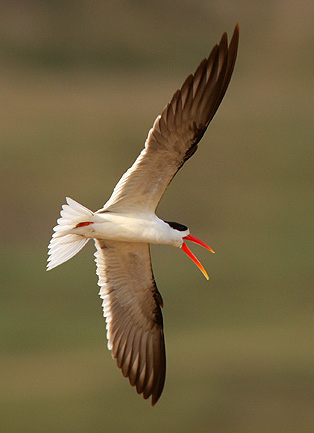
Black-bellied Tern
Sterna acuticauda
Order: Charadriiformes / Family: Laridae

Wikimedia Commons
About the Black-bellied Tern
The Black-bellied Tern, known scientifically as Sterna acuticauda, is a remarkable bird found predominantly in the Indian subcontinent. This species is a member of the family Laridae, which includes gulls and other terns, and it inhabits freshwater wetlands across India, Nepal, Bangladesh, and Myanmar. The Black-bellied Tern has gained attention not only for its striking appearance but also for its ecological significance in these diverse ecosystems.
This tern plays a crucial role in its habitat as both a predator and prey. It primarily feeds on small fish and aquatic insects, thereby maintaining the balance of aquatic life. Its presence indicates healthy wetland ecosystems, making it an important species for monitoring environmental changes. Moreover, the Black-bellied Tern's migratory patterns reflect seasonal changes in water levels and food availability, as it moves to suitable habitats during different times of the year.
These terns are most commonly found in lowland freshwater wetlands, including rivers, lakes, and marshes. During the breeding season, they select nesting sites on sandy or gravelly islands within large rivers. This choice of habitat makes them vulnerable to human activities such as river regulation, sand mining, and habitat destruction. Despite these challenges, the Black-bellied Tern continues to thrive in some protected areas, where conservation efforts focus on preserving its habitats from degradation.
The Black-bellied Tern's seasonal movements are influenced by monsoonal rains. In the dry season, when water levels drop, they may move to larger water bodies or coastal wetlands. Their ability to adapt to changing conditions highlights their resilience, yet underscores the need for continued conservation efforts to ensure their survival amidst growing environmental pressures.
The Black-bellied Tern belongs to the family Laridae, within the order Charadriiformes. These birds typically live average 8-10 years, with some living up to 12 years..
How to Identify a Black-bellied Tern
The Black-bellied Tern is a medium-sized tern, measuring approximately 30 centimeters in length with a wingspan of about 80 centimeters. Adults are easily identifiable by their distinctive black belly and contrasting white underparts. The upper parts are pale gray, and during the breeding season, the forehead and crown turn black, setting off the vibrant orange-red bill and legs.
Juvenile Black-bellied Terns differ from adults in plumage. They typically have a mottled gray appearance with a less pronounced black belly. The bill and legs are also duller compared to the bright orange of the adults. This difference in appearance helps differentiate age groups in the field.
Both male and female Black-bellied Terns exhibit similar plumage, making them difficult to distinguish by sex. However, observers may note subtle differences in size, with males being slightly larger. In flight, the Black-bellied Tern displays a slender, buoyant silhouette, characterized by long, narrow wings and a deeply forked tail. Perched, it maintains an upright posture, often seen on sandbanks or logs near water bodies.
Confusion with similar species like the River Tern (Sterna aurantia) is possible, but the Black-bellied Tern's dark belly and more slender build are key distinguishing features. Observers should note the bird's behavior, as its agile flight and preference for freshwater habitats often aid in confirming identification.
Having trouble telling birds apart? Upload a photo to our bird identification tool for an instant species match.
Black-bellied Tern Habitat and Range
Preferred Habitat
The Black-bellied Tern primarily inhabits freshwater ecosystems, flourishing in lowland wetlands such as rivers, lakes, and marshes. These birds are often associated with large river systems, where they find ample foraging opportunities and nesting sites on sandy islands. The presence of shallow water is crucial, as it supports their diet of small fish and aquatic insects.
During the breeding season, these terns favor open habitats with minimal vegetation, allowing them to keep a clear view of potential threats. Elevation typically ranges from sea level to around 500 meters, although they may venture to higher elevations during migrations or when food sources demand it.
In response to seasonal changes, the Black-bellied Tern may shift habitats, moving from inland wetlands to coastal areas or larger lakes during the dry season when water levels drop. This seasonal movement helps them exploit varying food resources and avoid competition and overcrowding in shrinking habitats.
While primarily found in rural and natural settings, the Black-bellied Tern can occasionally be seen near urban areas if suitable wetland habitats are present. However, they are less common in heavily urbanized regions due to habitat loss and disturbance.
Geographic Range
The Black-bellied Tern inhabits a relatively limited range, concentrated in South Asia. Its breeding range spans across the Indian subcontinent, with significant populations in northern and central India, Nepal, Bangladesh, and parts of Myanmar. During the breeding season, these terns are most commonly found along major river systems such as the Ganges, Brahmaputra, and their tributaries.
In the non-breeding season, the Black-bellied Tern may disperse more widely, seeking out larger water bodies and coastal wetlands in search of food and suitable conditions. This seasonal movement does not constitute a long-distance migration but rather a regional adjustment to changing environmental factors.
Countries like India and Bangladesh host the largest populations of Black-bellied Terns. Within these countries, specific areas such as the Sundarbans and Assam are known hotspots where these birds are regularly observed. Despite their relatively confined range, the Black-bellied Tern's adaptability to various wetland conditions allows it to inhabit both inland and coastal environments.
While not considered migratory in the traditional sense, their movement patterns highlight the importance of conserving a network of wetland habitats across their range. This connectivity ensures that the Black-bellied Tern can continue to find suitable conditions throughout the year.
Want to know which birds visit your area? Browse our backyard birds by location guides for region-specific species lists.
What Does the Black-bellied Tern Eat?
The Black-bellied Tern primarily feeds on small fish and aquatic insects, which it captures with remarkable precision. During foraging, it employs a direct flight pattern, skimming the water surface to locate prey visually. Once a target is spotted, the tern dives with agility, often completely submerging itself to catch fish or insects just below the surface.
Fish form the bulk of its diet, usually ranging in size from 2 to 5 centimeters, allowing the tern to swallow them whole. Insects, particularly aquatic larvae and small crustaceans, supplement its diet, especially during breeding season when protein demand increases.
The diet of the Black-bellied Tern can vary seasonally, reflecting changes in prey availability. In the monsoon season, when water levels are high, fish may be more abundant, whereas in the dry season, insects could become more prevalent as water bodies shrink.
Feeding typically occurs throughout the day, with peak activity in the morning and late afternoon when prey is most active. The tern's sharp eyesight and swift flight enable it to exploit these periods, ensuring a consistent food supply. Occasionally, these terns may also feed in mixed-species flocks, taking advantage of communal foraging to increase feeding efficiency.
Black-bellied Tern Behavior and Social Structure
Socially, the Black-bellied Tern exhibits a mix of solitary and communal behaviors. During the breeding season, pairs establish territories on sandbanks or river islands, where they engage in courtship displays to strengthen pair bonds. These displays often involve vocalizations, synchronized flight, and offering fish as nuptial gifts.
Territoriality is prominent during nesting, with pairs defending their chosen sites against intruders. However, outside the breeding season, these terns become more gregarious, forming loose flocks that can number in the dozens. These flocks provide safety in numbers when foraging and resting.
In response to predators, the Black-bellied Tern employs swift, agile flight to evade capture. When threatened, it may also issue alarm calls to alert nearby individuals. Such vocalizations can lead to group mobbing behavior, where several terns unite to drive off a potential threat.
Daily activity patterns of the Black-bellied Tern are closely tied to feeding schedules. They are most active during daylight hours, with a notable increase in activity during dawn and dusk. These periods coincide with peak prey availability, maximizing feeding efficiency. Resting often occurs during the hottest part of the day, with terns seeking shaded areas or cooler sandbanks.
Black-bellied Tern Nesting and Reproduction
Nesting for the Black-bellied Tern takes place on sandbanks or gravel islands within large river systems. These locations offer safety from ground predators and provide an unobstructed view of approaching threats. Nests are simple scrapes in the sand or gravel, with minimal lining, which helps in camouflaging the eggs against potential predators.
The typical clutch size for the Black-bellied Tern is two to three eggs. Both parents share incubation duties, which last for approximately 21 to 24 days. During this period, the non-incubating parent often remains nearby, ready to bring food or defend the nest if necessary.
Once hatched, the chicks are semi-precocial, meaning they are relatively mature and mobile but still require parental care. Both parents feed and protect the chicks, which fledge at about three to four weeks of age. Fledging is a critical time, as young terns must quickly learn to forage and evade predators.
Typically, the Black-bellied Tern raises one brood per year. In years with favorable conditions, a second brood may be attempted, although this is less common. The success of nesting largely depends on environmental conditions, with high water levels or human disturbance posing significant challenges.
Black-bellied Tern Sounds and Vocalizations
The Black-bellied Tern's vocalizations are distinctive and serve various communicative purposes. The primary call is a sharp, repetitive 'kree-kree-kree', which can be heard as terns engage in flight or defend territories. This call is high-pitched and carries well over distances, making it effective for long-range communication.
In addition to the primary call, softer 'churr' notes are often exchanged between mates, especially during courtship and nesting. These sounds, though quieter, play a crucial role in reinforcing pair bonds and coordinating activities between partners.
Alarm calls are harsher and more urgent, typically consisting of rapid, repeated notes. These calls alert other terns to potential threats and can trigger defensive or mobbing behavior. Compared to other terns, the Black-bellied Tern's calls are somewhat higher in pitch and less varied, yet still integral to their social interactions.
Dawn chorus activity is not as pronounced in Black-bellied Terns as in some other bird species, but early morning hours often see increased vocal activity as they prepare for the day's foraging.
Interesting Facts About the Black-bellied Tern
- 1The Black-bellied Tern can spot prey from over 30 meters above water, thanks to its keen eyesight and agile flight.
- 2Unlike many terns, the Black-bellied Tern prefers freshwater habitats, making it unique among its coastal relatives.
- 3During courtship, male Black-bellied Terns present small fish as gifts to females, a behavior known as courtship feeding.
- 4These terns have a deep forked tail that enhances their maneuverability in flight, allowing quick changes in direction.
- 5The Black-bellied Tern's black belly is not only distinctive but also helps in camouflage against predators when viewed from the water.
Black-bellied Tern Conservation Status
The Black-bellied Tern is currently listed as Near Threatened on the IUCN Red List. Its population trend is decreasing, primarily due to habitat loss, disturbance, and river management practices that alter their natural breeding sites. Sand mining and dam construction have significantly affected the availability of suitable nesting areas, leading to population declines. Conservation efforts focus on habitat protection and management, with several key river systems designated as protected areas or nature reserves. These efforts aim to maintain natural river dynamics, crucial for the tern's breeding and foraging success. Historically, the Black-bellied Tern faced fewer threats when natural river systems were more widespread and less disturbed. However, increased human activity along rivers has led to more significant challenges in recent decades. Ongoing research and monitoring programs are vital in tracking population trends and assessing the effectiveness of conservation measures. Public awareness campaigns also play a role in reducing human disturbances at breeding sites, crucial for the species' long-term survival.
Other Laridae Species


Birds Similar to the Black-bellied Tern
These species are often confused with the Black-bellied Tern due to similar appearance or overlapping range.