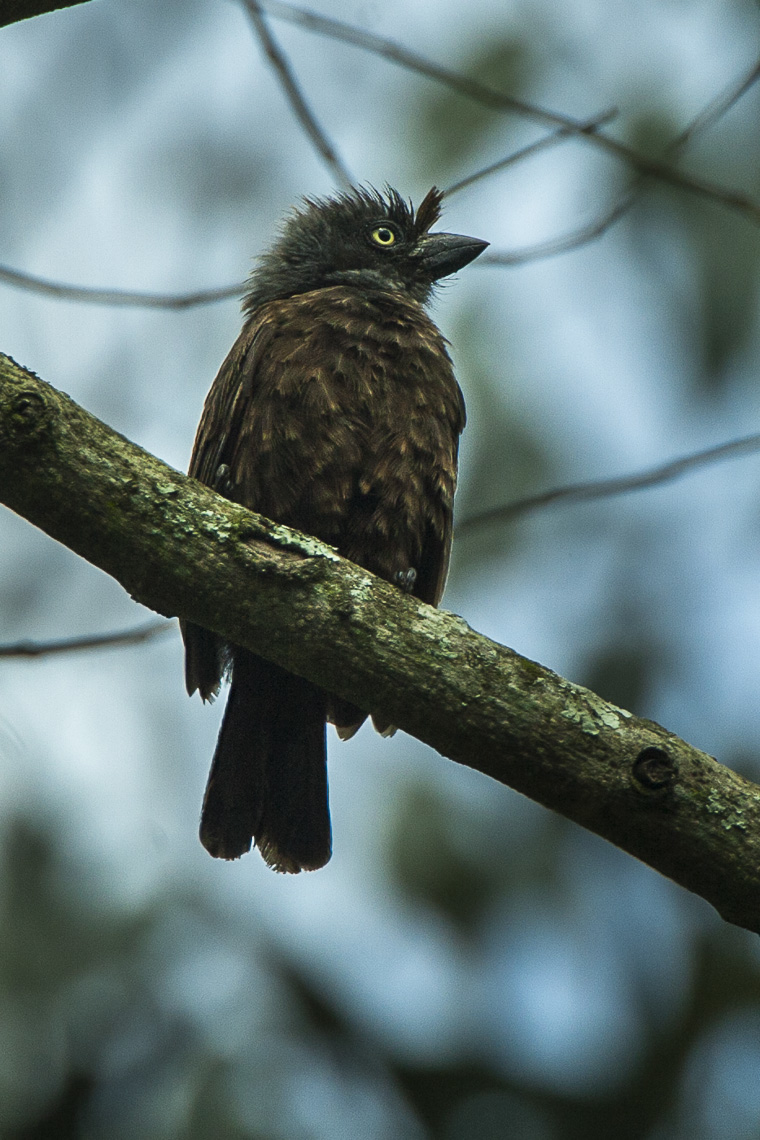
Black-billed Barbet
Lybius guifsobalito
Order: Piciformes / Family: Lybiidae

Wikimedia Commons
About the Black-billed Barbet
The Black-billed Barbet, scientifically known as Lybius guifsobalito, is a striking bird species found predominantly in the savannas and woodlands of sub-Saharan Africa. This member of the Lybiidae family showcases a vibrant red plumage that captivates bird watchers and researchers alike. The barbet's black bill contrasts sharply against its colorful feathers, serving as a key identifier in its natural habitat. The Black-billed Barbet plays a significant role in its ecosystem, acting as both a pollinator and seed disperser. By feeding on a variety of fruits, it aids in the propagation of numerous plant species, maintaining ecological balance in its environment. It is frequently observed in regions such as Ethiopia, Kenya, and Uganda, where its presence is a testament to the health of the local ecosystem. Adapted to both woodland and savanna habitats, the Black-billed Barbet adjusts its behavior seasonally, often following the availability of its preferred food sources. During the dry season, these barbets may be found nearer to water sources or in areas where fruiting trees are abundant. As an integral part of the avian community, the Black-billed Barbet contributes not only to the biodiversity of its range but also to the intricate web of life that supports countless other species. The bird's ability to thrive in various habitats underscores its ecological importance and adaptability. In addition to its ecological contributions, the Black-billed Barbet holds cultural significance for some indigenous communities, who regard the bird as a symbol of vibrancy and resilience. This charismatic species continues to intrigue ornithologists and nature enthusiasts with its charming appearance and crucial role within its environment.
The Black-billed Barbet belongs to the family Lybiidae, within the order Piciformes. These birds typically live average 6-9 years with a maximum recorded of 11 years..
How to Identify a Black-billed Barbet
Adult Black-billed Barbets are easily identified by their vivid red plumage, which covers most of their body, including the head and breast. Their namesake black bill is not only prominent but also serves as a distinctive feature that sets them apart from other barbet species. The wings and back are typically dark, providing a contrasting backdrop to the brighter parts of their plumage. Juvenile Black-billed Barbets exhibit duller colors, with more subdued reds and a paler appearance overall. This difference aids in distinguishing younger birds from fully mature adults. Males and females are similar in appearance, making sex differentiation challenging in the field. However, subtle size variations may exist, with males occasionally being slightly larger. In flight, the Black-billed Barbet displays a robust silhouette, characterized by its relatively short tail and broad wings. When perched, its upright posture and stocky build are apparent. Compared to similar species, such as the Red-and-yellow Barbet, the Black-billed Barbet's lack of yellow markings and its all-black bill are key distinguishing factors. Observers should note these features to avoid confusion with other brightly colored African barbet species.
Having trouble telling birds apart? Upload a photo to our bird identification tool for an instant species match.
Black-billed Barbet Habitat and Range
Preferred Habitat
The Black-billed Barbet thrives in a variety of habitats across its range, predominantly in open woodlands and savannas. It shows a preference for areas with scattered trees and shrubs, which provide both foraging opportunities and nesting sites. The barbet is typically found at elevations ranging from sea level up to 2,000 meters, although it is most common in lowland regions. Seasonal habitat shifts occur as the barbet follows fruiting patterns, sometimes moving into more densely wooded areas during periods of food scarcity. While primarily associated with natural habitats, the Black-billed Barbet can also be found in rural gardens and occasionally on the fringes of urban areas where suitable vegetation exists. This adaptability underscores its resilience in the face of habitat changes.
Geographic Range
The Black-billed Barbet is widely distributed across sub-Saharan Africa, with its range extending from the Horn of Africa in Ethiopia and Eritrea to the savannas of Kenya and Uganda. It is a year-round resident in these regions, not exhibiting long-distance migratory behavior. However, local movements are common as the barbet seeks out areas rich in food resources. In Kenya, for example, it is notably present in the southern and central parts, where it frequents both protected areas and agricultural lands. Population density varies, with hotspots often found in areas where fruiting trees are abundant. Despite its broad range, sightings are more common in regions where suitable habitat conditions persist, indicating the species' reliance on specific ecological niches.
Want to know which birds visit your area? Browse our backyard birds by location guides for region-specific species lists.
What Does the Black-billed Barbet Eat?
The Black-billed Barbet's diet primarily consists of a variety of fruits, which it seeks out with notable proficiency. Figs, berries, and other fleshy fruits form the core of its diet, with occasional supplementation from insects and small invertebrates. Seasonal diet changes occur based on fruit availability, with the barbet often adjusting its foraging behavior to exploit the most abundant resources. The bird employs a versatile foraging technique, moving between perches to pluck fruits or catch insects in mid-air. It frequently targets fruiting trees, where it can be seen either alone or in small family groups. Prey size varies, but the barbet typically focuses on items that can be easily handled and consumed. Feeding occurs primarily during the morning and late afternoon, aligning with the bird's peak activity periods.
Black-billed Barbet Behavior and Social Structure
Black-billed Barbets exhibit a largely social structure, often observed in pairs or small family groups. They are territorial, with pairs defending their chosen areas through vocalizations and displays. Courtship behaviors include mutual preening and bill tapping, which strengthen pair bonds. The barbet is generally non-migratory, but it does exhibit some local movements in response to food availability. When faced with predators, the Black-billed Barbet relies on its agility and dense foliage to avoid detection, often retreating to the safety of tree canopies. Daily activity patterns are diurnal, with the birds being most active in the early morning and late afternoon. During these periods, they engage in foraging, social interactions, and territorial defense.
Black-billed Barbet Nesting and Reproduction
The Black-billed Barbet constructs nests in tree cavities, often choosing sites that offer protection from both predators and the elements. Nests are typically lined with plant fibers, feathers, and other soft materials to provide a suitable environment for egg incubation. Clutch size usually ranges from two to four eggs, with both parents sharing incubation duties. The incubation period lasts approximately 14 to 16 days, after which the eggs hatch. Fledging occurs about 30 days after hatching, with both parents involved in feeding and protecting the young. The species often raises one or two broods per year, depending on environmental conditions and food availability.
Black-billed Barbet Sounds and Vocalizations
The primary song of the Black-billed Barbet is a series of melodious notes, characterized by a rhythmic and repetitive quality. These calls are often used in territorial displays and to maintain contact between mates. Alarm calls are sharper and more abrupt, serving to alert others to potential threats. During the dawn chorus, the barbet's song can be heard mingling with those of other woodland species, creating a vibrant acoustic tapestry. The quality of its calls can be compared to the musicality of a flute, with variations in pitch and tempo adding complexity to its vocal repertoire.
Interesting Facts About the Black-billed Barbet
- 1The Black-billed Barbet can consume up to 60% of its body weight in fruit daily, highlighting its role as a key seed disperser.
- 2Despite its vivid coloration, the Black-billed Barbet can blend into its environment effectively, using foliage as cover from predators.
- 3This species exhibits mutual preening, a behavior that strengthens pair bonds and ensures feather maintenance.
- 4The Black-billed Barbet's vocalizations can be heard over considerable distances, often serving as an audible indicator of territorial boundaries.
- 5During the breeding season, both male and female barbets share responsibilities, from incubation to feeding fledglings.
- 6The presence of Black-billed Barbets in an area is often an indicator of a healthy ecosystem, given their reliance on abundant fruit supplies.
- 7The barbet's robust bill is adapted not only for fruit consumption but also for excavating nesting cavities in softer wood.
Black-billed Barbet Conservation Status
Currently classified as Least Concern by the IUCN, the Black-billed Barbet maintains a stable population across most of its range. However, habitat loss due to deforestation and agricultural expansion poses a potential threat to localized populations. Conservation efforts focus on preserving critical habitats and promoting sustainable land-use practices. While the species has not experienced significant historical population declines, ongoing monitoring is essential to ensure its continued stability. Protecting areas where the barbet is known to thrive will help mitigate future risks and maintain its ecological contributions.