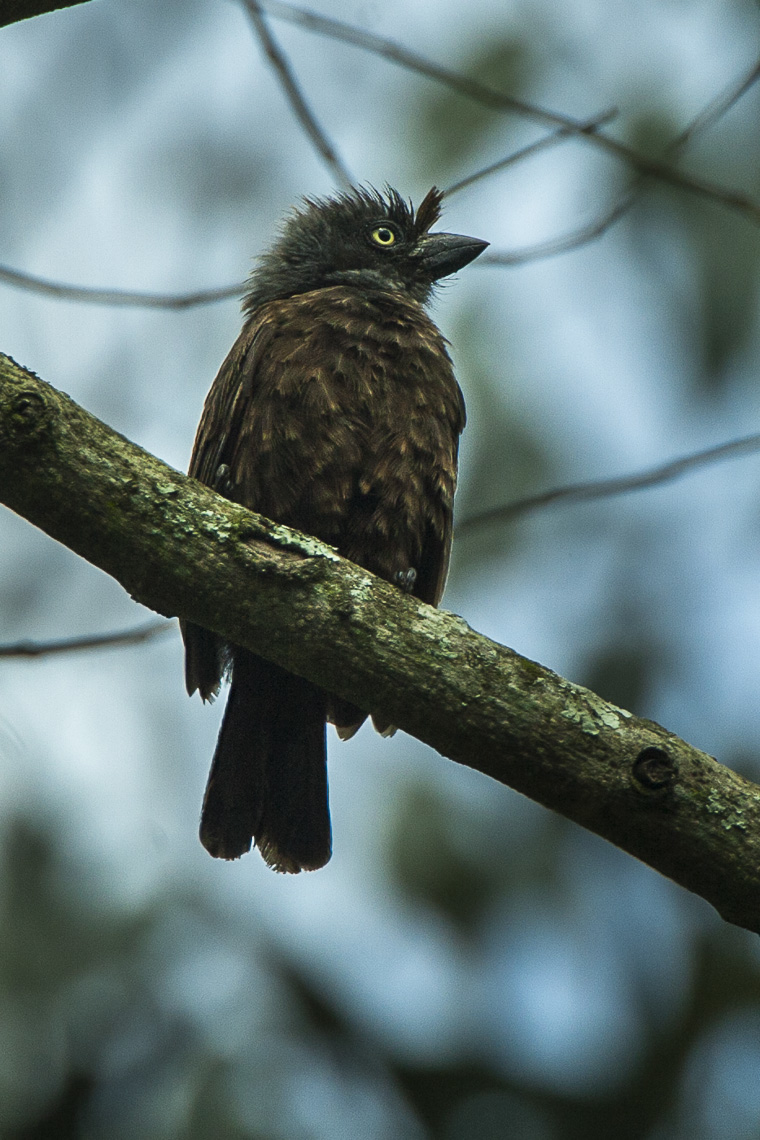
Black-collared Barbet
Lybius torquatus
Order: Piciformes / Family: Lybiidae

Wikimedia Commons
About the Black-collared Barbet
The Black-collared Barbet, scientifically known as Lybius torquatus, is a vibrant and charismatic bird native to sub-Saharan Africa. This species inhabits a range of environments from dry woodlands to suburban gardens, showcasing its adaptability. The bird's most notable feature is its vivid red face and throat, contrasted by a black band encircling its neck, from which it derives its common name. The Black-collared Barbet plays a significant ecological role as a seed disperser and a consumer of fruit, particularly figs, which makes it vital for the maintenance of healthy forest and woodland ecosystems. In its native range, which stretches from southern Angola through Zimbabwe and into South Africa, the Black-collared Barbet is often a year-round resident, showing little inclination for long-distance migration. Seasonal behaviors include slight local movements in search of food, especially during the dry season when resources become scarce. It also takes part in mutualistic relationships with other fruit-eating birds, sharing foraging sites and sometimes assisting in the same feeding trees. As an indicator species, the presence of the Black-collared Barbet often signifies a healthy, biodiverse environment. Its adaptability to different habitats, from dense forests to man-made gardens, highlights its versatility and resilience, although habitat fragmentation and loss pose ongoing threats. Its ability to thrive in urban areas provides an excellent opportunity for urban dwellers to observe and understand the dynamics of native bird species in African towns and cities.
The Black-collared Barbet belongs to the family Lybiidae, within the order Piciformes. These birds typically live typically 7-9 years, with some individuals living up to 12 years..
How to Identify a Black-collared Barbet
The adult Black-collared Barbet features a bright red face and throat, bordered by a distinct black collar wrapping around its neck. Its upperparts are olive-brown, while the underparts are pale with a slight yellowish tinge. Juveniles resemble adults but may exhibit a duller red and a less defined black collar, which becomes more pronounced as they mature. There is little sexual dimorphism, meaning males and females appear similar in coloration and size, although males might have slightly larger bills. When perched, the bird's stocky body and thick neck make it easily recognizable. In flight, it displays a short, rounded wing silhouette with a direct, undulating flight pattern. The Black-collared Barbet can be confused with the Crested Barbet, which also has a red face but includes a more conspicuous crest and spotted plumage. Another potential confusion is with the Red-fronted Tinkerbird, though it is much smaller and lacks the distinctive black collar.
Having trouble telling birds apart? Upload a photo to our bird identification tool for an instant species match.
Black-collared Barbet Habitat and Range
Preferred Habitat
The Black-collared Barbet thrives in a variety of habitats including open woodlands, savannas, and forest edges. It often frequents areas rich in fruiting trees, such as fig and acacia species. Found at elevations ranging from sea level to about 2,000 meters, the barbet is a common presence in both rural and suburban environments. In cities and towns, it adapts well to gardens and parks that provide suitable food and nesting sites. During dry seasons, it may gravitate towards consistently fruiting trees or areas with reliable water sources. While it is not strictly tied to any single habitat type, the presence of trees and shrubs is essential for both feeding and nesting.
Geographic Range
The Black-collared Barbet occupies a broad range across sub-Saharan Africa. Its breeding range extends from southern Angola and Zambia in the north, through Zimbabwe, Mozambique, Botswana, and Namibia, reaching as far south as South Africa and Eswatini. It does not engage in long-distance migration but may perform local movements in response to food availability, particularly in the dry season when it might move towards riverine forests or lush gardens. Population densities are highest in areas with abundant fruiting trees, such as the Limpopo and Mpumalanga provinces in South Africa, where both natural and urban environments meet.
Want to know which birds visit your area? Browse our backyard birds by location guides for region-specific species lists.
What Does the Black-collared Barbet Eat?
The diet of the Black-collared Barbet primarily consists of fruits, with a strong preference for figs. It also consumes a variety of other fruits, berries, and occasionally insects. Seasonal changes in diet occur as different fruits become available, particularly in the wet season when a wider variety of fruits ripen. The barbet forages by hopping through trees and shrubs, using its stout bill to pluck fruit. It often targets small to medium-sized fruits that it can easily manipulate, and may occasionally feed on the ground. Feeding generally occurs throughout the day, with peaks in the early morning and late afternoon.
Want to attract Black-collared Barbets to your yard? See our recommended feeders and seed types for the best results.
Black-collared Barbet Behavior and Social Structure
The Black-collared Barbet exhibits a social structure that includes pairs and small family groups. Pairs establish and defend territories, marked by frequent singing and calling. During courtship, these birds engage in mutual preening and synchronized duets, which strengthen pair bonds. Although they defend territories, they may form loose flocks when feeding, particularly in areas where food is abundant. The barbet reacts to predators with alarm calls and mobbing behavior, particularly when chicks or eggs are threatened. Its daily activities include foraging, preening, and vocalizing, with peak activity during the cooler hours of the day.
Black-collared Barbet Nesting and Reproduction
The Black-collared Barbet nests in tree cavities, often excavated by the birds themselves in softwood trees or dead branches. The nest is lined with wood chips and occasionally grasses. Preferred nesting sites include trees in gardens, orchards, and open woodlands. The typical clutch consists of 2 to 4 eggs, which both parents incubate over a period of approximately 13 to 15 days. After hatching, both parents actively feed the chicks, which fledge about 31 to 33 days post-hatching. The species may produce two broods per year, depending on environmental conditions and food availability.
Black-collared Barbet Sounds and Vocalizations
The Black-collared Barbet is renowned for its distinctive, melodious duet song, which sounds like 'too-puddly' repeated at regular intervals. This call is typically performed by mated pairs, with one bird singing the first note and the other responding. Its calls are easy to identify and can be heard throughout its range, often used to establish and maintain territory boundaries. Alarm calls are harsher and more abrupt, alerting other birds to potential dangers. The barbet is most vocal during the early morning hours, participating in the dawn chorus, adding to the ambient soundscape of its habitat.
Interesting Facts About the Black-collared Barbet
- 1The Black-collared Barbet can be identified by its characteristic 'too-puddly' song, which is unique among African barbets.
- 2Despite its bright appearance, the Black-collared Barbet is a cavity nester, often choosing dead trees or branches for its nesting sites.
- 3The species plays an essential role in seed dispersal, particularly for fig trees, which are crucial to its diet.
- 4Black-collared Barbets exhibit mutualistic behaviors by sometimes assisting other birds in foraging, showing a rare cooperative trait.
- 5Both male and female Black-collared Barbets participate in incubation and feeding, displaying strong parental cooperation.
- 6This barbet's adaptability to urban environments makes it a familiar sight in many African cities, where it frequents gardens and parks.
- 7The bird's thick bill is specially adapted to plucking and manipulating fruit, its primary food source.
Black-collared Barbet Conservation Status
The Black-collared Barbet currently holds a status of Least Concern according to the IUCN, with stable population trends. Primary threats include habitat loss due to deforestation and land conversion for agriculture. Conservation efforts focus on protecting natural habitats and promoting urban greening to provide suitable environments. Historical records indicate stable populations over time, although localized declines may occur where habitat destruction is severe. Continued monitoring and habitat conservation are essential to maintain its status.
Attracting Black-collared Barbets to Your Feeder
The Black-collared Barbet is a regular visitor to backyard bird feeders across its range. At the Eye On The Fly feeding station, we observe Black-collared Barbets regularly and capture footage with our feeder cameras.