Black-faced Laughingthrush
Trochalopteron affine
Order: Passeriformes / Family: Leiothrichidae

Wikimedia Commons
About the Black-faced Laughingthrush
The Black-faced Laughingthrush, scientifically known as Trochalopteron affine, is a captivating bird found predominantly in the Himalayan regions. As a member of the Leiothrichidae family, this bird contributes significantly to the avian diversity of the area. Its distinctive laugh-like call, which gives the species its common name, often echoes through the montane forests it inhabits. The Black-faced Laughingthrush usually resides in the understory of dense forests, often favoring areas with ample undergrowth for cover. It is commonly found in countries like Nepal, Bhutan, and parts of India, particularly in the states of Sikkim and Arunachal Pradesh. These regions provide the dense, moist forests that are ideal for their lifestyle.
Ecologically, the Black-faced Laughingthrush plays a crucial role in the seed dispersal of the plants it feeds on. Its diet primarily consists of fruits, berries, and insects, which it forages for with enthusiasm. This bird’s presence in the ecosystem helps maintain a balanced food web and supports plant regeneration. Furthermore, its behavior of foraging in mixed-species flocks enhances its ability to find food and avoid predators, illustrating its adaptive strategies for survival.
Seasonal behaviors of the Black-faced Laughingthrush are also notable. During the breeding season, which typically spans from April to June, these birds exhibit increased territoriality. Males are known for their vocal displays, which serve to both attract mates and deter rivals. As the seasons change, these laughingthrushes may move to slightly different elevations but generally remain within the same geographic area. Their sedentary nature means they do not undertake long migrations, further emphasizing their adaptation to the rich resources available in their native habitats.
The Black-faced Laughingthrush belongs to the family Leiothrichidae, within the order Passeriformes. These birds typically live average 6-8 years with max recorded of 12 years.
How to Identify a Black-faced Laughingthrush
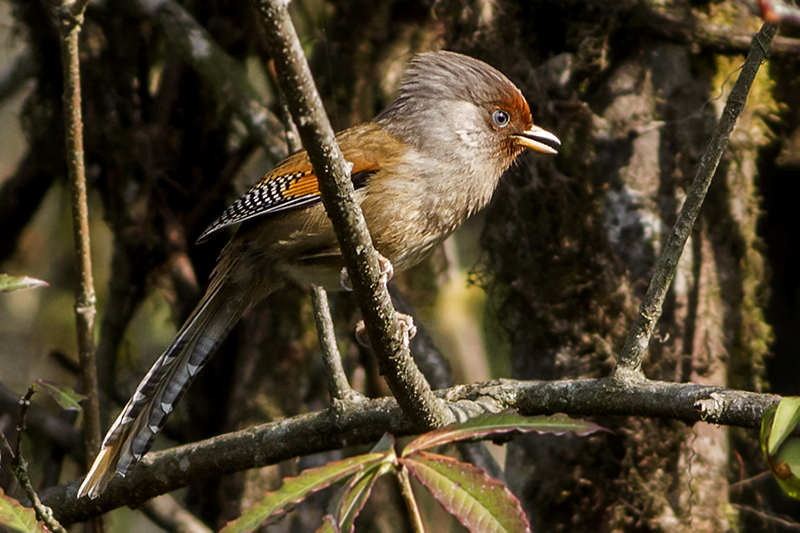
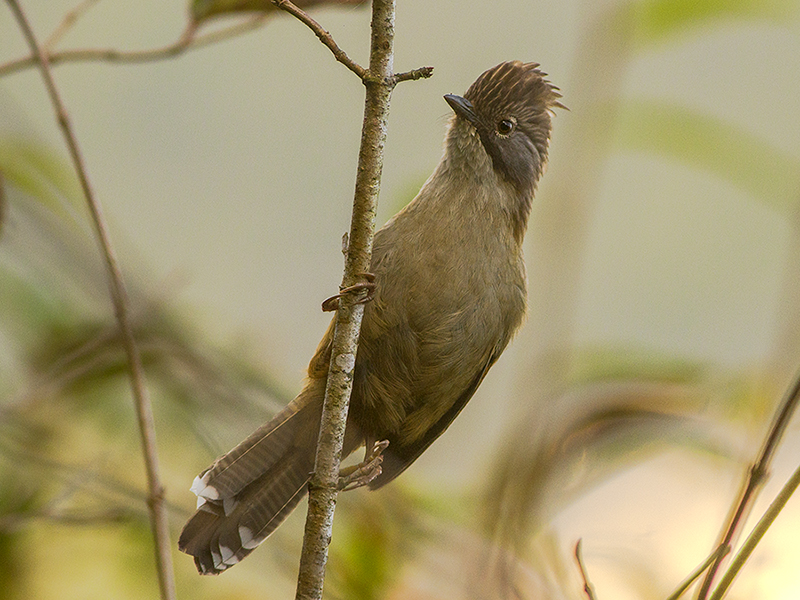
The Black-faced Laughingthrush is a medium-sized bird, easily recognized by its striking black facial markings, which contrast vividly with its overall reddish-brown plumage. Adults possess a well-defined black mask that extends from the bill through the eyes, accentuated by a subtle white eye-ring. The rest of the plumage is a warm mix of brown and chestnut hues, with subtle streaks that add texture to their appearance.
Juvenile Black-faced Laughingthrushes are similar in coloration but tend to have less defined facial markings and a slightly duller overall plumage. Both males and females share similar plumage, making it difficult to differentiate between the sexes based on appearance alone.
This species can be confused with other laughingthrushes in the region, particularly those with similar dimensions and coloration. However, the Black-faced Laughingthrush's distinctive facial marking serves as a reliable field mark. When in flight, its rounded wings and medium-length tail create a somewhat stocky silhouette. While perched, it often adopts a horizontal posture, frequently seen hopping through dense undergrowth or flitting between branches.
Having trouble telling birds apart? Upload a photo to our bird identification tool for an instant species match.
Black-faced Laughingthrush Habitat and Range
Preferred Habitat
The Black-faced Laughingthrush primarily inhabits montane forests, thriving in areas with dense undergrowth and ample vegetation. These forests, often found at elevations ranging from 1,500 to 3,500 meters, provide the necessary cover and food resources. In the Eastern Himalayas, it is common to find these birds in mixed broadleaf and coniferous forests.
Seasonally, the Black-faced Laughingthrush may adjust its habitat slightly, shifting to lower elevations during colder months to avoid severe weather. However, they remain within the forested areas, avoiding open lands and preferring the protection of trees and shrubs. While typically found in rural, undeveloped areas, they are occasionally spotted in semi-urban regions, provided there is sufficient natural habitat.
Their presence is less frequent in highly urbanized areas, as they rely heavily on forested environments for nesting and foraging.
Geographic Range
The Black-faced Laughingthrush is predominantly found in the Himalayan regions, with its range extending through Nepal, Bhutan, and northeastern India. In India, it is particularly prevalent in the states of Sikkim and Arunachal Pradesh, where montane forests offer ideal habitats.
This species is largely sedentary, exhibiting limited migratory behavior. Instead, they undertake altitudinal movements, descending to lower elevations during the harshest winter months. Such movements help them access food resources that might be scarce at higher altitudes during colder periods.
Population density hotspots include forested areas within these regions, where they are often found in mixed-species flocks, increasing their visibility to bird watchers and researchers. While not considered rare, the Black-faced Laughingthrush's reliance on specific habitat types means that its presence is closely tied to forest health and availability.
Want to know which birds visit your area? Browse our backyard birds by location guides for region-specific species lists.
What Does the Black-faced Laughingthrush Eat?
The Black-faced Laughingthrush has a diverse diet that includes both plant and animal matter. Its primary food sources consist of fruits and berries, which it consumes in abundance. Berries from shrubs and small trees form a significant part of its diet, particularly during the fruiting season.
In addition to fruits, this bird actively forages for insects and other invertebrates. It employs a methodical foraging technique, often seen hopping along branches and the forest floor, flipping leaves and debris to uncover hidden prey. During cooler months, when fruit availability decreases, the Black-faced Laughingthrush increases its intake of insects to meet its nutritional needs.
The bird's feeding schedule is typically diurnal, with peak activity occurring during the early morning and late afternoon. This pattern allows it to take advantage of the cooler temperatures and higher insect activity during these times of day.
Black-faced Laughingthrush Behavior and Social Structure
The Black-faced Laughingthrush is a social bird, often seen foraging in small groups or mixed-species flocks. This behavior not only aids in locating food but also provides protection against predators. When threatened, the bird exhibits a variety of defensive behaviors, including rapid flight into dense cover and emitting alarm calls to alert other flock members.
During the breeding season, the species becomes more territorial. Males engage in vocal displays to establish dominance and attract females. These displays often involve a series of loud, melodious calls that can be heard echoing through their forest habitat.
Courtship displays also play a role in mate selection, with males performing elaborate displays of plumage and song. Outside of the breeding season, the Black-faced Laughingthrush maintains a more subdued presence, focusing on foraging and flocking behaviors that enhance survival during leaner months.
Black-faced Laughingthrush Nesting and Reproduction
The nesting habits of the Black-faced Laughingthrush involve constructing cup-shaped nests made from twigs, leaves, and moss. These nests are typically located in dense shrubbery or low tree branches, providing concealment from predators.
Clutch sizes generally range from 2 to 4 eggs, with both parents involved in incubation and feeding. The incubation period lasts approximately 14 days, during which the adults take turns keeping the eggs warm. Once hatched, the young remain in the nest for about 12 to 14 days before fledging.
Both parents continue to feed and care for the fledglings after they leave the nest, ensuring their survival during the critical early stages of life. The Black-faced Laughingthrush often raises one or two broods per year, depending on environmental conditions and food availability.
Black-faced Laughingthrush Sounds and Vocalizations
The Black-faced Laughingthrush is renowned for its melodious song, characterized by a series of clear, flute-like notes. The rhythm is often described as a varied sequence of whistles and trills, which can carry across considerable distances.
In addition to its primary song, the bird emits a variety of call notes used in different contexts, such as short, sharp chips for communication within the flock and more prolonged calls for territorial defense. Alarm calls are harsher and more abrupt, designed to warn others of potential threats.
Dawn chorus is a particularly active time for this species, with males singing vigorously to establish territory and attract mates. The song of the Black-faced Laughingthrush is a defining feature of the Himalayan soundscape, often drawing the attention of birdwatchers and enthusiasts.
Interesting Facts About the Black-faced Laughingthrush
- 1The Black-faced Laughingthrush can be part of mixed-species flocks, benefiting from collective foraging efficiency.
- 2Its vocalizations, including territorial songs, can be heard up to half a kilometer away in dense forests.
- 3Despite its vibrant calls, the Black-faced Laughingthrush is often well-camouflaged in the forest undergrowth.
- 4The bird's diet shifts significantly with seasons, increasing insect consumption during colder months.
- 5It is known for its adaptability to mixed habitats, successfully occupying forest edges and clearings.
- 6The Black-faced Laughingthrush plays a key role in seed dispersal, aiding in forest regeneration.
- 7Its distinctive black face and laugh-like calls are often used as identifiers by bird enthusiasts.
Black-faced Laughingthrush Conservation Status
Currently classified as Least Concern by the IUCN, the Black-faced Laughingthrush has a stable population trend. However, habitat destruction poses a significant threat, particularly deforestation in the Himalayan regions. Conservation efforts focus on habitat preservation and the establishment of protected areas to ensure the survival of this species. Historical population changes have been minimal, largely due to the bird's adaptability to various forest types. Ongoing monitoring and conservation planning aim to mitigate potential threats and ensure that the Black-faced Laughingthrush continues to thrive in its native habitats.