Black-throated Laughingthrush
Ianthocincla chinensis
Order: Passeriformes / Family: Leiothrichidae

Wikimedia Commons
About the Black-throated Laughingthrush
The Black-throated Laughingthrush (Ianthocincla chinensis) is a captivating bird species found predominantly in the subtropical and tropical forests of Southeast Asia. It is part of the Leiothrichidae family and is renowned for its melodious calls, which contribute significantly to the soundscape of its natural habitat. This bird plays a vital role in its ecosystem, primarily through seed dispersal, which aids in forest regeneration. Its presence is most notable in the dense undergrowth of forests in countries such as China, Vietnam, Laos, and Myanmar. The Black-throated Laughingthrush is a non-migratory bird, meaning it remains in its habitat year-round, adapting to the seasonal changes within these regions. This trait distinguishes it from many other species that rely on migration to exploit different seasonal resources. During the breeding season, which typically occurs from March to July, the Black-throated Laughingthrush becomes more vocal, with its song serving as both a mating call and a territorial signal. The density of their populations is often highest in protected areas where their preferred habitats remain undisturbed. As a forest-dwelling bird, the Black-throated Laughingthrush contributes to the ecological balance by consuming a variety of insects and small invertebrates, helping to control these populations. The bird's preference for mid-elevation forests allows it to thrive in regions where human encroachment is less pronounced, although habitat loss due to deforestation poses an ongoing threat to its populations.
The Black-throated Laughingthrush belongs to the family Leiothrichidae, within the order Passeriformes. These birds typically live typically 5-9 years, with the oldest recorded individuals living up to 12 years..
How to Identify a Black-throated Laughingthrush
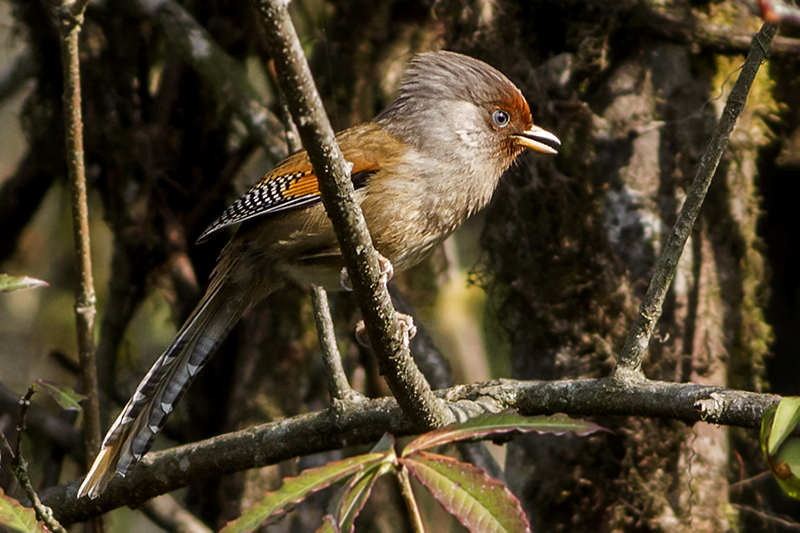
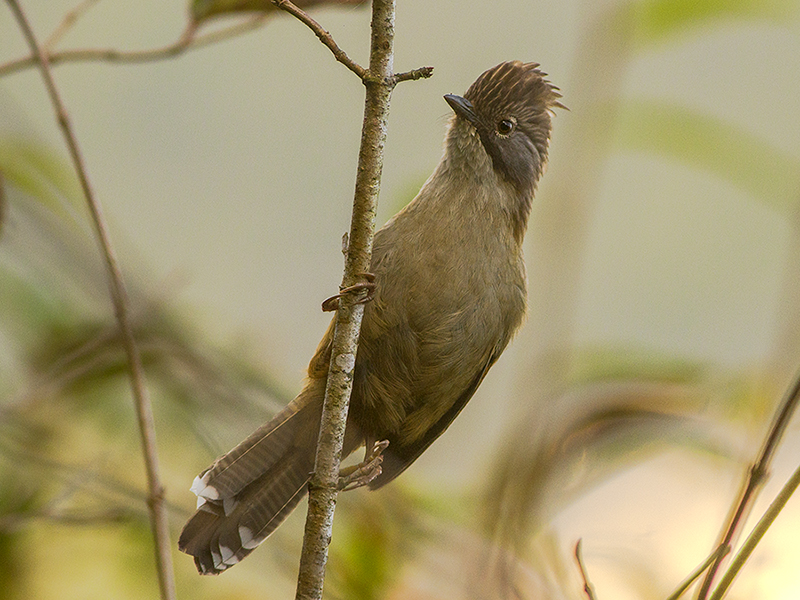
The Black-throated Laughingthrush is easily identified by its distinctive black throat and face, which contrasts sharply with its overall grayish body. Adult birds exhibit a strong sexual dimorphism, with males being slightly larger and more robustly colored than females. The upperparts are primarily gray, with a subtle brownish hue on the wings and tail. The underparts are lighter, often appearing almost white or pale gray, providing a striking contrast to the dark throat. Juveniles lack the pronounced black throat, instead showing a more muted coloration with a grayish-brown appearance. This plumage difference can sometimes lead to confusion with other similar species in the region, such as the White-throated Laughingthrush. In flight, the Black-throated Laughingthrush exhibits a distinctive silhouette, with broad wings and a slightly rounded tail. When perching, it often adopts a horizontal posture, with its tail slightly cocked upwards, a characteristic behavior of many laughingthrushes.
Having trouble telling birds apart? Upload a photo to our bird identification tool for an instant species match.
Black-throated Laughingthrush Habitat and Range
Preferred Habitat
The preferred habitat of the Black-throated Laughingthrush is subtropical and tropical moist lowland forests, where dense undergrowth provides ample cover and foraging opportunities. It thrives at elevations ranging from 300 to 1,800 meters, with occasional sightings at higher altitudes during specific seasonal conditions. Unlike many other forest birds, the Black-throated Laughingthrush does not typically venture into urban areas, although it can sometimes be found in rural gardens adjacent to forests. Seasonal habitat shifts are minimal, as this species remains in its preferred environment year-round, relying on the evergreen nature of its habitat to provide consistent resources.
Geographic Range
The Black-throated Laughingthrush is primarily found across Southeast Asia, with a range encompassing southern China, including the provinces of Yunnan and Guangxi, and extending into northern Vietnam, Laos, and parts of Myanmar. This species does not migrate, maintaining relatively stable populations within its range throughout the year. Population density is highest in areas of undisturbed forest, particularly within national parks and protected reserves. Despite its limited geographic range, the Black-throated Laughingthrush benefits from the diversity of habitats within these countries, allowing it to exploit various ecological niches.
Want to know which birds visit your area? Browse our backyard birds by location guides for region-specific species lists.
What Does the Black-throated Laughingthrush Eat?
The diet of the Black-throated Laughingthrush consists primarily of insects and other small invertebrates, which it actively forages from the forest floor and low vegetation. During the breeding season, its diet may shift slightly to include more protein-rich insects, providing essential nutrients for its young. In addition to animal prey, the Black-throated Laughingthrush consumes a variety of fruits and berries, making it an important seed disperser in its habitat. This frugivorous tendency increases during the fruiting season, typically from late summer to early autumn, when fruit becomes more abundant. The bird employs a methodical foraging technique, often seen hopping on the ground or through low branches in search of food.
Black-throated Laughingthrush Behavior and Social Structure
The Black-throated Laughingthrush exhibits a highly social structure, often seen in small flocks that can number up to a dozen individuals. This social behavior extends to communal roosting and cooperative feeding, where they work together to locate food sources. Territorial behavior is most pronounced during the breeding season, with males singing to establish and defend their territory. Courtship displays involve vocal duets between males and females, accompanied by a series of bowing and wing-flicking movements. Flocking patterns are dynamic, with groups breaking into smaller units during the breeding season and reassembling in larger flocks during non-breeding periods. When faced with predators, the Black-throated Laughingthrush employs alarm calls to alert other flock members and may use mobbing tactics to deter threats. Daily activity peaks in the early morning and late afternoon, coinciding with cooler temperatures and increased prey activity.
Black-throated Laughingthrush Nesting and Reproduction
Nesting for the Black-throated Laughingthrush typically occurs from March to July. Pairs build their nests in dense shrubs or low trees, preferring concealed locations that offer protection from predators. The nest is a cup-shaped structure composed of twigs, leaves, and grass, lined with softer materials such as feathers and moss. A typical clutch consists of three to four eggs, which the female incubates for about 14 days. Both parents share in feeding the chicks once they hatch. Fledging occurs approximately 12 to 15 days after hatching, with the young remaining dependent on the parents for several weeks post-fledging. The Black-throated Laughingthrush often raises one to two broods per year, depending on environmental conditions and food availability.
Black-throated Laughingthrush Sounds and Vocalizations
The Black-throated Laughingthrush is celebrated for its rich, melodious song, characterized by a series of clear whistles and trills with a rhythmic quality that echoes through its forest habitat. Its primary song, used for both courtship and territorial defense, features a complex sequence of notes delivered at varying pitches. Call notes are sharp and include a mix of whistles and chattering sounds, often used for communication within flocks. Alarm calls are distinct, with harsh, rapid sequences that serve to alert other birds of potential threats. During the dawn chorus, the Black-throated Laughingthrush's song is particularly prominent, contributing to the vibrant tapestry of sounds in its environment.
Interesting Facts About the Black-throated Laughingthrush
- 1The Black-throated Laughingthrush can live up to 15 years in the wild, making it a relatively long-lived bird for its size.
- 2This species is known for its complex vocalizations, which can mimic the calls of other forest birds.
- 3The Black-throated Laughingthrush's diet shifts seasonally, with an increased consumption of fruits during autumn.
- 4Despite its name, the Black-throated Laughingthrush is not closely related to true thrushes but shares similar vocal traits.
- 5The bird's laughter-like calls help maintain social bonds within flocks and coordinate group activities.
- 6It is one of the few laughingthrush species that thrives in mid-elevation forests, adapting well to diverse habitats.
- 7The Black-throated Laughingthrush's plumage provides excellent camouflage, making it difficult to spot in dense foliage.
Black-throated Laughingthrush Conservation Status
The International Union for Conservation of Nature (IUCN) currently lists the Black-throated Laughingthrush as a species of Least Concern. While its population trend is generally stable, ongoing threats such as habitat loss due to deforestation and land conversion pose significant risks. Conservation efforts focus on habitat preservation, particularly within protected areas where logging and habitat destruction are controlled. Historically, the species has shown resilience to moderate habitat changes, but continued monitoring and habitat conservation remain crucial to ensure its long-term survival.