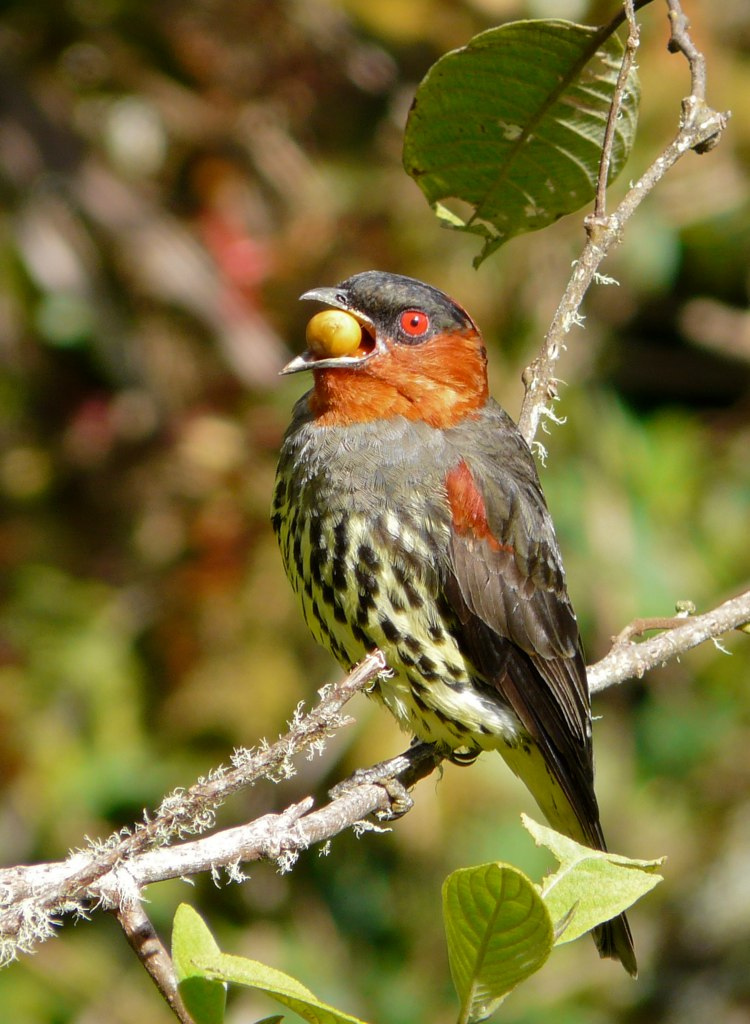
Black-tipped Cotinga
Carpodectes hopkei
Order: Passeriformes / Family: Cotingidae

Wikimedia Commons
About the Black-tipped Cotinga
The Black-tipped Cotinga (Carpodectes hopkei) stands as a symbol of the tropical rainforests of Central America. It is renowned for its striking appearance and vital role in the ecosystem. This bird is most commonly found in the lowland and foothill forests extending from eastern Honduras through Nicaragua and into northern Costa Rica. The Black-tipped Cotinga exhibits a pronounced sexual dimorphism, with males showcasing a dazzling white plumage contrasted by prominent black tips on the wings and tails. Females, while less vibrant, still possess a distinctive beauty with their more subdued tones. This cotinga plays a crucial ecological role as both a seed disperser and a predator of insects. It frequents the forest canopy, where it participates in the complex food web by consuming fruits, insects, and small arthropods. The bird's foraging habits help maintain the health and diversity of the forest. Throughout the year, the Black-tipped Cotinga displays varied behaviors, influenced by the seasonal availability of food and the reproductive cycle. During the breeding season, males engage in elaborate courtship displays, characterized by aerial acrobatics and vocalizations, to attract females. As the seasons change, the cotinga adjusts its diet and foraging techniques, capitalizing on the abundance of ripe fruits and swarming insects. The Black-tipped Cotinga's presence is a testament to the rich biodiversity of its habitat, and its continued survival depends on the preservation of the lush forests it calls home.
The Black-tipped Cotinga belongs to the family Cotingidae, within the order Passeriformes. These birds typically live average 8 years, with a maximum recorded lifespan of 12 years..
How to Identify a Black-tipped Cotinga
The Black-tipped Cotinga is a medium-sized bird, measuring about 20 to 22 centimeters in length. Adult males are easily identifiable with their bright white plumage offset by striking black tips on the wings and tail. This contrast makes the bird stand out, particularly when in flight. Females exhibit a more muted color palette, with grayish-white feathers and less pronounced black markings. Juvenile birds resemble females but may show even less contrast in their plumage. In terms of morphology, both sexes possess a stout, slightly curved bill, adapted for their fruit-based diet. The Black-tipped Cotinga can be confused with other cotingas, but its unique wing and tail coloration set it apart. When perched, this bird maintains an upright posture, often seen high in the canopy. Its flight is direct and swift, characterized by rapid wingbeats and short glides. The combination of its distinct plumage and flight pattern aids in its identification among birdwatchers and researchers alike.
Having trouble telling birds apart? Upload a photo to our bird identification tool for an instant species match.
Black-tipped Cotinga Habitat and Range
Preferred Habitat
The Black-tipped Cotinga primarily inhabits tropical and subtropical moist lowland forests. It thrives in areas with dense canopy cover, where it can forage for fruits and insects. This bird prefers elevations ranging from sea level to about 1,200 meters. The cotinga is a resident species, showing little to no migration, although it may make local movements in response to food availability. While primarily found in rural and forested areas, it occasionally ventures into secondary growth and edge habitats, particularly when seeking food. The preservation of primary forest habitats is essential for the survival of the Black-tipped Cotinga, as it relies heavily on intact ecosystems for its dietary and nesting needs.
Geographic Range
The Black-tipped Cotinga is found in a relatively narrow range within Central America. Its distribution extends from eastern Honduras through Nicaragua and into the northern regions of Costa Rica. This limited range makes it somewhat vulnerable to habitat loss. However, within its range, the cotinga is often locally common in suitable habitats. The species does not undertake long migratory journeys, although it may move seasonally within its range to exploit food resources. Population densities are highest in well-preserved forest areas, where the diversity of fruiting trees supports its dietary needs.
Want to know which birds visit your area? Browse our backyard birds by location guides for region-specific species lists.
What Does the Black-tipped Cotinga Eat?
The Black-tipped Cotinga primarily feeds on fruits, making it a crucial seed disperser in its habitat. It favors berries and small fruits, consuming them whole and aiding in the spread of seeds through its droppings. In addition to fruits, the cotinga supplements its diet with insects and small arthropods. This dietary flexibility allows it to adapt to seasonal changes in food availability. The bird employs a sit-and-wait foraging technique, often perching quietly before making short flights to capture prey or pluck fruits. Feeding predominantly occurs during early morning and late afternoon when the forest is most active.
Black-tipped Cotinga Behavior and Social Structure
The Black-tipped Cotinga exhibits a variety of intriguing behaviors. It is a generally solitary bird, although it may be seen in loose associations with mixed-species flocks. During the breeding season, males perform elaborate courtship displays, which include aerial acrobatics and distinctive vocalizations to attract females. These displays are a critical component of their mating rituals. The cotinga is territorial, with males defending their chosen display sites vigorously. In response to predators, it relies on its quick flight and dense foliage for cover. The bird's daily activity pattern involves periods of foraging interspersed with rest, making it more active during cooler parts of the day.
Black-tipped Cotinga Nesting and Reproduction
The nesting habits of the Black-tipped Cotinga are closely tied to the forest environment. It typically builds its nest high in the canopy, using twigs and leaves to construct a cup-shaped structure. The chosen location is often well-concealed among the foliage, providing protection from predators. The female lays a clutch of one to two eggs, which she incubates for approximately 18 to 20 days. After hatching, the chicks remain in the nest for about 25 days, during which both parents participate in feeding and caring for the young. The cotinga usually raises one brood per year, although this can vary depending on environmental conditions.
Black-tipped Cotinga Sounds and Vocalizations
The vocalizations of the Black-tipped Cotinga are an essential aspect of its behavior, particularly during the breeding season. Its primary song consists of a series of melodic whistles, often described as clear and flutelike. These calls serve to establish territory and attract mates. In addition to the song, the cotinga produces a variety of call notes, including sharp chatters and softer purrs. Alarm calls, delivered in response to threats, are more abrupt and harsh in tone. The cotinga is most vocal during the early morning, participating in the dawn chorus that fills the forest with sound. Its calls are distinctive, making it easier to identify in dense foliage.
Interesting Facts About the Black-tipped Cotinga
- 1The Black-tipped Cotinga's white plumage makes it one of the most visually striking birds in its habitat.
- 2Despite its limited range, the Black-tipped Cotinga's presence is a good indicator of a healthy forest ecosystem.
- 3The male Black-tipped Cotinga's courtship display involves impressive aerial maneuvers to attract a mate.
- 4Black-tipped Cotingas are known to associate with mixed-species flocks, benefiting from group foraging.
- 5The cotinga's diet of fruits and insects helps control insect populations and facilitates seed dispersal.
- 6Their nests are often built high in the canopy, concealed among dense foliage to protect from predators.
- 7The Black-tipped Cotinga's distinct vocalizations include flutelike whistles that resonate through the forest.
Black-tipped Cotinga Conservation Status
The Black-tipped Cotinga is currently listed as Near Threatened by the IUCN. Its population trend remains stable, although habitat destruction poses a significant threat. Deforestation for agriculture and development has led to a reduction in suitable habitats. Conservation efforts focus on preserving and restoring forest habitats, which are crucial for the cotinga's survival. Protected areas in Central America play a vital role in maintaining population stability. Historically, the cotinga was more widespread, but habitat loss has confined it to smaller, fragmented areas.