Blue-headed Macaw
Primolius couloni
Order: Psittaciformes / Family: Psittacidae
Wikimedia Commons
About the Blue-headed Macaw
The Blue-headed Macaw (Primolius couloni) is a medium-sized parrot known for its vibrant appearance and vocal nature. This species plays a crucial role in the ecosystems of the Amazon basin, primarily found in the lowland rainforests of southeastern Peru, western Brazil, and northern Bolivia. The macaw's presence is a significant indicator of forest health, as they contribute to seed dispersal and maintain biodiversity. Their preference for canopy layers in dense, humid forests underscores their adaptation to the complex vertical structure of the Amazon. Throughout the year, Blue-headed Macaws demonstrate a range of seasonal behaviors, largely influenced by food availability and nesting requirements. During the wet season, which spans from November to April, they become more vocal and form larger flocks, often seen foraging in fruiting trees. As the dry season approaches, these macaws may expand their range slightly in search of food, although they primarily remain within their established territories. The Blue-headed Macaw's ecological role extends beyond its immediate habitat. By dispersing seeds over a large area, they contribute to the regeneration of forest areas and support a wide array of other species. Their feeding habits also aid in controlling pest populations, as they consume insects and larvae along with seeds and fruits. This macaw's presence is a testament to the intricate balance of life within the Amazon rainforest and highlights the interconnectedness of its inhabitants. Conservation efforts for the Blue-headed Macaw focus on habitat preservation, as deforestation and illegal pet trade pose significant threats to their population. Protecting large tracts of intact forest in their native range is crucial to ensuring the survival of this species and maintaining the ecological integrity of their habitat.
The Blue-headed Macaw belongs to the family Psittacidae, within the order Psittaciformes. These birds typically live average 30 years with a maximum recorded of 40 years..
How to Identify a Blue-headed Macaw
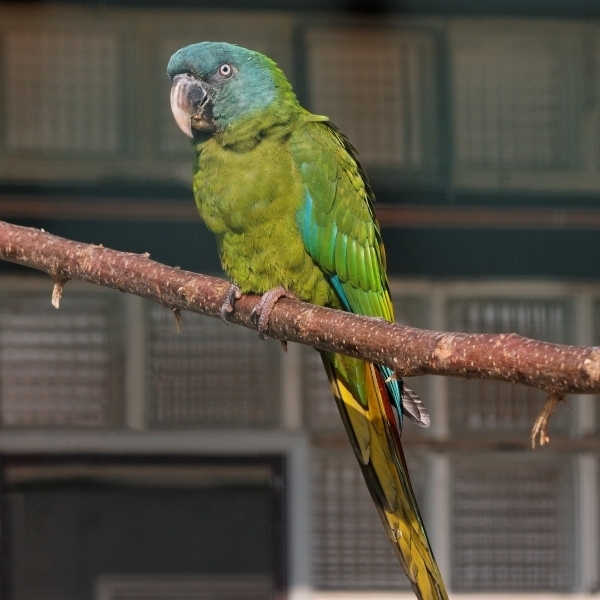
The Blue-headed Macaw is distinguished by its medium-sized body and striking plumage. Adults display a vibrant blue head, which contrasts sharply with their olive-green body and wings. The primary and secondary flight feathers are a deep blue, adding to their distinctive silhouette in flight. The tail feathers are long, with a blue hue at the tips, while their underparts are predominantly yellowish-green. Juvenile Blue-headed Macaws resemble adults but have slightly duller plumage and a less pronounced blue coloration on the head. Males and females are similar in appearance, with minimal sexual dimorphism, making it challenging to distinguish between them in the field. The Blue-headed Macaw can be confused with other macaw species, such as the Chestnut-fronted Macaw, due to overlapping ranges. However, the Blue-headed Macaw's distinct blue head provides a reliable field mark for identification. When perched, these macaws maintain an upright posture, often seen socializing in groups or pairs. In flight, their wings display a unique pattern, with the blue contrasting against the green body, aiding in visual recognition among birders.
Having trouble telling birds apart? Upload a photo to our bird identification tool for an instant species match.
Blue-headed Macaw Habitat and Range
Preferred Habitat
The Blue-headed Macaw inhabits the humid lowland rainforests of the Amazon basin, thriving in the dense canopy layers of these biodiverse regions. They are primarily found in southeastern Peru, particularly in the regions of Madre de Dios and Ucayali, where the forest remains largely intact. These macaws prefer elevations up to 1,000 meters, avoiding higher altitudes where the forest structure changes. Within their preferred habitat, Blue-headed Macaws favor areas close to rivers and oxbow lakes, which provide abundant food resources and nesting sites. Seasonal shifts in habitat do occur, as they may venture into adjacent forest types during dry periods in search of food, but they largely remain within the confines of their established range. Unlike some macaw species, the Blue-headed Macaw shows little tolerance for urban environments, relying on large, undisturbed tracts of forest to meet their ecological needs.
Geographic Range
The Blue-headed Macaw's range is confined to the southwestern Amazon basin. They are most commonly observed in southeastern Peru, with significant populations in the departments of Madre de Dios, Ucayali, and Puno. In Brazil, their range extends into the western states of Acre and Amazonas, while in Bolivia, they inhabit the northern regions bordering Peru. This macaw is a resident species, showing little migratory behavior, which limits their range to these areas year-round. Population densities are notably higher in regions with extensive intact forest cover, particularly along riverine corridors where food resources are plentiful. The Blue-headed Macaw's range does not extend into higher elevations, and their presence in any region is closely tied to the availability of suitable forest habitat. Conservation efforts focus on protecting these critical areas to ensure the long-term survival of this species.
Want to know which birds visit your area? Browse our backyard birds by location guides for region-specific species lists.
What Does the Blue-headed Macaw Eat?
The Blue-headed Macaw primarily feeds on a diverse diet of seeds, fruits, and nuts, which they skillfully extract using their powerful beaks. During the wet season, when fruiting trees are abundant, they consume a wide variety of figs, palm fruits, and other native tree species. As the dry season advances, their diet shifts to include more seeds and nuts, which are more readily available. These macaws also consume insects and larvae, providing a protein-rich supplement to their diet. Foraging typically occurs in the early morning and late afternoon, when they are most active. Blue-headed Macaws often forage in flocks, which can number from a few individuals to larger groups of up to 30 birds. Their foraging techniques involve skillful manipulation of food items, using their beaks to crack open hard shells and extract the nutritious contents within. The size of prey varies depending on seasonal availability, but they exhibit a preference for larger fruiting trees, which can sustain their dietary needs.
Blue-headed Macaw Behavior and Social Structure
Blue-headed Macaws are highly social birds, often seen in pairs or small family groups. During the breeding season, which usually occurs in the wet months, they become more territorial, defending nesting sites from intruders. Courtship displays involve mutual preening and vocalizations, strengthening pair bonds. Outside the breeding season, they exhibit less territorial behavior and often join larger flocks for foraging and roosting. These flocks provide safety in numbers, offering protection from predators such as hawks and eagles. When threatened, Blue-headed Macaws emit loud alarm calls and may take flight in unison, confusing predators with their sudden movement. Daily activity patterns typically include early morning and late afternoon foraging, with periods of rest and social interaction in the mid-day hours. They are known for their playful nature, engaging in aerial acrobatics and games with conspecifics, which help maintain social bonds within the flock.
Blue-headed Macaw Nesting and Reproduction
The Blue-headed Macaw nests in natural cavities found in large trees, often selecting sites near riverbanks or within dense forest canopies. They do not construct elaborate nests, instead relying on existing cavities for shelter and protection. The average clutch size ranges from 2 to 4 eggs, which the female incubates for approximately 26 to 28 days. During this period, the male provides food for the female, ensuring she remains nourished while tending to the eggs. Upon hatching, both parents share the responsibility of feeding and caring for the chicks. The fledging period lasts about 12 weeks, during which the young macaws develop their flight skills and begin to explore their surroundings. Blue-headed Macaws typically raise one brood per year, although favorable conditions can lead to more frequent breeding. Parental roles are clearly defined, with both male and female contributing to chick rearing and protection.
Blue-headed Macaw Sounds and Vocalizations
The Blue-headed Macaw produces a variety of vocalizations, characterized by sharp, high-pitched screeches and squawks. Their primary calls, often heard during foraging or in flight, consist of repetitive, rhythmic sequences that carry over long distances. These calls serve both to maintain contact with flock members and to communicate the presence of potential threats. Alarm calls are rapid and harsh, differing in tone from their usual vocalizations, and trigger immediate attention from nearby conspecifics. During the dawn chorus, Blue-headed Macaws contribute to the vibrant soundscape of the forest with their lively calls, which can be likened to a series of short, abrupt laughs. These vocalizations play a crucial role in social interactions and territory establishment, marking their presence within the expansive Amazonian habitat.
Interesting Facts About the Blue-headed Macaw
- 1The Blue-headed Macaw can live up to 35 years in the wild, with some individuals reaching up to 50 years in captivity.
- 2Unlike many macaws, Blue-headed Macaws have a relatively small range, confined to parts of Peru, Brazil, and Bolivia.
- 3These macaws are known for their intelligence, able to solve complex problems in captivity and the wild.
- 4Despite their vibrant colors, Blue-headed Macaws can blend into the forest canopy, making them difficult to spot.
- 5Their strong, curved beaks allow them to crack open hard nuts and seeds that other birds might find challenging.
- 6Blue-headed Macaws form strong pair bonds, often staying with the same mate for life.
- 7They play a key role in seed dispersal, contributing to the health and regeneration of the Amazon rainforest.
Blue-headed Macaw Conservation Status
The Blue-headed Macaw is currently classified as Vulnerable by the IUCN, with population trends indicating a gradual decline. Primary threats include habitat destruction due to deforestation and the illegal pet trade, which targets these colorful birds for their appeal. Conservation efforts focus on habitat protection and legal enforcement to curb illegal trade. Historical data suggests that populations were once more widespread, but human activities have significantly restricted their range. In recent years, concerted efforts by local and international organizations aim to safeguard critical habitats and promote sustainable practices that benefit both the macaws and local communities.
Other Psittacidae Species


Birds Similar to the Blue-headed Macaw
These species are often confused with the Blue-headed Macaw due to similar appearance or overlapping range.