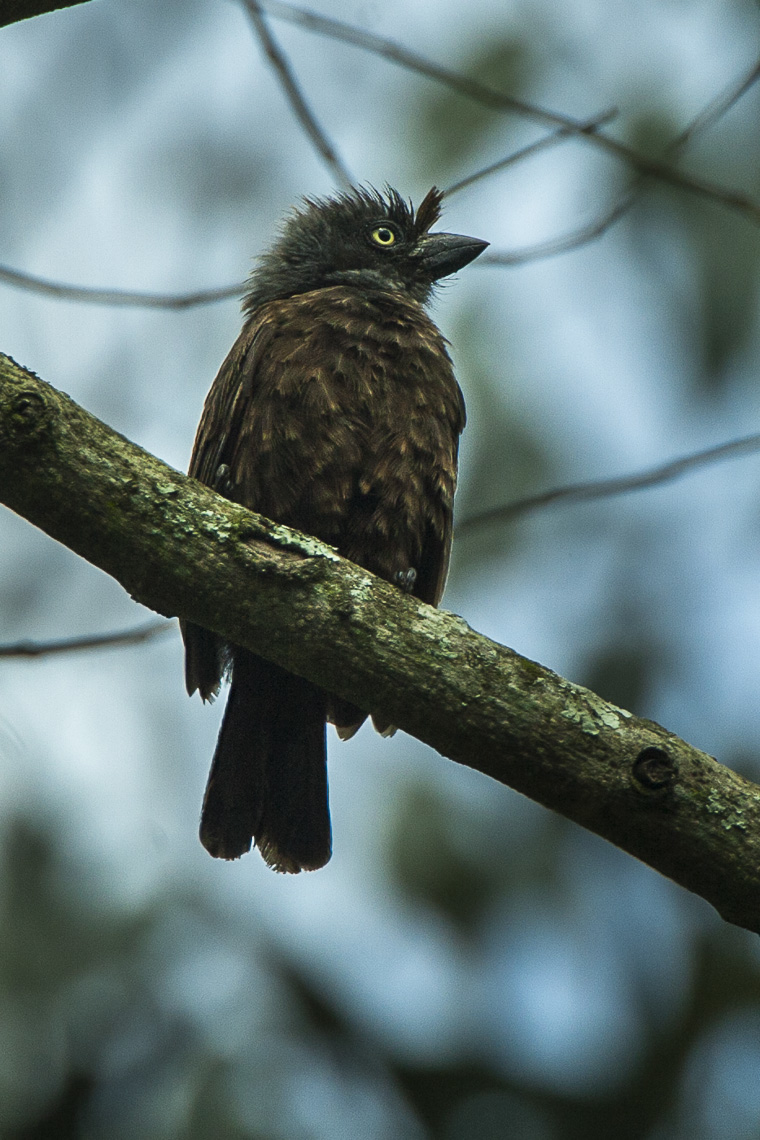
Brown-breasted Barbet
Lybius melanopterus
Order: Piciformes / Family: Lybiidae

Wikimedia Commons
About the Brown-breasted Barbet
The Brown-breasted Barbet (Lybius melanopterus) is a medium-sized bird that captures attention with its bold coloration and robust presence in the eastern regions of Africa. A member of the Lybiidae family, this species is particularly noted for its role in the diverse ecosystems of Kenya, Tanzania, and Uganda. The bird's striking appearance features a mixture of chestnut, black, and white plumage, which allows it to blend seamlessly with its natural habitat of mixed woodland and savanna. The Brown-breasted Barbet plays a significant ecological role as both predator and prey. Its diet primarily consists of fruits, particularly figs, which aids in seed dispersal and contributes to the health of its ecosystem. Additionally, this barbet's nesting habits, involving the excavation of holes in dead wood, provide nesting sites for other species, highlighting its ecological importance. Seasonal behaviors of the Brown-breasted Barbet include periods of increased vocalization during the breeding season, which typically coincides with the rainy season when food resources are abundant. Males and females engage in duet singing, establishing and maintaining territories. The bird is notably sedentary, exhibiting minimal migration, although some local movements may occur in response to food availability. The Brown-breasted Barbet's presence is a testament to the rich biodiversity of East Africa, standing as a vibrant participant in the intricate web of life.
The Brown-breasted Barbet belongs to the family Lybiidae, within the order Piciformes. These birds typically live typically 6-8 years, with a maximum recorded lifespan of 10 years..
How to Identify a Brown-breasted Barbet
The Brown-breasted Barbet is readily identifiable by its striking plumage. Adults display a rich chestnut breast that gives the species its name, contrasting with black wings and back. The head is predominantly black with a white stripe above the eye, adding to its distinctive appearance. Juvenile birds exhibit duller colors, with less pronounced chestnut and more muted black and white contrasts. Males and females are similar in appearance, though males may have slightly more vivid coloration. When compared to similar species like the Black-billed Barbet, the Brown-breasted Barbet's chestnut breast is a key distinguishing feature. In flight, the barbet has a robust silhouette with broad wings and a relatively short tail. Its perching posture is upright, often seen on exposed branches or wires, a habit that aids in easy identification. The bird's size, at about 20-23 cm in length, places it among the medium-sized barbets, further assisting in differentiation from smaller or larger similar species.
Having trouble telling birds apart? Upload a photo to our bird identification tool for an instant species match.
Brown-breasted Barbet Habitat and Range
Preferred Habitat
The Brown-breasted Barbet thrives in a variety of woodland and savanna habitats, predominantly within the eastern regions of Africa. It favors open woodlands and wooded savannas, often found in areas with abundant fruit trees such as figs. The species is commonly seen at elevations ranging from sea level to about 2000 meters, depending on the availability of suitable habitat. Unlike many birds, it shows little preference for urban areas, instead opting for rural settings where natural vegetation is more prevalent. Seasonal shifts in habitat are minimal, though the bird may move locally to follow fruiting patterns of preferred tree species. Its reliance on wooded environments is crucial for both feeding and nesting, making habitat preservation a key factor in its conservation.
Geographic Range
The Brown-breasted Barbet's range is primarily concentrated in East Africa, with significant populations in Kenya, Tanzania, and Uganda. This bird is largely non-migratory, residing year-round within its established range. During the breeding season, the barbet's distribution remains consistent, as it does not undertake long-distance migrations. Instead, the bird may engage in local movements, particularly in response to food availability. Population density hotspots include regions such as the coastal forests of Kenya and the savanna woodlands of northern Tanzania. Despite its restricted range, the Brown-breasted Barbet is considered common within its preferred habitats, maintaining stable numbers across its distribution.
Want to know which birds visit your area? Browse our backyard birds by location guides for region-specific species lists.
What Does the Brown-breasted Barbet Eat?
The diet of the Brown-breasted Barbet primarily comprises fruits, with figs being a particularly favored food source. This frugivorous diet supports its role in seed dispersal, an important ecological function. In addition to fruits, the barbet occasionally consumes insects and small invertebrates, which provide essential proteins and nutrients, particularly during the breeding season. The bird employs a dynamic foraging technique, using its robust bill to pluck fruit from trees, often hanging upside down to reach difficult spots. Feeding mainly occurs during the cooler parts of the day, such as early morning and late afternoon, to avoid the midday heat. Seasonal changes in diet are minimal, though the barbet may adjust its fruit selection based on availability, showcasing its adaptability.
Brown-breasted Barbet Behavior and Social Structure
Brown-breasted Barbets exhibit complex social structures and behaviors. They are often seen in pairs or small family groups, displaying strong territorial instincts. During the breeding season, pairs engage in synchronized vocal duets, which serve to establish and maintain their territory. These duets are a critical component of their courtship displays, with males and females both participating. The species is generally non-migratory, showing limited movement outside of its breeding territories. Flocking behavior is rare, as the bird prefers to maintain its own space within its habitat. When faced with predators, the barbet adopts a quiet, motionless posture, blending into its surroundings to avoid detection. Daily activity patterns include periods of rest and vocalization interspersed with foraging, primarily during the cooler hours of the day.
Brown-breasted Barbet Nesting and Reproduction
The nesting habits of the Brown-breasted Barbet are both fascinating and ecologically significant. The species typically excavates nesting holes in dead or decaying wood, which not only serves its own reproductive needs but also provides future nesting sites for other cavity-nesting species. Nest construction begins with the male and female collaborating to create a suitable cavity, often taking several weeks to complete. A typical clutch consists of two to four eggs, with an incubation period of approximately 13 to 15 days. Both parents share incubation duties and are actively involved in feeding and caring for the young. Fledging occurs around 30 to 35 days after hatching, with the young birds remaining dependent on their parents for several weeks post-fledging. The Brown-breasted Barbet typically raises one brood per year, although favorable conditions may occasionally allow for a second.
Brown-breasted Barbet Sounds and Vocalizations
The Brown-breasted Barbet is known for its loud, repetitive calls, which play a key role in communication and territory establishment. The primary song consists of a series of rhythmic, rolling notes, reminiscent of a mechanical drill, which can be heard over long distances. These vocalizations are particularly prominent during the dawn chorus, when the bird is most active in announcing its presence. Besides its song, the barbet also produces a variety of call notes, including sharp, quick alarms used to alert others of potential threats. These calls, distinct from the more melodious songs, are an essential aspect of the barbet's vocal repertoire.
Interesting Facts About the Brown-breasted Barbet
- 1The Brown-breasted Barbet can excavate its own nesting cavity using its strong beak, a process that can take several weeks.
- 2A pair of Brown-breasted Barbets may engage in duets to reinforce their pair bond and maintain territory boundaries.
- 3Despite their bright plumage, Brown-breasted Barbets can remain undetected by predators through motionless camouflage.
- 4These barbets play a crucial ecological role by dispersing seeds of the fruits they consume, promoting forest regeneration.
- 5The barbet's vocalizations are so loud they can be heard from over a kilometer away, aiding in territory defense.
Brown-breasted Barbet Conservation Status
The Brown-breasted Barbet is currently classified as Least Concern by the IUCN, with its population trend considered stable. The primary threats to this species include habitat destruction and fragmentation, particularly due to deforestation and land conversion for agriculture. Conservation efforts focus on habitat preservation, ensuring that the bird's natural environments remain intact and viable. Historically, the population has fluctuated in response to habitat changes, but it has shown resilience in areas where conservation measures are effectively implemented. Continued monitoring and protection of key habitats are essential to maintaining the barbet's population stability.