Brown-capped Laughingthrush
Trochalopteron austeni
Order: Passeriformes / Family: Leiothrichidae

Wikimedia Commons
About the Brown-capped Laughingthrush
The Brown-capped Laughingthrush (Trochalopteron austeni) is a member of the Leiothrichidae family, known for its vibrant vocalizations and striking appearance. This species inhabits the subtropical forests of Southeast Asia, particularly in regions such as northeast India, Myanmar, and parts of Thailand. The laughingthrush thrives in dense forests, often within bamboo thickets and areas of secondary growth, where its lively calls echo through the underbrush. The ecological role of this bird is significant, as it participates in seed dispersal and insect population control, feeding on a variety of insects and small invertebrates. During the breeding season, which occurs from March to July, the Brown-capped Laughingthrush becomes more secretive, nesting in well-hidden locations. Outside of this period, it exhibits more conspicuous behavior, forming loose flocks that forage actively on the forest floor. Seasonally, the species may move to different elevations in response to food availability, often descending to lower altitudes during colder months. The Brown-capped Laughingthrush's presence in its habitat is an indicator of forest health, as it is sensitive to habitat degradation. Its dependence on dense forest structure makes it vulnerable to deforestation, highlighting the importance of conservation efforts in its native range. Despite these challenges, the Brown-capped Laughingthrush remains a common sight within suitable habitats, a testament to its adaptability and ecological resilience. The bird's distinctive plumage and vocalizations add to the rich tapestry of biodiversity in Southeast Asia's lush forests.
The Brown-capped Laughingthrush belongs to the family Leiothrichidae, within the order Passeriformes. These birds typically live average 5-7 years with a max recorded of 10 years..
How to Identify a Brown-capped Laughingthrush
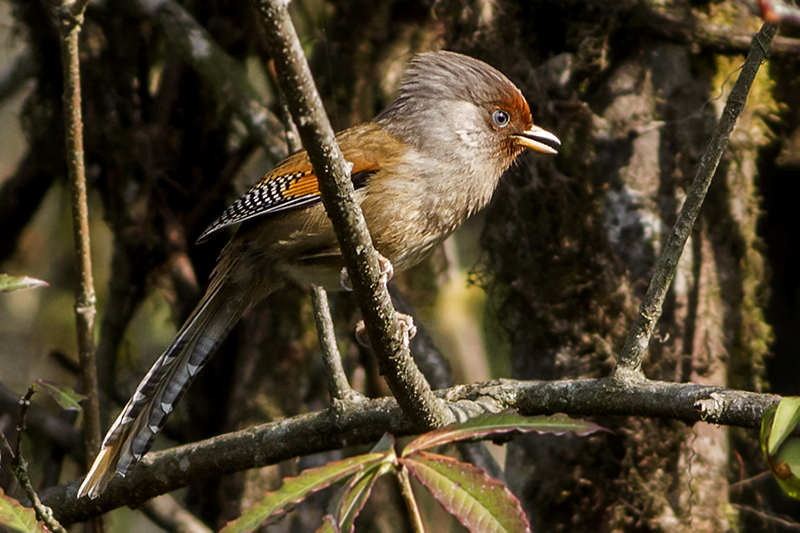
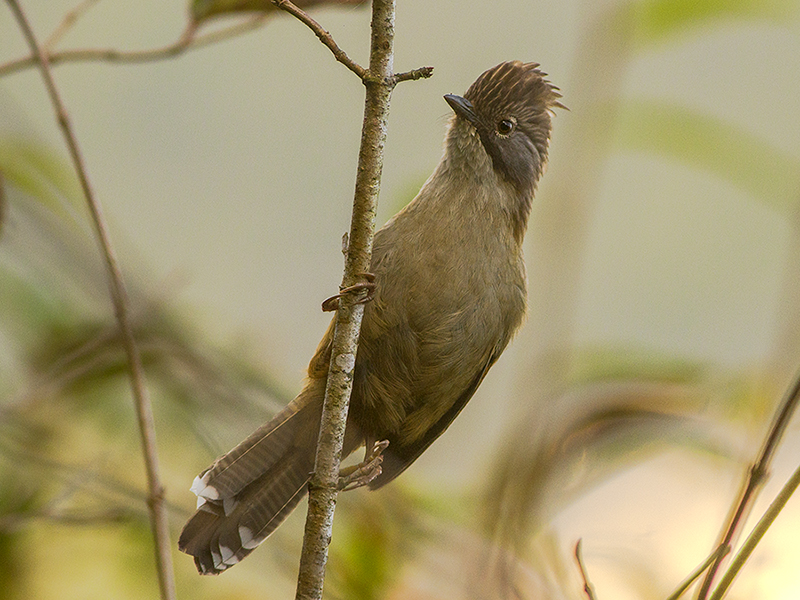
Identifying the Brown-capped Laughingthrush is a rewarding experience for birders. Adults display a rich brown cap that contrasts with their olive-green upperparts and grayish underparts. The face is marked by a distinctive white eye-ring, which enhances its expressive appearance. Juveniles resemble adults but tend to have duller plumage, lacking the sharp contrast seen in mature individuals. Males and females appear similar, making sexing in the field challenging without behavioral cues. When perched, the Brown-capped Laughingthrush holds a slightly upright posture, often flicking its tail. In flight, its silhouette is characterized by short, rounded wings and a long tail, which aids in maneuvering through dense foliage. The species can be confused with the similar-looking White-browed Laughingthrush, but the latter has more pronounced white streaks on the face and lacks the brown cap. Observers should also note the bird's call, a series of melodious, laughing notes that set it apart from other birds in the region.
Having trouble telling birds apart? Upload a photo to our bird identification tool for an instant species match.
Brown-capped Laughingthrush Habitat and Range
Preferred Habitat
The Brown-capped Laughingthrush inhabits subtropical and tropical moist lowland and montane forests. It prefers areas with dense undergrowth, such as bamboo thickets and regenerating secondary forests. In regions like northeast India and Myanmar, it thrives in altitudes ranging from 500 to 2500 meters, moving to lower elevations during winter months. The species is less commonly found in urban or heavily disturbed habitats, as it relies on the rich, complex structure of undisturbed forest environments. Seasonal shifts in habitat are typically driven by food availability, with the bird descending to more accessible areas during periods of scarce resources.
Geographic Range
The breeding range of the Brown-capped Laughingthrush spans across northeast India, Myanmar, and parts of Thailand, inhabiting dense forested areas within these regions. It does not undertake long migrations, but may exhibit altitudinal migration, moving between elevations seasonally. In India, it is primarily found in the states of Assam, Manipur, and Nagaland, while in Myanmar, its presence is noted in the Shan Hills and other suitable habitats. Population densities are higher in regions with well-preserved forest cover, where the bird can exploit abundant food resources and suitable nesting sites.
Want to know which birds visit your area? Browse our backyard birds by location guides for region-specific species lists.
What Does the Brown-capped Laughingthrush Eat?
The diet of the Brown-capped Laughingthrush consists primarily of insects and small invertebrates. It forages actively on the forest floor, using its bill to probe leaf litter and undergrowth. During the breeding season, the diet shifts to include a greater proportion of protein-rich insects to meet the nutritional needs of growing chicks. The bird also supplements its diet with berries and seeds, particularly during periods when insect prey is less available. Foraging typically occurs during the cooler parts of the day, with peak activity in the early morning and late afternoon. The Brown-capped Laughingthrush's foraging technique involves careful exploration of dense vegetation, often in the company of other bird species.
Brown-capped Laughingthrush Behavior and Social Structure
The Brown-capped Laughingthrush exhibits a complex social structure, often forming small, loose flocks, especially outside the breeding season. These flocks move methodically through the forest, communicating with a series of calls that help maintain group cohesion. Territorial behavior is most pronounced during the breeding season, when pairs establish and defend nesting sites. Courtship involves elaborate displays, including wing flicking and vocal duets. The species displays a high level of vigilance, responding to potential predators with alarm calls and evasive maneuvers. Daily activity patterns are influenced by temperature, with foraging and social interactions peaking during cooler periods of the day. The bird's ability to adapt its behavior in response to environmental changes showcases its ecological resilience.
Brown-capped Laughingthrush Nesting and Reproduction
Brown-capped Laughingthrushes build cup-shaped nests using twigs, grasses, and leaves, typically located in dense vegetation close to the ground. Preferred nesting sites include bamboo thickets and dense shrubs, providing both concealment and protection. The average clutch size ranges from 2 to 4 eggs, with incubation lasting around 14-16 days. Both parents participate in feeding and caring for the chicks, which fledge approximately 12-14 days after hatching. The species generally raises one brood per year, though in optimal conditions, a second brood may occur. The involvement of both parents in nesting duties ensures high survival rates for the offspring.
Brown-capped Laughingthrush Sounds and Vocalizations
The primary song of the Brown-capped Laughingthrush is a series of melodious, bubbling notes resembling laughter. These vocalizations are often delivered in rapid succession, creating a lively soundscape within their forest habitats. Call notes are similarly musical but shorter and used primarily for communication within flocks. Alarm calls are sharper and more urgent, alerting others to potential threats. During the dawn chorus, their songs are particularly prominent, contributing to the vibrant auditory environment of the forest. The laughingthrush's vocal repertoire is an essential tool for social interaction and territory establishment.
Interesting Facts About the Brown-capped Laughingthrush
- 1The Brown-capped Laughingthrush is named for its distinct, laughter-like vocalizations, making it a sought-after species for birdwatchers.
- 2Unlike many birds, the Brown-capped Laughingthrush often forages on the ground, using its bill to sift through leaf litter for insects.
- 3This species can be spotted at elevations as high as 2500 meters, adapting well to montane forest environments.
- 4Despite its specific habitat requirements, the Brown-capped Laughingthrush remains common in suitable areas, showing remarkable ecological resilience.
- 5The social nature of the Brown-capped Laughingthrush aids in predator detection, as flock members alert each other to dangers with sharp alarm calls.
Brown-capped Laughingthrush Conservation Status
The Brown-capped Laughingthrush is currently listed as Least Concern by the IUCN, although its populations face pressure from habitat loss due to deforestation and agricultural expansion. While the population trend is generally stable, localized declines occur in areas of significant habitat disturbance. Conservation efforts focus on habitat preservation and reforestation initiatives within its range. Historical population changes highlight the impact of human activities on its habitat, underscoring the need for continued conservation measures to ensure the species' long-term survival.